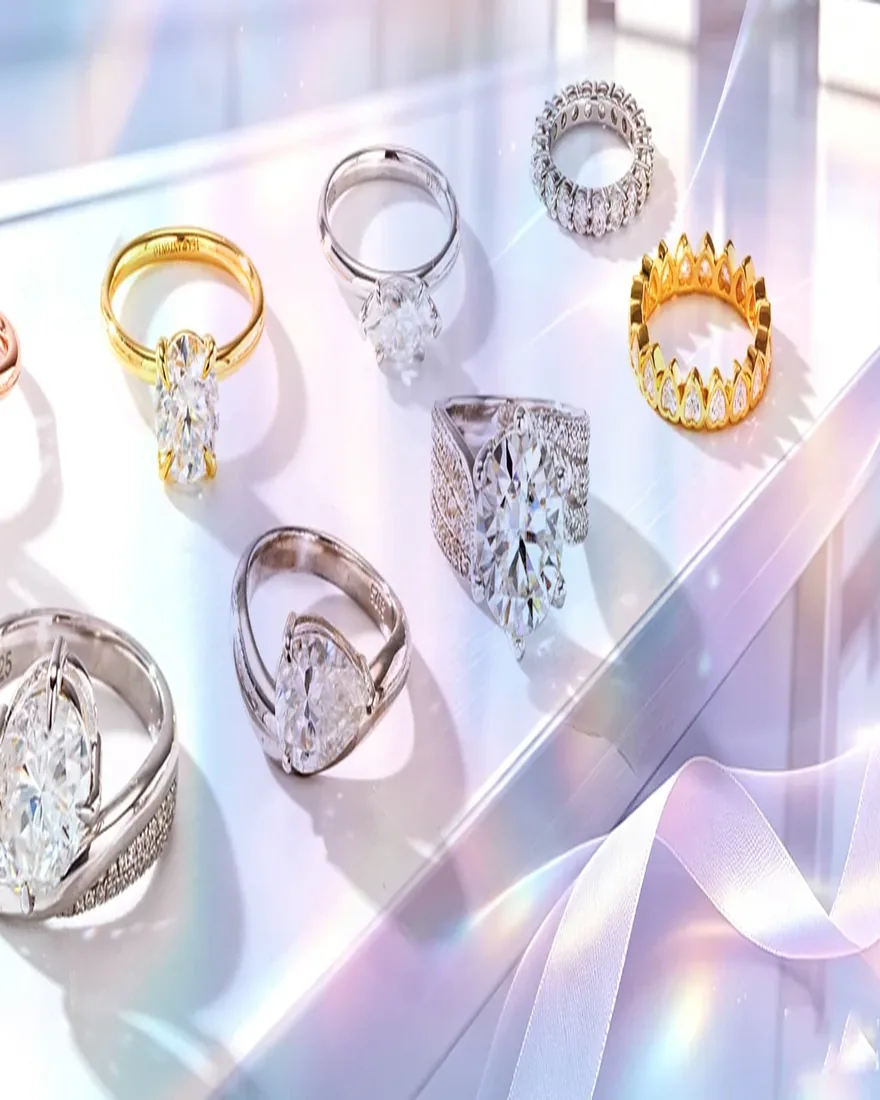
A DTC jewelry brand was losing returns on their best-selling signet ring. The casting was fine, the stones were fine — but the finish was not. Close up, the high points were flat, the inside of the band felt gritty, and after a month of wear the rhodium was turning patchy. The factory they used was casting and polishing, but polishing to a price, not to a standard. OEM casting and polishing is a bundle, but it is really two separate crafts, and the second one is where most suppliers cut cost. This is what you are actually buying when you outsource it.
Why finish is where brands lose money
A poor casting is visible immediately. A poor polish shows up after sale: a customer buys a ring that looks right in a flat photo, wears it for a month, and returns it because it no longer looks new. Industry finishing rejects sit around 6–10%; controlled polishing lines hold under 2%. The grit sequence and the buffing pressure are the variables.
| Finishing step | Price-line factory | Specified OEM standard |
|---|---|---|
| Grit progression | 3 stages | 5–6 stages (240 to rouge) |
| Inside of band | Quick buff | Filing, sanding, polished smooth |
| Rhodium thickness | 0.3 µm | 0.5 µm, measured per batch |
| High-point rounding | Sharp left as-cast | Hand-rounded and burnished |
| Ultrasonic clean | Wipe only | Ultrasonic + steam before QC |
What the OEM bundle includes
When you contract OEM casting and polishing, you supply (or approve) the CAD design, alloy, stone choice and finish spec. The factory owns the rubber mould, the casting tree, the divest, the setting handover, the full polishing sequence and the plating. Your brand marks — karat stamp and your own maker’s mark — are applied under your artwork, and the finished pieces ship in your packaging or ours. Critically, the tooling and the CAD file stay controlled so your next re-run matches.
Finishing specs to write into the order
- Grit sequence. Require a minimum of five stages from coarse through to tripoli and rouge. This is what makes a ring read as premium in hand.
- Inside comfort-fit. The inside of the band must be filed and polished smooth, not left rough. Rough interiors are the most common "cheap feel" complaint.
- Plating thickness. Specify rhodium or gold plate in microns and ask for a measurement report. 0.5 µm lasts roughly twice as long as 0.3 µm on daily-wear silver.
- High-point rounding. Prong tips, edge corners and gallery rails should be burnished smooth so they do not catch hair or fabric.
- Final clean. Ultrasonic and steam before QC so polishing compound residue does not lock into crevices.
None of these steps is expensive on its own. Taken together they account for a meaningful slice of the per-piece cost, which is exactly why a price-line factory quietly skips them. The buyer who names them in the order gets them; the buyer who leaves polishing to the factory’s discretion gets whatever the cheapest line happens to produce.
Which OEM buyer are you?
New brand with one hero SKU: start with a single OEM run of 100–200 pcs and spend time on the finish sample. The sample is your standard for every reorder. Multi-SKU brand: ask for a finish spec sheet applied across the whole line, so a ring from design 3 and a ring from design 14 feel identical. Private-label with packaging: bundle the finishing, plating and custom packaging in one contract so quality and presentation arrive together.
Frequently Asked Questions
What does OEM jewelry manufacturing mean?
OEM means the factory produces jewelry to your approved design, alloy and finish spec, branded with your marks, rather than selling you their own stock designs under your label.
Can I supply my own CAD design for OEM production?
Yes. Approved CAD files, 3D renders or even a physical sample can be used. We reverse-scan samples and confirm the model before cutting tooling.
Who owns the tooling and CAD files?
On a paid OEM program, the rubber moulds and approved CAD files are held for your exclusive reorder use. They are not reused for other clients.
What MOQ applies to OEM casting and polishing?
The typical OEM MOQ is 100 pieces per design for silver, dropping to 30–50 on reorders once the tooling exists.
How do you keep my design from being copied?
Tooling is sealed and logged against your account, and our production schedule separates your runs. We work with brands that sell into the US and EU under NDAs on request.
Key takeaways
- Casting gets you the shape; polishing gets you the finish customers actually feel.
- Five grit stages, 0.5 µm plate and a smooth interior separate a premium OEM piece from a price-line one.
- Lock the finish sample once; it is the quality standard for every future reorder.
Request an OEM finish sample: send your CAD or a reference piece, sample returned within 14 days. Start an OEM program.
Related: manufacturing guides · white-label range · talk to production.
Rhodium plating, which gives white gold jewellery its bright finish, is covered in the Wikipedia article on rhodium.


