If someone offers you "zircon" at a mall kiosk, they almost certainly mean cubic zirconia, the lab-grown diamond simulant. Natural zircon is a completely different stone — a nesosilicate mineral that scientists date back billions of years, making it one of the oldest known materials on the planet. The name collision has done the natural stone no favors, but anyone who has seen a fine blue zircon in person knows immediately that it is something special and entirely its own.
What natural zircon does well
Zircon has a refractive index and dispersion that outpace diamond in the "fire" department — the little rainbow flashes that break out across the stone as it turns. A well-cut blue zircon reads almost neon against the skin. It is also strongly doubly refractive, which means facet edges look slightly doubled when you look through the stone under a loupe. That doubling is actually a quick way to confirm you have natural zircon and not a simulant.
Colors and heat treatment
Natural zircon occurs in brown, red, yellow, green, and blue. Most of the bright blue zircon on the market is produced by heat-treating brown material from Cambodia and Myanmar; the treatment is stable, standard in the trade, and openly disclosed. Untreated "stabilized" green and golden zircons are also available, as are rare reddish-brown "hyacinth" zircons that collectors prize. Fine blue zircon over two carats is increasingly hard to source, and prices have climbed as old-mine rough has dwindled.
The old-mine connection
Before diamond became the default engagement stone in the 20th century, zircons in brown, golden, and blue were widely used in Victorian and Art Deco jewelry. If you inherit a ring from that era with a bright, fiery stone that is not quite a diamond, it may well be old-mine zircon. We see this in repair work more often than you would think, and it is worth identifying before a well-meaning re-polish or re-setting damages the stone. Many a family ring has been quietly mislabeled as an old diamond, when a look through a loupe at the doubled facet edges would have settled it in seconds.
Durability caveats
Here is the catch. Zircon is 6 to 7.5 on the Mohs scale depending on variety, and it is soft enough that the facet edges wear down over years of ring wear. The result is a stone that looks "worn" around the girdle even if the center is fine. It is also slightly brittle. For that reason we recommend zircon mainly for earrings, pendants, and dress rings, and for any daily ring we set it with a protective bezel and inspect the edges at every prong check. Ultrasonic cleaners can loosen stones in included zircons; stick with warm soapy water.
Zircon vs moissanite vs CZ
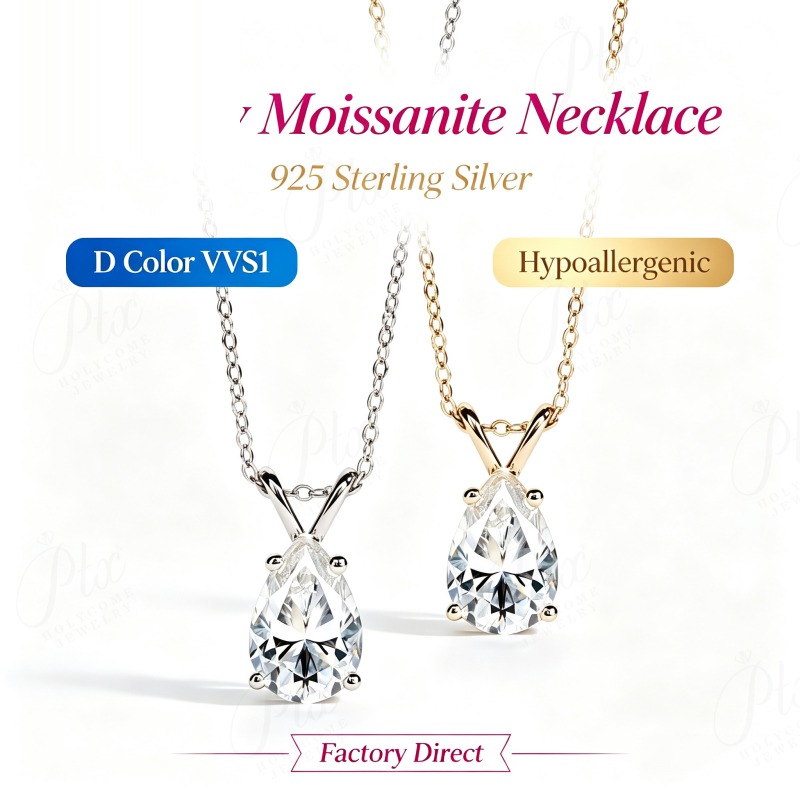
Shoppers often lump these three together, but they are nothing alike. Cubic zirconia is a lab-grown, colorless diamond simulant that is cheap, uniform, and lifeless. Moissanite is a lab-grown silicon carbide with its own fire and a price tag to match. Natural zircon is a mined mineral, doubly refractive, and carries a warm vintage glow that the simulants cannot reproduce. If you want a bright white sparkler on a budget, moissanite or CZ will do it. If you want a stone with history, character, and old-mine fire, natural zircon is its own category and should be priced and sold as such. We write this out in full on every quote because the name confusion is the number one reason clients end up with the wrong stone.
The geology footnote
Zircon is one of the few minerals that survives geological events essentially unchanged, which makes it a favorite of earth scientists who date the oldest rocks on the planet. Some Australian zircons have been dated to roughly 4.4 billion years old, barely 100 million years after the Earth formed. You do not need to care about that to wear a zircon ring, but it does put the price in perspective: the rough in your jewelry is older than most of the rock on the surface of the planet.
Buying tips
Look for eye-clean stones with strong saturation. Blue zircon reads best in medium tones — too dark and it looks like sapphire, too light and the fire washes out. Because zircon is often confused with CZ, ask for a gemologist's note or a certificate if the price climbs into serious territory. And never pay untreated prices for blue zircon; essentially all commercial blue is heat-treated, which is normal and expected. If a seller presents a blue zircon as natural and untreated, treat that as a red flag rather than a bargain.
If you are comparing zircon against other diamond simulants, our breakdown of diamond simulants lays out the differences, and the science of sparkle explains why zircon throws more fire than many people expect.
Independent background on moissanite — how its hardness and refractive index compare with diamond — is documented in the Wikipedia article on moissanite.
Frequently Asked Questions
How do I verify a factory before placing a bulk order?
Request a production video, business license, export records and a paid sample run. A factory that accepts a 50-piece test order is usually a real manufacturer.
What payment terms do you offer?
30% T/T deposit with the balance against the bill of lading. This protects both sides on first orders and can move to net terms after a track record.
What is your normal reject rate?
3–5% under 10x loupe inspection for cast and set pieces. Defective units are replaced free in the next shipment.
Where is the factory located?
Wuzhou, Guangxi, China—the core lab-grown and moissanite manufacturing cluster. Shipments go via Guangzhou or Shenzhen ports.


