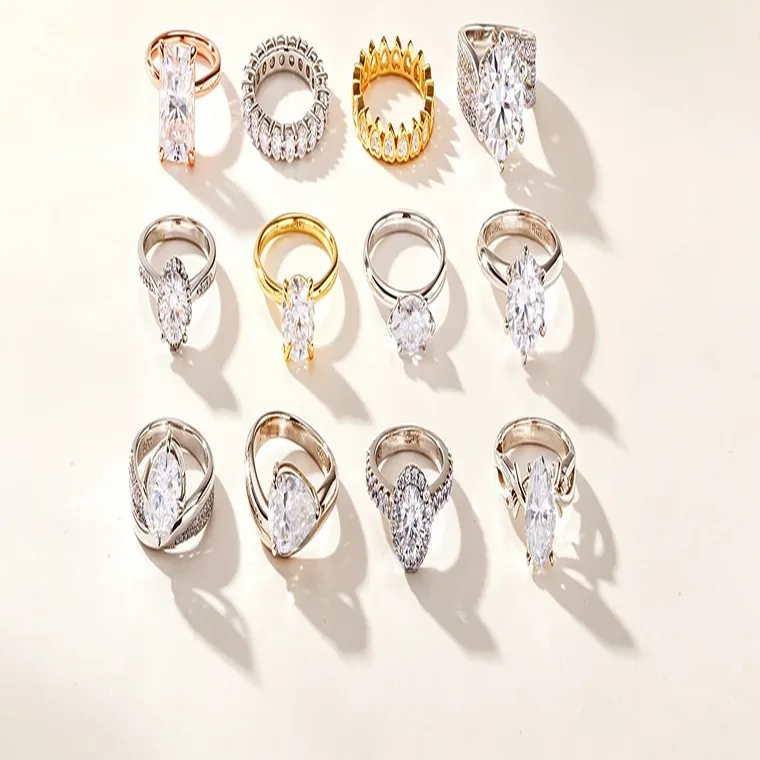
Morganite is the pink-to-peach beryl, the same mineral family that gives us emerald and aquamarine. Until about ten years ago it was a niche stone, mostly sold to collectors. Then bridal media picked it up, suddenly every editorial showed a blush-colored stone in rose gold, and morganite went from obscure to everywhere. We get asked about it at least once a week.

Here's the honest bench-side assessment. Morganite is beautiful, romantic, and much larger for the money than a diamond of the same budget. It is also softer, more inclusion-prone, and more sensitive to chemicals than a diamond. Whether it's right for you depends on how you actually live, not just how the ring looks in a flat-lay photo.
What morganite is
Morganite is the pink variety of beryl, colored by trace manganese and cesium. It was named for J.P. Morgan, the banker and gem collector, in the early 1900s. It comes out of pegmatite mines in Brazil, Madagascar, Afghanistan, and Mozambique. The best material is a soft peach-pink that reads warm against the skin; the cheaper end of the range is pale lavender-pink that can look washed out.
On the Mohs scale, morganite is 7.5 to 8. That's the same hardness as aquamarine and tourmaline, and a full notch below sapphire at 9. It's hard enough for daily wear, but over years of bumping doors and typing on keyboards, the facet edges will start to show tiny nicks. We've reset enough scratched morganites to know that this isn't theoretical.
The color question: natural vs. heated
Most morganite on the market has been heat-treated. Rough morganite is often paler and slightly violet-toned; gentle heating removes the gray and lavender casts and produces the consistent peach-pink everyone now expects. This treatment is stable, permanent, and broadly accepted — you don't need to worry about the color fading over time.
What you do want to avoid is morganite that has been irradiated to deepen color. That material is rare, but it can fade in strong sunlight. Ask the dealer whether the color is heat-only, and for stones over three carats, ask for a lab report.
Size for the money
This is where morganite wins. A clean, eye-clean, 2-carat morganite in a round or oval cut will cost a fraction of what a comparable 2-carat diamond costs. We regularly set morganites in the 3- to 5-carat range for clients who want presence on the hand without a five-figure diamond budget. In a halo setting, a 3-carat morganite looks like a 5-carat diamond to anyone not holding a jeweler's loupe.
The trade-off is that morganite doesn't sparkle like a diamond. Its refractive index is lower, so it returns less fire and brilliance. It glows, it doesn't flash. If you want serious scintillation under event lighting, a diamond or a moissanite will give you more. If you want a soft, romantic, face-up color that reads as "old world," morganite is one of the best choices in the market.
Setting choices
We set morganite in rose gold more than any other metal. The warm metal intensifies the peach tone and makes the stone look cohesive rather than "pasted on." White gold or platinum works too, but it tends to make the stone look cooler, slightly pinker and less peachy. Yellow gold sits in between.
Because morganite has imperfect cleavage, we avoid tight, thin prongs that grip the girdle hard. A bezel or a halo with wide prongs is safer. We also steer clients away from split-shank, cathedral-style settings that put lateral pressure on the stone during daily wear. Custom designs let us build the setting around the stone rather than the other way around, which is the right way to treat a softer gem.
Daily care
Morganite is sensitive to acids and hairspray, the way beryl family stones are. Perfume, lotion, and hairspray will build up a dull film on the surface over months, and repeated exposure can slightly etch the facet edges. The routine we give morganite owners is the same one we give emerald owners: put the jewelry on last, after makeup and fragrance have dried.
Clean it with warm soapy water and a soft toothbrush. Ultrasonic cleaners are generally safe for heat-treated morganite, but we prefer steam cleaning only after we've inspected the stone for surface-reaching inclusions. A morganite with a visible feather running to the surface can crack in an ultrasonic, and we've seen it happen.
Who should buy morganite
Morganite is the right call if you want a colored stone, you love warm pinks, you want size for the budget, and you're willing to be slightly more careful with the ring than you would with a sapphire. It's the wrong call if you never want to think about the ring, if you work with your hands, or if you want maximum sparkle under every light.
Bring us your inspiration photos and we'll tell you honestly whether a morganite setting makes sense for your lifestyle. We've set enough of them to know both their best days and their worst, and we'd rather talk you out of the wrong stone than reset it in two years.
Independent background on moissanite — how its hardness and refractive index compare with diamond — is documented in the Wikipedia article on moissanite.
Frequently Asked Questions
Is moissanite a good diamond alternative for retail buyers?
Yes for price-sensitive customers who want brilliance and hardness. Moissanite ranks 9.25 on the Mohs scale, holds up to daily wear and costs a fraction of a natural diamond of the same size, so it resells fast in bridal and fashion lines.
What is the minimum order for wholesale moissanite?
MOQ starts at 50 pieces per design for stock items. Custom cuts and private-label settings usually start at 100–300 pieces depending on the mold.
Do you provide certificates with moissanite stones?
Yes. Every parcel ships with GRA or IGI documentation listing carat weight, color grade and cut. We recommend passing the certificate to your end customer for trust.
How long does sample and bulk production take?
Samples ship in 3–5 days. Bulk runs take 15–20 days under 500 pieces, and 25–30 days for custom work.


