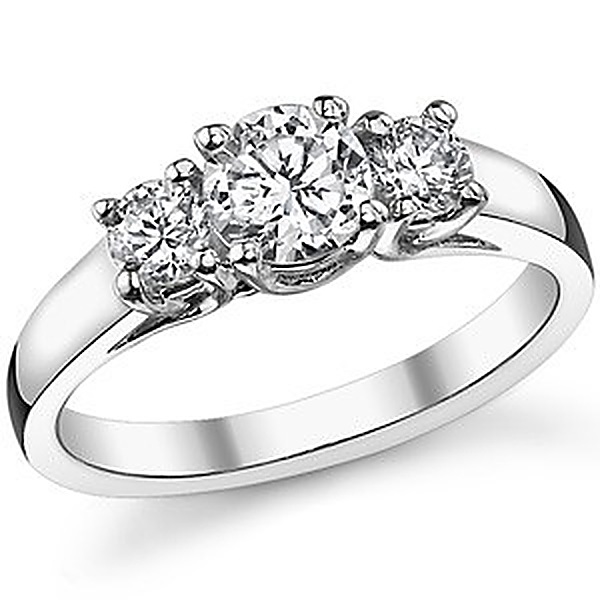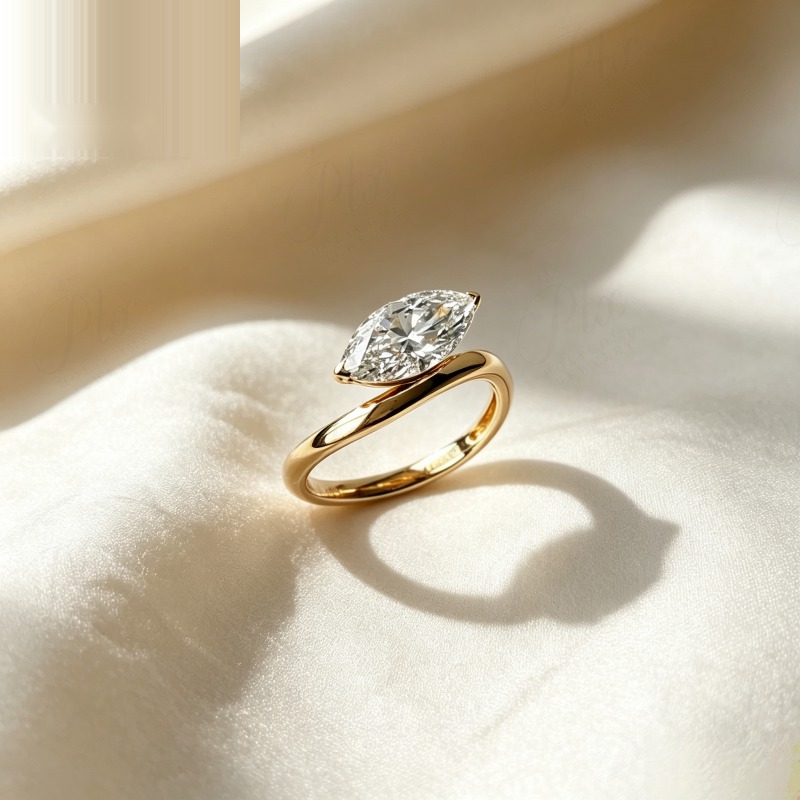
The most common call we get at the bench is not "my ring broke." It is "my ring lost a stone." That almost always comes as a surprise, but it should not. A loose prong gives weeks of warning before a stone falls out, and a worn clasp gives months. The trick is knowing what to look at, and actually looking.
We ask every client who walks out with a ring to do a ten-minute check once a month. It does not require a loupe, a microscope, or any special skill. It requires a bright room, a plain white piece of paper, and the patience to look closely at the pieces you wear every day.

Set up your inspection space
Pick a room with a window or a bright overhead light. Lay a white towel or a sheet of plain paper on a table. White is important because it gives you a neutral background, so a loose stone does not roll off into the carpet if it happens to fall. Empty your pockets, take off your watch, and wash your hands first, so you are not spreading lotion around as you handle the pieces.
Take the pieces off one at a time. Do not inspect them while you are wearing them; you need to see the back of the setting, the inside of the band, and the underside of the clasp, and you cannot do that on your finger or neck.
Check the stones first
Hold each ring or pendant up to the light and look at every stone in the setting. For each stone, do three things.
First, look at the prongs. Are all of them sitting on top of the stone, or is one bent back, worn thin, or missing entirely? A prong that looks flattened against the stone's surface is a prong that is about to let go. Second, gently wiggle the stone with your fingernail or a wooden toothpick. Do not use metal. If the stone moves at all under light pressure, it is loose and needs to be looked at by a jeweler. Third, look through the stone at the background behind it. A cloudy or dark area at the base can mean a crack or a loose seat.
For pavé and micro-pavé settings, run a fingernail lightly across the row of small stones. Any stone that catches your nail differently than its neighbors is either tilted or missing. Those small stones fall out more often than center stones, because their prongs are tiny and wear thin quickly.
Check the metal and the shank
Look at the band itself. Is there a thin spot, especially opposite the head of the ring? That is where most rings wear through over years of daily wear, and it is the spot we look at first when a client brings a ring in for refurbishment. A fine line, a slight discoloration, or a spot that feels thinner than the rest of the band is an early warning. A ring that is worn through will eventually crack, and the repair is cheaper if you bring it in before it breaks.
Look at the inside of the band for scratches that look deeper than normal, and at the shoulders where the shank meets the head. Cracks often start right at that transition. If you see a hairline that you can catch with a fingernail, stop wearing the ring and bring it in.
Check chains, clasps, and earring backs
For necklaces and bracelets, hold the clasp in one hand and the chain in the other and look at where the two connect. The jump ring that joins them is the single most common failure point in chain jewelry. Is it closed? Is there a visible gap? Is it worn thin on one side? If any of those are true, the chain is one snag away from falling off your neck.
Test the clasp itself. A spring ring should snap shut with a positive click, not a tired one. A lobster clasp should close firmly when you release the lever. If the clasp feels weak, do not wait for it to fail; bring it in for a clasp replacement, which is usually a quick and inexpensive bench job.
For earrings, check the posts and backs. A post that bends, a back that has lost its tension, or a clutch that slides off too easily is how earrings get lost. We recommend replacing silicone backs every year or two, because they harden with age and stop gripping.
What to do when you find something
If you find a loose stone, a worn prong, or a weak clasp, stop wearing that piece. Do not wear it to "just one more event." Take it off and put it in a soft pouch until you can bring it in. The cost of tightening a prong on schedule is a fraction of the cost of replacing a lost diamond, and the emotional cost of losing a stone that belonged to someone in your family is not recoverable at any price.
If everything looks fine, give the piece a quick wipe with a lint-free cloth, put it back where it lives, and move on. Ten minutes once a month is not much to ask, and it is the single most reliable way to keep the pieces you love in service for decades. For a deeper dive into the most common failure points, read our posts on prong wear and the daily ring care basics, and keep our when to see a jeweler checklist handy for the moments between monthly inspections.
The International Gem Society moissanite guide explains how moissanite performs in daily wear compared with diamond.
Authoritative References
For buyers who need to verify the technical and regulatory basis of this guide, the following independent institutions publish authoritative reference data:
- ISO 9001 Quality Management - the international standard for consistent production quality.
- Wikipedia: Jewellery - manufacturing processes, materials and global trade background.
Frequently Asked Questions
How do I verify a factory before placing a bulk order?
Request a production video, business license, export records and a paid sample run. A factory that accepts a 50-piece test order is usually a real manufacturer.
What payment terms do you offer?
30% T/T deposit with the balance against the bill of lading. This protects both sides on first orders and can move to net terms after a track record.
What is your normal reject rate?
3–5% under 10x loupe inspection for cast and set pieces. Defective units are replaced free in the next shipment.
Where is the factory located?
Wuzhou, Guangxi, China—the core lab-grown and moissanite manufacturing cluster. Shipments go via Guangzhou or Shenzhen ports.