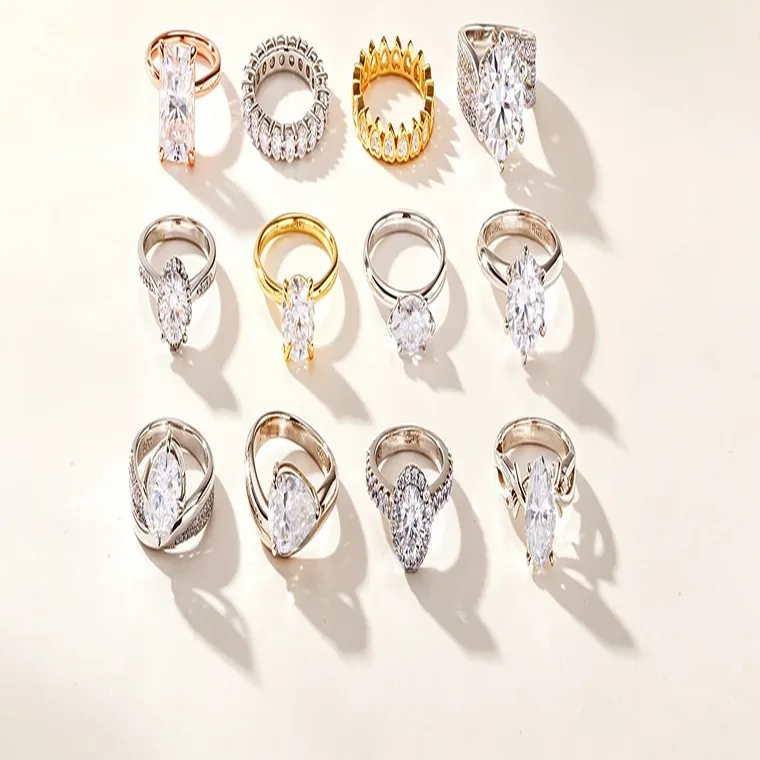
The cathedral setting that looks cinematic in a showroom photo catches on scrub tops, gym towels, car doors, and the edge of every sink you lean against. If you work with your hands, train regularly, or simply hate taking jewelry off, a tall, high-set ring is going to be a source of friction long before it is a source of joy. Low-profile settings solve that problem—but only if you pick the right one. Done wrong, a low ring can look squat and kill the stone’s sparkle.

What “profile” actually means
Profile is the height of the setting off the finger. A high solitaire lifts the stone four or five millimeters above the band, letting light enter from the sides and giving the ring that iconic, floating look. A low-profile ring sits one to two millimeters off the band, often with a bezel or half-bezel wrapping the stone. Trade-off number one: lower profile means less side light, which can make a stone look smaller and darker. Trade-off number two: lower profile means the stone and its prongs meet fewer doorframes, desk edges, and gym straps.
For active wearers, trade-off two wins most of the time. The sparkle of a high setting is nice in photographs and at dinner. The reality of a high setting on a daily ring is that it catches on sweaters, loosens prongs over time, and occasionally hits a hard surface hard enough to chip the girdle of the stone.
Settings that work for low-profile wear
A full bezel is the most durable option. A rim of metal wraps entirely around the stone, protecting every edge. Bezels suit colored stones particularly well, because the rim adds a frame that draws the eye to the color. A half-bezel protects two sides and leaves the other two open for light, which is a good compromise if you want sparkle without the catch-prone corners of a full prong setting.
Channel settings work beautifully for bands with rows of smaller stones. Because the stones sit inside the channel rather than on top, nothing protrudes above the band surface, and the ring can be worn without thought. Pavé is the setting we are most cautious about for active wearers—the tiny beads holding each small stone catch on fabric far more than most buyers expect.
Shapes that hold up
Round stones are the most forgiving in low settings, because they have no corners to catch. Cushion and oval shapes also translate well, but you want the cut to be deep enough that the stone does not look flat when set low. Emerald cuts and other step cuts with sharp corners should be fully bezel-protected if you plan to wear them daily; the corners are the first thing to chip on a low-set ring that meets a hard surface.
If the center stone is a diamond, cut quality matters more than color or clarity in a low setting. A well-cut round will return light from the top even when the sides are shaded by the band. A poorly cut stone will look lifeless, and lowering the profile will only make that worse.
Stacking and bands
Low-profile rings are built to stack. Because they sit flush, they slide next to a wedding band without a gap, which is one of the reasons they are the default choice for people who plan to wear both rings every day. Our band-matching guide walks through the flush-fit logic in more detail. If you are choosing an engagement ring with a wedding band in mind, the low-profile decision makes the later band choice much easier.
There is no rule that says an engagement ring has to tower off the finger. We build low-profile settings every week for nurses, teachers, chefs, and athletes who want a ring they do not have to think about. The look is quieter than a cathedral solitaire, but on the right hand, it reads as intentional rather than compromised. Bring us your daily routine—not just your Pinterest board—and we will size the profile to fit your actual life.
Center stone size in a low setting
A common worry is that lowering the profile will make the stone look smaller. In practice, the opposite is often true: a well-cut stone in a tight bezel reads as intentional and substantial, because the eye fills in the size of the whole setting rather than just the crown. If you want maximum visual size, choose a shape with a large face-up area—oval, cushion, or marquise—rather than a tiny round that disappears into a low bezel. Talk to us about proportions before you commit, because the cut and the setting work together, not independently.
The Gemological Institute of America’s gem encyclopedia is an authoritative, widely cited reference on moissanite and diamond quality factors.
Frequently Asked Questions
What ring sizes can you supply in bulk?
US sizes 5–12 including half sizes. Send a size breakdown with your order and we cast to that curve; comfort-fit inner bands reduce resize requests.
Can I order a mixed size run instead of one size?
Yes. Mixed runs are standard for wholesale: specify quantity per size and we pack and label by size at no extra labor cost.
What is the MOQ for custom ring designs?
50 pieces per design for existing molds; 100–300 pieces when a new mold or CAD model is required.
How should I price rings for retail margin?
Most partners use a 3–4x markup on FOB cost for sterling and 2.5–3x for moissanite solos, which keeps landed cost under 30% of retail.


