A newly cast ring, straight from the flask, is an ugly object. It is covered in investment residue, sprues, small fins of metal, and a grainy orange-peel surface. It is not round, it is not straight, and the polish on a showroom counter is months of bench labor away. Buyers who assume that in-house casting means the piece arrives nearly finished are usually surprised at the bill - and at the quality gap between shops that finish properly and shops that do not.
The casting is a rough blank, not a product
Investment casting excels at producing near-net shapes in one pour. It does not produce flat surfaces, true roundness or mirror polish. Metal shrinks as it solidifies, the sprue pulls on the part as it cools, and the investment shell leaves a fine surface texture that is part of the process. Even a modern vacuum-cast 14k band is roughly 90% of the final geometry and maybe 30% of the final finish.
The finishing sequence, in order
- Sprue removal. The main sprue is cut off flush with a jeweler's saw or grinding disc, leaving a stump that is filed down to the surface.
- Flash and seam cleanup. Where the investment shell cracked slightly, a thin fin of metal formed. These are filed away along the mold parting line.
- Trueing the shank. A cast ring is rarely a perfect circle. The bench worker slips it over a steel mandrel and taps it round, checking with ring gauges as they go.
- Abrasive progression. From coarse emery files through 220, 400, 600 and 800 grit paper, smoothing every file mark left by the previous step.
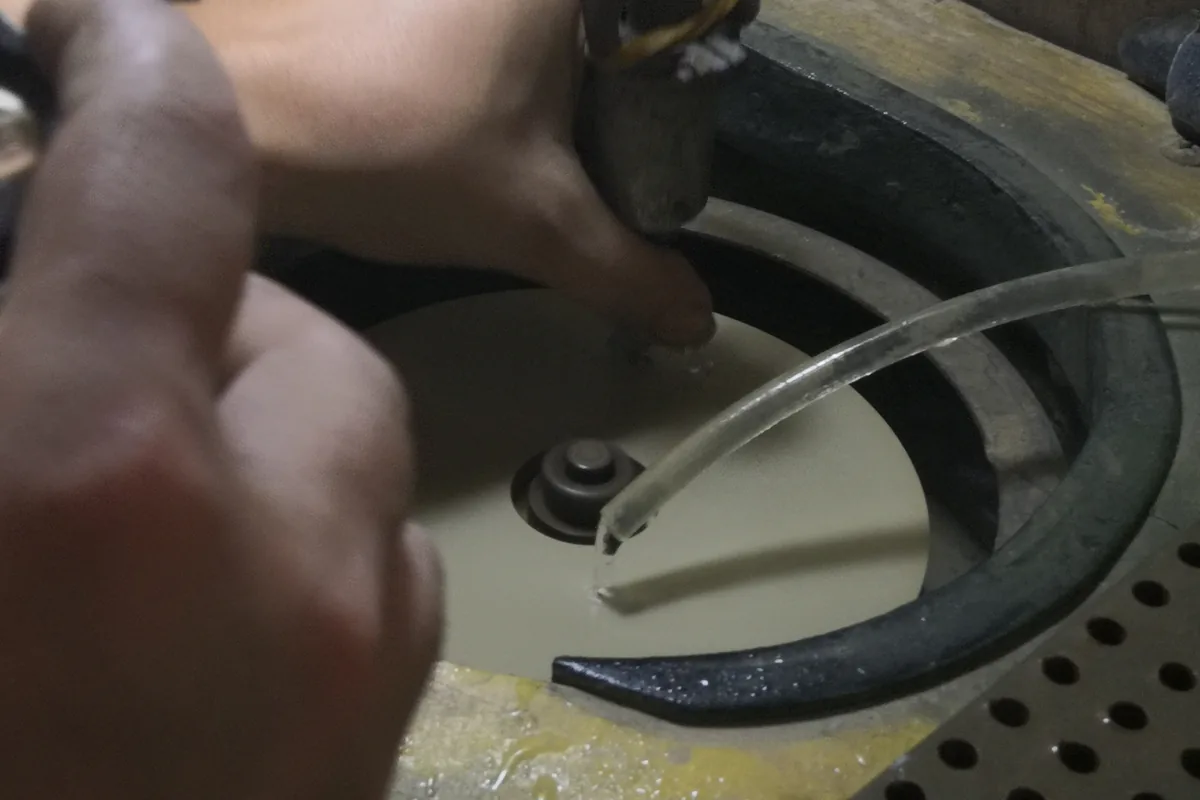
- Buffing. Tripoli on a stiff muslin wheel cuts the satin surface down; rouge on a soft cotton wheel brings the high polish.
- Final cleanup. Ultrasonic, steam, and a last inspection under magnification.
Where casting stops and chasing begins
Casting cannot reproduce everything a designer draws. Very sharp internal angles, fine undercut texture, and crisp script engraving tend to round off during the pour. When a design calls for those details, the factory chooses between two paths: chase the texture into the cast blank by hand with small punches and chisels, or cast a slightly over-sized blank and machine the detail afterward. Hand chasing adds ten minutes to several hours per piece depending on the pattern, and it is one of the places where a hand-finished label on a product page is genuinely justified.
Comfort-fit and structural additions that the cast does not include
A cast band is flat inside by default. A comfort-fit interior - the gently domed inside surface that makes a 6 mm band feel like a 4 mm band - is cut and polished into the cast blank by hand on a lathe. That is ten extra minutes per piece, and it is one of the details buyers use to justify a price premium. Likewise, a solitaire head that is soldered onto a cast shank is usually fabricated from cast or wire separately: the basket, the seat and the prongs are built and soldered on, then the joint is filed smooth so the solder line disappears. None of that is "casting". It is bench work that the cast only sets up.
Sizing beads, engraving, milgrain edges and stamping all happen after casting as well. The casting provides the skeleton; the bench provides everything a customer notices.
Time math buyers should know
A simple 4 mm comfort-fit band in sterling silver spends roughly:
- 30 seconds in the casting machine per piece on a tree of 12.
- 1-2 minutes of sprue cutting per piece.
- 10-15 minutes of filing, sanding and truing.
- 5-10 minutes of buffing.
The pour is a rounding error. The bench is the cost. When you compare factory quotes, the shops quoting suspiciously low per-unit prices are almost always compressing the finishing step - fewer grit steps, less truing, a quick tripoli-and-out buff. The result sells at first, but the finish oxidizes unevenly and the shank goes oval within a year of wear.
How to judge whether a factory finishes properly
When you audit a shop, ask to see a casting straight from the flask and the same design after finishing. The gap between those two states is where the bench team lives. A shop that is proud of its finish will show you both; a shop that treats casting as the whole job will only show you the polished product. Ask how long a simple band spends at the bench on average, and whether the same person files, sands and buffs, or whether those steps are split between specialists. Specialization usually wins on volume and consistency, but either model is fine as long as it is deliberate.
What hand-finishing cannot fix
Finishing will not correct a bad casting. Porosity in a gallery shows up as tiny pits no amount of rouge hides; a mis-run at the tip of a prong means the prong has to be rebuilt and soldered on; shrinkage cavities near a bezel are structural. A factory that tries to fix casting defects at the bench by burnishing over them is selling you a warranty claim. Good factories reject the piece at the cast stage, before paying an hour of bench labor on a part that should never have been finished. Our own line separates casting QC from finishing QC for exactly this reason - more on how that gate works in the casting guide series.
Sterling silver terminology used in this guide follows the Wikipedia entry on sterling silver.
Frequently Asked Questions
How do I verify a factory before placing a bulk order?
Request a production video, business license, export records and a paid sample run. A factory that accepts a 50-piece test order is usually a real manufacturer.
What payment terms do you offer?
30% T/T deposit with the balance against the bill of lading. This protects both sides on first orders and can move to net terms after a track record.
What is your normal reject rate?
3–5% under 10x loupe inspection for cast and set pieces. Defective units are replaced free in the next shipment.
Where is the factory located?
Wuzhou, Guangxi, China—the core lab-grown and moissanite manufacturing cluster. Shipments go via Guangzhou or Shenzhen ports.


