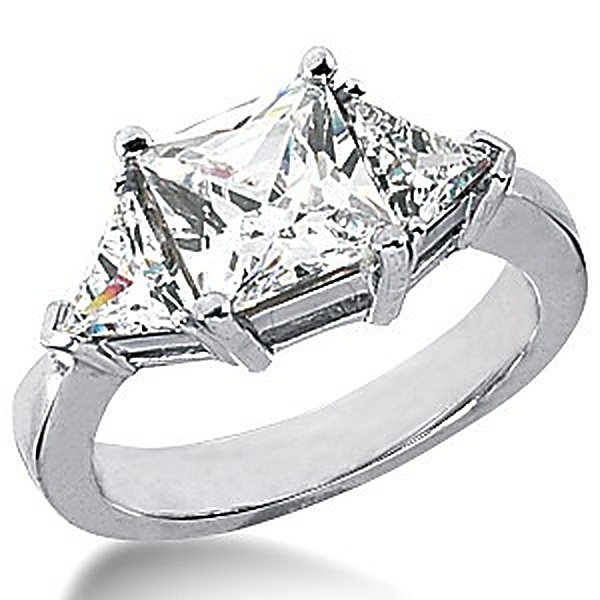
A stone falls out in the first three months of wear and the customer assumes the diamond was poor quality. More often, the stone was fine and the setting was wrong. Stone setting is the step where most jewelry warranty claims are born, and the failures are not random — they trace to a small list of bench errors that recur in the same patterns. Buyers who know the patterns can write specs that prevent the return.
1. Under-beaded prongs (the loose-stone failure)
A prong does not hold a stone by touching it. It holds it by a small, polished "bead" of metal pushed over the girdle during the setting process. If the setter under-beads — just touches the girdle without rolling a proper bead over it — the stone looks set but flexes under pressure. The first hard knock tips it, then it slides out. Inspection trick: run a fingernail along each prong tip. A proper bead has a rounded dome; a sloppy bead is flat and sharp. Good factories re-bead every prong under magnification before QC release.
2. Poor seat (the tilted-stone failure)
Every stone sits in a cut "seat" — a groove cut into the basket to match the stone's girdle. If the seat is cut too deep, the stone sits below the prongs and never contacts them; if too shallow, the stone rocks. A wobbly stone at QC is an obvious reject, but a stone that sits level yet rocks under firm pressure is the silent failure that comes back after a month. The fix is re-seating, not just tightening prongs.
3. Snapped or bent prongs
Prongs break for two reasons. One: they were made too thin at the casting stage — a design / gauge problem. Two: the setter applied too much force with the burnisher and cracked the prong where it joins the basket. Bent prongs usually come from a customer knock; snapped prongs come from bench force. Buyers can prevent snapped prongs by specifying prong thickness at sample stage (a minimum 0.4mm round wire for small stones, heavier for center stones) and rejecting any piece where a prong shows a stress line under 10x magnification.
4. Overheated stones (the "burned" failure)
Setting often involves soldering near the stone. If the factory solders before setting, no problem. If it solders after, the stone must be protected with a heat shield — wet tissue, a thermal barrier, or slow heating. Without it, heat cracks included stones (emerald especially), discolors treated stones (topaz, some sapphires), and "burns" diamonds along the girdle. The diamond survives but the girdle becomes abraded and milky. The prevention is sequencing: solder first, set last. If a repair shop must solder around a set stone, ask for heat-shield documentation.
5. Misaligned prongs and off-center stones
A prong that lands on a facet corner instead of the girdle edge will chip the stone on the first squeeze. A stone that sits off-center in a halo looks wrong in photos and throws the balance. These are layout errors, not wear errors — they should be caught at QC, before the piece ships. Buyers who receive a batch with one or two off-center pieces should inspect the whole batch; it usually signals a new setter on the line.
Prong design choices that prevent failure
Not all prongs are equal. A 4-prong solitaire looks open and lets light through, but each prong carries more leverage and wears faster. A 6-prong setting spreads the load and is more secure, at the cost of slightly more metal covering the stone. Cathedral and raised-prong designs expose tips to knocks; flush and bezel-set stones almost never lose stones. For customers who wear rings in active jobs, a bezel or tension-style setting is the durable choice. For active lifeguards, tradespeople, and gym-goers, the setting design matters more than the stone itself.
How to inspect a batch at your end
You do not need a microscope to catch most setting failures. With the ring in hand, push gently on each stone with a wooden stick or a plastic tweezer — never with metal. A secure stone does not move. Run a fingernail along each prong tip; a smooth rounded bead catches the nail, a sharp or flat tip does not. Look at the seat from the side: the stone should sit level, not tilted. Check that no prong is resting on a facet corner. Catching these on a 5% sample of a batch catches the systematic errors — a new setter, a rushed shift — before the pieces reach retail customers.
What to write into the spec
- Prong gauge: minimum wire diameter, measured at the prong base.
- Bead verification: all prongs checked under 10x before QC release.
- Stone security: firm push-test on every stone; no rocking allowed.
- Sequencing: solder before set; no heat near mounted stones without protection.
- Reject threshold: any loose or rocking stone is a reject, not a rework.
Stone setting failures are the most avoidable category of warranty claim. They are also the most visible to the end customer, because a missing stone is a catastrophe in a way a slightly dull polish is not. For the upstream design choices, our guide to setting mechanics and prong design covers how to build the seat correctly the first time.
Independent background on moissanite — how its hardness and refractive index compare with diamond — is documented in the Wikipedia article on moissanite.
Frequently Asked Questions
How do I verify a factory before placing a bulk order?
Request a production video, business license, export records and a paid sample run. A factory that accepts a 50-piece test order is usually a real manufacturer.
What payment terms do you offer?
30% T/T deposit with the balance against the bill of lading. This protects both sides on first orders and can move to net terms after a track record.
What is your normal reject rate?
3–5% under 10x loupe inspection for cast and set pieces. Defective units are replaced free in the next shipment.
Where is the factory located?
Wuzhou, Guangxi, China—the core lab-grown and moissanite manufacturing cluster. Shipments go via Guangzhou or Shenzhen ports.


