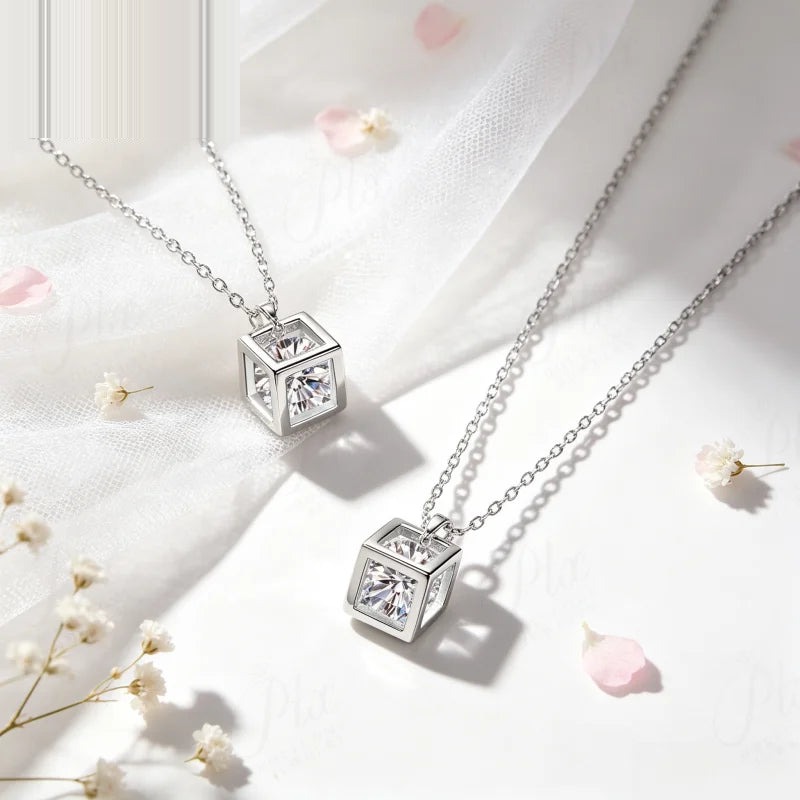
Laser welders moved from luxury equipment to standard shop gear over the last fifteen years, and most buyers now assume any repair or setting can be done cold. That assumption is half right. Laser welding — a pulsed Nd:YAG or fiber laser focused to a 0.2–1.0 mm spot — lets a bench technician fuse metal within a fraction of a millimeter of a mounted stone, without heating the whole shank. But it is not a universal torch replacement, and the mistakes shops make with it are predictable and consistent across factories.
Why laser welding changed repair work
Traditional torch soldering heats a broad zone. A cracked prong next to an already-set sapphire means removing the stone, soldering, re-finishing, and re-setting — a 20–30 minute job. Laser welding delivers energy in pulses of 1–20 ms to a spot smaller than a pinhead. Heat-affected zone is typically under 0.5 mm, so stones rated to 200–250°C can often stay in the seat. For prong and pavé setting, this means a loose pavé stone can be tightened in place without re-cutting the seat. The economic effect is large: prong-tip repairs that used to take 15 minutes now take 90 seconds.
The pulse-energy window that actually works
Setting the laser is less magic than it looks. For 14K yellow gold on a 0.4 mm prong, technicians typically run 3–5 J per pulse at 4–6 ms with a 0.3–0.5 mm spot. Fine silver and sterling silver need slightly higher energy (5–8 J) because silver conducts heat away fast. Platinum sits at the high end, 8–15 J, because of its melting range. Run the pulse too hot and you blow a hole in the prong; too cold and the weld is a cold lap that cracks on the first wear. A filler wire (matching alloy, ~0.2 mm) is almost always added for build-up welds, which is why a welded prong should look slightly proud before final polish. We run three test pulses on scrap of the same alloy before touching a customer piece.
Setup time and cost on the bench
A laser welder is not free to run. Setup includes fitting the right shielding glass, loading the correct alloy filler wire, and dialing the pulse energy on scrap before touching the piece. For a single prong tip, the actual weld takes seconds, but setup and post-weld polishing add up to 5 minutes. For a bench doing 20 repairs a day, that still beats torch work by a wide margin. The economic crossover is around 3–4 repairs per day; below that, a small shop is often better off keeping a torch and only sending laser work out to a partner bench. For production houses doing daily setting and repair, the laser pays for itself inside the first year on reduced rework and faster turnaround.
When laser welding still loses to a torch
Three jobs still want the torch. First, large structural joints (a broken shank wider than ~1.5 mm) need a continuous braze that laser pulses cannot match in strength. Second, soldering on titanium and stainless steel is impractical because the oxide layer cannot be controlled by a micro-spot. Third, any joint that needs flow — where solder must wick into a seam — is a torch job. We use laser for setting, prong tips, bail repairs, and sprue touch-ups; the torch stays out for shank work and for any seam where capillary solder flow is required.
The damage buyers see in photos
The most common QC failures from over-eager laser work are: (1) burned prong tips that look like dark craters after polish, (2) heat-fractured stones from repeated pulses on a tight setting, and (3) discolored rhodium around a repair. Our pre-ship QC checklist specifically flags weld zones under 10x magnification. For plated pieces, a laser repair almost always requires re-plating the affected area — see rhodium plating cadence. Disclosures for repaired or altered pieces under marking law are summarized in the FTC Jewelry Guides.
Can a laser weld a broken ring shank?
A hairline crack near the bezel can be laser-repaired. A clean break across a 2 mm shank should be torch-brazed for structural strength; a laser weld on a load-bearing shank is a warranty claim waiting to happen.
Will laser welding damage my stones?
Most diamond, sapphire, and ruby settings tolerate low-energy pulses. Opal, emerald, and moissanite need shielding — we wet-cotton any stone within 5 mm of a weld zone.
How big is a laser weld spot?
Typical jewelry lasers run 0.2–1.0 mm spot diameter, with a heat-affected zone under 0.5 mm. That is small enough to weld inside a pavé bead without disturbing adjacent stones.
Need setting or repair work that survives daily wear? HOLYCOME uses pulsed fiber lasers in-house and reserves torch work for the structural joints that need it. Send us a run for a quote on OEM setting and repair services.
Sterling silver terminology used in this guide follows the Wikipedia entry on sterling silver.
Frequently Asked Questions
How do I verify a factory before placing a bulk order?
Request a production video, business license, export records and a paid sample run. A factory that accepts a 50-piece test order is usually a real manufacturer.
What payment terms do you offer?
30% T/T deposit with the balance against the bill of lading. This protects both sides on first orders and can move to net terms after a track record.
What is your normal reject rate?
3–5% under 10x loupe inspection for cast and set pieces. Defective units are replaced free in the next shipment.
Where is the factory located?
Wuzhou, Guangxi, China—the core lab-grown and moissanite manufacturing cluster. Shipments go via Guangzhou or Shenzhen ports.


