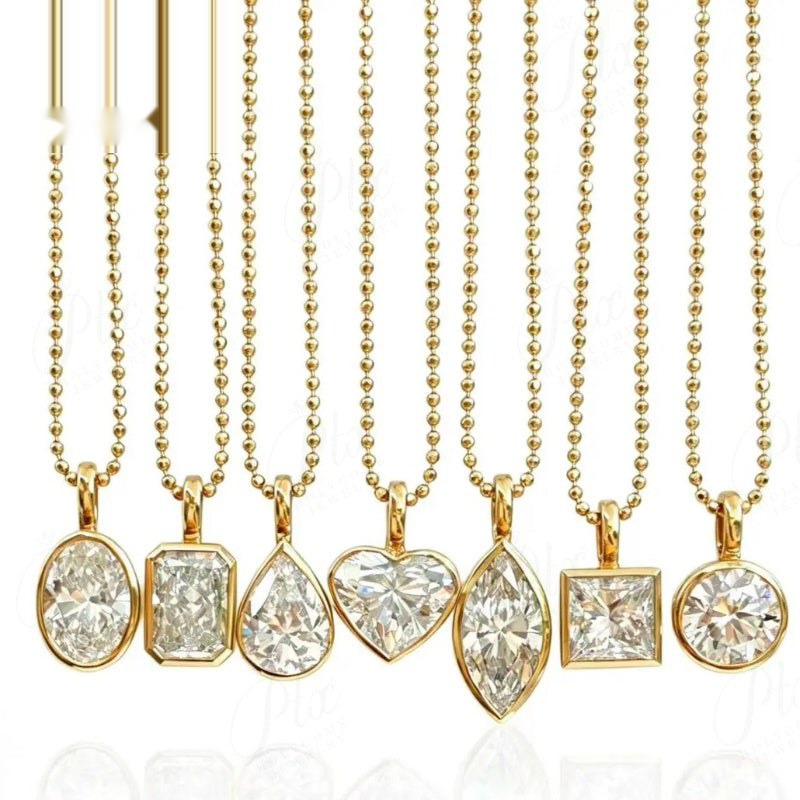
Kunzite is the pale pink-to-violet gem that shows up every few years as "the next tanzanite." It is gorgeous, it can be found in large clean sizes, and it has a price-to-color ratio that makes collectors weak in the knees. It is also one of the easiest gems to ruin if you do not understand how it behaves. We set kunzite regularly, but we set it with very specific instructions for the owner.
What it is
Kunzite is the pink variety of spodumene, a lithium aluminum silicate mined mainly in Afghanistan, Pakistan, Brazil, and California. It was named for George Frederick Kunz, the Tiffany gemologist who first brought it to market in 1902. The pink color comes from manganese in the crystal structure. The finest material is a saturated lavender-pink, almost violet, but much of what is sold is a pale, almost colorless pink that needs a careful eye to appreciate.
Large clean kunzite crystals are common because spodumene grows big. That is why you see 10-carat kunzite pendants at prices that would be unthinkable in ruby or sapphire. Size is not rare in kunzite; color and clarity together are.
The fading problem
Here is the fact most listings leave out. Kunzite color is somewhat photosensitive. Prolonged exposure to direct sunlight can slowly bleach the pink toward a pale, colorless state over years. This is not a defect — it is a known property of the mineral. We have seen 1970s kunzite rings that spent decades on a kitchen windowsill come in almost white. It is also why reputable dealers keep finished kunzite pieces in closed trays, not in lit display windows.
For normal daily wear, this is a slow process. A ring you put on in the morning and take off at night will keep its color for decades. A pendant hung in a sunny breakfast nook will not. Store kunzite in a closed jewelry box, not on a stand, and you will not notice any fading.
Durability: cleavage is real
Kunzite scores 6.5 to 7 on the Mohs scale, which on paper sounds fine. The problem is its perfect prismatic cleavage. A sharp knock in the wrong direction will split the stone cleanly along a plane. It behaves more like topaz than like quartz. For that reason we set kunzite in protective bezels or halos, never in a high-prong solitaire that can catch on a sweater. We also warn customers that kunzite is not a workring stone. It is for dinners, offices, and good weekends, not for hikes or home repairs.
Treatments
Most commercial kunzite is heat-treated or irradiated to deepen pink and remove unwanted greenish or yellowish tones. This is standard, stable, and accepted in the trade — the resulting color is permanent under normal wear. The fading mentioned above is separate; it affects the color itself, not a treatment layer. When you buy kunzite, ask whether it has been treated. The answer will almost always be yes, and that is fine.
The Pala deposits
Much of the early twentieth century's finest kunzite came from the Pala district of San Diego County, California, where spodumene was first identified as a gem material. Californian kunzite tends toward a slightly lavender-leaning pink. Modern material from Afghanistan and Pakistan is often a deeper, more saturated violet-pink. Both are genuine kunzite; the difference is geographic. If you see a vintage American Art Deco kunzite ring, it is almost certainly Pala material, and its color will have paled somewhat if it spent decades in a lit display case.
Cleaning and care
Warm soapy water and a soft cloth. Do not use an ultrasonic cleaner — the vibrations can exploit cleavage cracks. Do not steam. Keep it away from perfume, lotion, and hairspray, which will dull the surface and can seep into any microscopic crack. Put your kunzite piece on after you have finished dressing and take it off before you wash hands, shower, or clean the house. Our notes on chemical exposure apply double here. Store it in its own pouch, away from diamonds and sapphires that can scratch its surface.
Sizing up large kunzite
Because kunzite crystals grow so large, 20-carat and even 50-carat finished stones are not unusual. They look spectacular as pendants, where the cleavage risk is low and the color reads at a distance. A 30-carat kunzite pendant costs a fraction of what a comparably sized pink sapphire would, and it is one of the easiest ways to own a genuinely large colored stone without a collector's budget. We keep a few large kunzite ovals in the shop for exactly this kind of piece.
Who should buy kunzite
Kunzite is for buyers who want a pink stone that is not a pink sapphire and not a morganite. It reads as more violet than morganite and costs less per carat than a comparable pink sapphire. It works beautifully as a pendant or earring center where cleavage risk is low, and it pairs well with both white and rose gold. We set kunzite in bespoke pieces when a customer specifically asks for the pink-violet tone, and we always include the care conversation before the sale. Treat it right and it will stay pink for a lifetime.
The International Gem Society moissanite guide explains how moissanite performs in daily wear compared with diamond.
Authoritative References
For buyers who need to verify the technical and regulatory basis of this guide, the following independent institutions publish authoritative reference data:
- GIA Gem Encyclopedia - independent grading and identification reference for natural and lab-grown gems.
- Wikipedia: Moissanite - peer-reviewed background on moissanite chemistry, optics and history.
Frequently Asked Questions
How do I verify a factory before placing a bulk order?
Request a production video, business license, export records and a paid sample run. A factory that accepts a 50-piece test order is usually a real manufacturer.
What payment terms do you offer?
30% T/T deposit with the balance against the bill of lading. This protects both sides on first orders and can move to net terms after a track record.
What is your normal reject rate?
3–5% under 10x loupe inspection for cast and set pieces. Defective units are replaced free in the next shipment.
Where is the factory located?
Wuzhou, Guangxi, China—the core lab-grown and moissanite manufacturing cluster. Shipments go via Guangzhou or Shenzhen ports.


