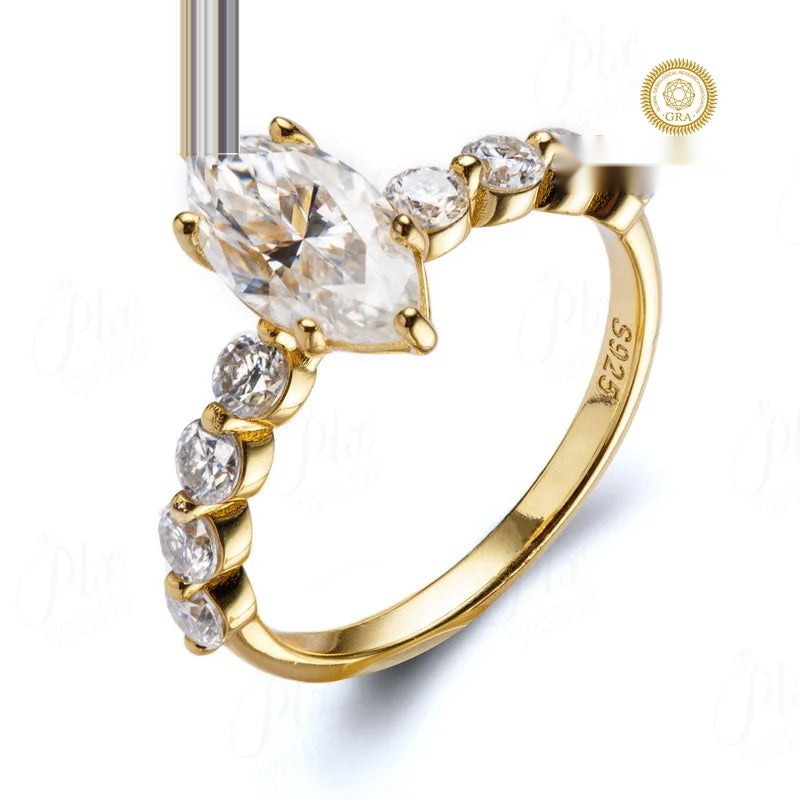
A final inspection at the end of production is better than nothing, but it is the truly weakest possible place to run QC. By the time a finished ring reaches the final inspector, every defect is expensive to fix. Real factories run quality control as stage gates: between casting and finishing, between finishing and setting, and between setting and plating. Buyers who ask only about the final checklist miss the controls that actually matter. A factory with strong stage gates catches most problems before they become rework, and it ships batches that look identical to the approved sample on arrival.
Incoming material check
Before production, the factory verifies the metal alloy with an X-ray fluorescence (XRF) tester, weighs the incoming stones against the order sheet, and confirms that CAD files match the approved spec. A stone that is 0.1ct off or a karat that tests low is caught here, not after setting. Ask whether your supplier runs XRF on every casting batch; shops that skip it are the ones that deliver karat-discrepant pieces months later. The incoming check also confirms that the stones match the order's cut, color, and clarity notes; a single wrong stone in a box of fifty is cheaper to reject at intake than to chase down after setting.
Post-casting inspection
Fresh castings are inspected under magnification for porosity, cold shuts, mis-runs, and sprue-attached flaws. Pieces with defects are either re-cast or flagged for extra finishing labor. Skipping this gate means the finisher spends hours sanding out porosity that should have been scrapped. A factory with a strong post-cast gate re-casts a small percentage of pieces; a factory without one hides defects under polish, and those defects surface as pits after the customer wears the piece for a few months. The post-cast bench should have a microscope and a reject bin; if you cannot see either, the gate is cosmetic.
Pre-setting inspection
Before stones are dropped in, the finished mount is checked for seat size, prong length, wall thickness, and surface finish. A seat cut too small means the setter has to force the stone, which is how chips happen. A seat too large means the stone rocks. This gate is where experienced setters catch design problems before they destroy an expensive stone. A piece that passes pre-setting but fails in setting means the pre-setting inspector did not measure; ask to see the measurement log, not just the pass stamp.
Post-setting inspection
After setting, each stone is pushed with a tweezer to confirm it does not rock, and each prong is checked for tightness and a smooth tip. Stones are checked for chips under magnification. Pieces that pass go to a touch-up polish and ultrasonic clean. This gate catches the majority of field failures: a loose prong that would otherwise ship and back out in the customer's first month of wear. Post-setting inspection is also where cert numbers are matched to stones; a mismatch here means the wrong card goes in the box, which is a very fast way to lose a retail customer's hard-won trust.
Final inspection before packing
The final inspector measures ring size with a stick gauge, checks finish consistency across the batch, verifies engraving legibility, confirms the right cert cards are paired, and inspects plating uniformity. Pieces are then tagged, grouped by SKU, and packed. A final QC log should be available to buyers on request; if a factory can only show you a single "QC passed" stamp, ask which stage gates they actually run. The final inspector should also spot-check at least one piece per batch for scale, not just inspect every piece quickly; the spot check is what catches systemic problems, like a mold that has worn down and softened engraving across a whole run.
Dimensional and symmetry checks
Beyond stone security, final QC includes a set of dimensional checks that buyers rarely see: ring width at the top and bottom of the shank, band thickness, stone seat alignment, and symmetry of the design. A ring that looks perfectly fine at arm's length can have a lopsided setting when measured, and that asymmetry is what separates a factory-grade piece from a hand-finished boutique piece. Dimensional gauges and micrometers are used on the first piece of each batch, and spot-checked through the run. Buyers ordering repeat SKUs should ask whether the factory keeps a master gauge from the approved sample; without it, each new production run drifts a little further from the original.
What buyers should request
Ask for photos at each stage gate for your very first order, and for the XRF report on the metal batch. A factory confident in its QC will share these without hesitation; a factory that hesitates usually has weak gates. You can read more about how we run stage gates on our manufacturing guides.
Carat weight conventions cited here follow the Wikipedia entry on carat weight.
Frequently Asked Questions
How do I verify a factory before placing a bulk order?
Request a production video, business license, export records and a paid sample run. A factory that accepts a 50-piece test order is usually a real manufacturer.
What payment terms do you offer?
30% T/T deposit with the balance against the bill of lading. This protects both sides on first orders and can move to net terms after a track record.
What is your normal reject rate?
3–5% under 10x loupe inspection for cast and set pieces. Defective units are replaced free in the next shipment.
Where is the factory located?
Wuzhou, Guangxi, China—the core lab-grown and moissanite manufacturing cluster. Shipments go via Guangzhou or Shenzhen ports.


