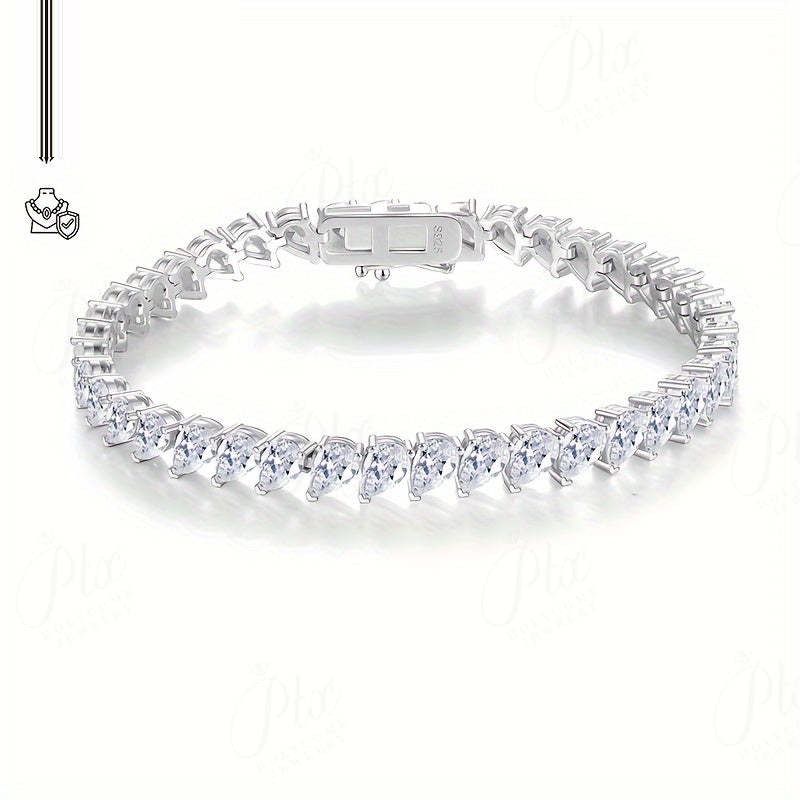
Two rings can come out of the same mold and look like completely different products depending on how the surface is finished. The finish is not a cosmetic afterthought; it changes how light reads off the metal, how fingerprints show up, how scratches age, and what the piece costs to repair later. Buyers selecting a finish for a line are choosing a surface behavior, not just a look.
High polish
High polish is the mirror finish most customers expect from bridal. It is produced by working through a sequence of compounds—rouge on a cotton buff, then a final soft touch—until the surface reflects like a mirror. It reads premium, but it is the highest-maintenance finish: every micro-scratch shows, and a daily-wear ring will start to look lived-in within months. High polish is the default for solitaires and solitaires-with-halos because the stone needs the surrounding metal to disappear visually.
Brushed and satin
Brushed finish is a directional texture laid down with a steel brush or a fine abrasive belt. Satin is a softer, finer version, usually produced with a wet nylon abrasive wheel. Both hide micro-scratches far better than high polish, which is why they dominate men's bands and stackable women's bands. The tradeoff is that a brushed surface is harder to repair: a scratch that would polish out on a high-polish ring has to be re-brushed in the exact same direction to disappear.
Direction matters. A brushed band is brushed in one consistent direction around the circumference; a re-brush that goes the wrong way leaves a visible patch. This is why satin and brushed finishes are priced slightly higher in repair than high polish.
Hammered and textured
Hammered finish is produced by striking the band with a textured hammer—round, square, or diamond-faced—before final cleanup. It is a hand operation, which means no two bands come out identical. That is the selling point. Hammered bands hide scratches extremely well because the surface is already irregular, but the texture traps soap and lotion, which is why these pieces need more frequent ultrasonic cleaning.
Other textures include sandblasted (a matte, pitted surface from fine media), eggshell (a softer matte), and engraved or milled patterns. Each has a different wear rate and a different cleaning requirement.
Combination finishes
Most modern production combines finishes: a high-polish center rail on a brushed band, a satin shank with a polished bezel around the stone. Combination finishes are where finish cost climbs, because the bench has to mask one surface while working the other. A well-executed combination finish reads as a premium product; a poorly masked one shows a blurred line between the two textures that catches the eye at arm's length.
How finish affects repair and care
A high-polish ring is the easiest to service: a scratch polishes out invisibly. A brushed or satin ring has to be re-textured in the same direction, which is a slower bench operation and is priced accordingly. A hammered or sandblasted finish is the hardest to repair, because matching the texture by hand is a skill rather than a quick buff. When a customer brings in a five-year-old hammered band for a re-polish, the honest answer is that it cannot be "polished" back to new—it can be re-textured, which is a different service and a different price. Setting that expectation up front saves an argument later.
Choosing a finish for a line
The decision comes down to wearer profile. Daily-wear bridal that will be worn through workouts and dishwashing should lean brushed or satin; it ages better. Statement pieces that live on a night-out hand can take high polish, because the surface stays pristine longer. Men's bands are almost always brushed, hammered, or sandblasted for exactly that durability reason.
Whatever the finish, it is applied after all mechanical work—stone setting, soldering, sizing—is complete, and it is the step before rhodium plating on white gold. The order matters; finishing a piece before setting means the setter will scratch it, and the shop will do the finish twice. For buyers working through our manufacturing guides, the finish spec is one of the last lines on the order sheet, but it is one of the first things a customer notices when the ring comes out of the box.
Unit price reflects finish complexity. A plain high-polish band is the cheapest finish in the shop. A satin-and-polish combination carries a premium for the masking step. A hand-hammered finish is the slowest of all because it is done one blow at a time, and the price reflects the bench hours. When a customer asks why two bands of the same metal and weight have a 20 percent price gap, the answer is almost always on the finish line of the work order, not on the metal itself. Ordering samples of each finish before committing to a run is a low-cost way to compare how the surfaces read on a real hand.
The International Gem Society moissanite guide explains how moissanite performs in daily wear compared with diamond.
Authoritative References
For buyers who need to verify the technical and regulatory basis of this guide, the following independent institutions publish authoritative reference data:
- FTC Advertising FAQs - U.S. guidance on truthful marketing and disclosure.
- Wikipedia: E-commerce - online retail and marketplace background.
Frequently Asked Questions
How do I verify a factory before placing a bulk order?
Request a production video, business license, export records and a paid sample run. A factory that accepts a 50-piece test order is usually a real manufacturer.
What payment terms do you offer?
30% T/T deposit with the balance against the bill of lading. This protects both sides on first orders and can move to net terms after a track record.
What is your normal reject rate?
3–5% under 10x loupe inspection for cast and set pieces. Defective units are replaced free in the next shipment.
Where is the factory located?
Wuzhou, Guangxi, China—the core lab-grown and moissanite manufacturing cluster. Shipments go via Guangzhou or Shenzhen ports.


