Most jewelry care advice is about chemicals, pools, and storage. The environment that quietly damages more rings in our repair queue than any other is the gym. Clients do not realize they are doing anything wrong: they throw a gym bag over their shoulder, grip a barbell, hold a plank, and their ring is pressed, scraped, and torqued the whole time. By the time the stone feels loose, a prong has already been worn thin.

Sweat is not just water
Sweat is salty, and salt is mildly corrosive to the metals around prongs and in the inside of a band. A single workout will not hurt a thing. Twenty years of salt sitting in the small crevices of a setting will. Over time, body chemistry also affects plating: rhodium on white gold wears faster against sweaty skin, and silver can tarnish quicker during heavy training seasons. None of this is dramatic, but it adds up.
The real enemy is impact and abrasion
The bigger issue is mechanical. Consider a few common gym moments:
- Barbells and dumbbells: the knurled metal bar presses directly into the top of your ring band. Over repeated lifts, it flattens the band and can bend prongs sideways.
- Push-ups and planks: your whole body weight pushes the face of the ring into the floor or a mat. A proud setting head takes the load, and a thin prong can fold.
- Kettlebell swings and ropes: catching a cord or a handle on a ring is how stones get knocked out, not just loosened.
- Yoga and Pilates: mat grip, wrist work, and downward dog put the ring face-down on surfaces for minutes at a time.
Diamond is hard enough to resist scratching, but prongs are soft metal bent over it. The stone never wears; the prong that holds it does.
The safest rule
We give clients one simple rule: take rings off before lifting, gripping, or placing hands flat on surfaces. Leave the ring in a dedicated small pouch in your gym bag, not loosely in a pocket where it can fall out through a hole, and not on a public locker-room counter. Earrings and bracelets are usually fine for cardio and light classes, but remove dangling earrings for anything involving hair ties, towels, or barbells. A thin chain around your neck under a hoodie can catch on equipment, so either tuck it fully away or leave it at home.
What you can safely leave on
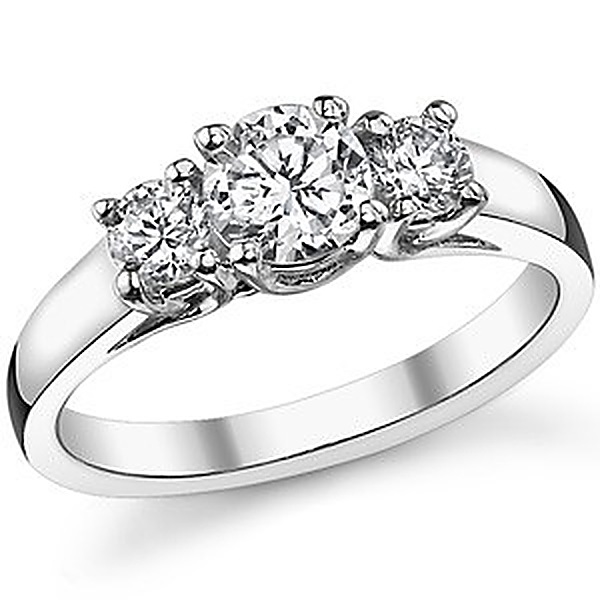
If you train hard and refuse to take your ring off, choose the right ring for the job. A smooth, plain wedding band without raised settings is the most gym-friendly piece you own: it has no prongs to bend, no stones to knock. A low-profile bezel-set ring is the next best thing, because the metal rim protects the stone. What you do not want to wear for heavy lifting is a high six-prong solitaire, a pave band, or a ring with tall, pointy details. Our guide to active-lifestyle jewelry covers the same idea for clients who cycle, hike, or garden.
What to inspect after a heavy season
If you have been lifting regularly for months, look at your ring under a bright light once a month. Run a piece of floss gently across the top of each stone. If the floss catches on a prong tip, that prong is bent or worn. If the stone wiggles at all, stop wearing it until we check it. A quick prong check at the bench takes minutes; a missing diamond costs far more. The gym is not a reason to stop wearing your ring. It is a reason to be intentional about when it goes on and off, the same way you would not run in leather shoes.
What about other kinds of exercise?
The gym rule applies beyond lifting. Rock climbing, cycling, and rowing all put abrasive pressure on rings and bracelets. Swimming in a pool is less about the ring and more about the chlorine, which we cover in our guide to pool and hot-tub care; the main gym-specific risk is mechanical. Even a casual yoga class can press a proud setting into a mat for minutes at a time. If you cannot bring yourself to remove rings, a thin, smooth wedding band without stones is the compromise we recommend most often.
A quick gym-bag checklist
- A small soft pouch or zip bag for rings and earrings, kept in a zipped inner pocket.
- A quick glance in the mirror before you leave the locker room to confirm the ring came off with you.
- A once-a-month check of prongs under a bright light, especially during heavy training blocks.
The whole point is that your ring should outlast your gym membership, not the other way around. A thirty-second removal habit is the cheapest jewelry insurance you will ever buy.
The Wikipedia article on rhodium explains why rhodium plating is applied to white gold and silver jewellery.
Related reading: Travel Jewelry Care: Keeping Pieces Safe on the Road, Jewelry Care for Active Lifestyles: Durability and Maintenance, Seasonal Jewelry Care: Adapting to Weather Changes.
Frequently Asked Questions
What care instructions should I give end customers?
Remove jewelry before swimming, cleaning or applying perfume. Store dry in a sealed bag. Clean with mild soap and a soft brush, then dry fully.
How often does rhodium plating need renewal?
Every 12–18 months under daily wear. Offer a re-plating service to your customers to build repeat visits.
Does chlorine damage sterling silver?
Yes. Chlorine and saltwater accelerate tarnish and can pit the surface. Rinse and dry immediately after any contact.
What causes green skin marks?
Copper or nickel in the base alloy reacting with sweat. Switch to 316L, titanium or sterling, and specify nickel-free plating.