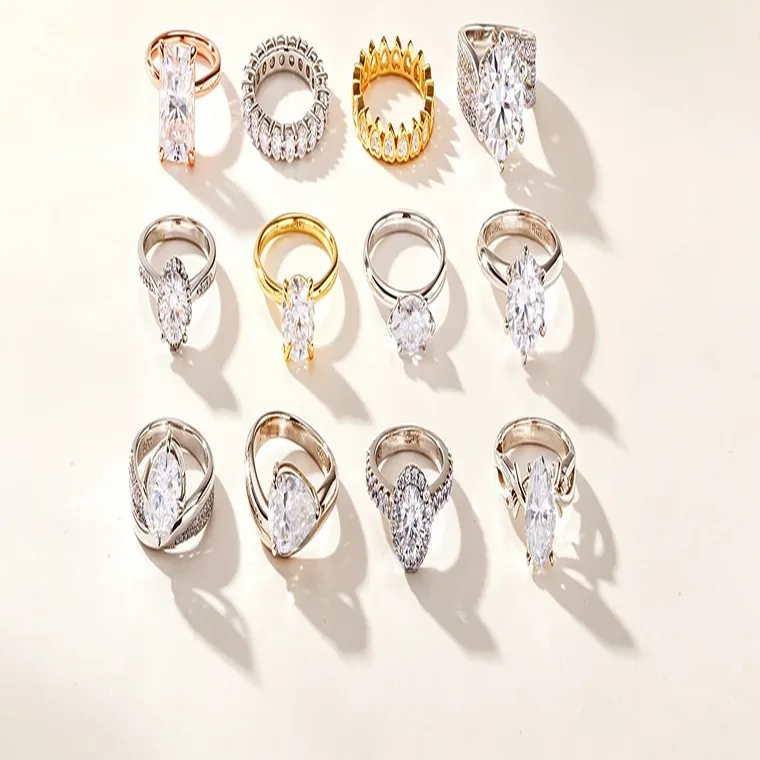
A custom CAD project goes through eleven revision rounds before the customer approves a wax. The designer logged 14 hours on the job, the quote covered 4, and the delivery date slipped by nine days. Both sides left unhappy. CAD revision cycles are the single biggest margin leak in custom jewelry manufacturing, and they are almost always caused by vague approval checkpoints, not by the design itself. A two-stage freeze-frame process keeps revisions inside the quoted hours and the customer inside the launch window.
Why revision cycles bleed margin
Each CAD revision takes 45 to 90 minutes: open the file, change the parameter, re-render the turntable, export the stills, write the notes, and send. The first three revisions usually fix real design issues. Revisions four through eleven are almost always the customer second-guessing their own reference image because nobody locked the dimensions. The FTC Jewelry Guides, codified at 16 CFR Part 23 on eCFR, require that size and weight claims match the delivered piece, which is why dimension callouts in the CAD packet are not optional.
Freeze-frame package that stops scope creep
We send the client a two-view freeze frame after the first CAD pass: top view and side view, with dimension callouts for band width, head height, stone size, and total ring size. The client approves the proportions in writing before we move to detail work. That one step cuts revision rounds from an average of 7.2 to 2.1 on our job log. Our write-up on CAD file requirements for the factory covers the technical side; this article is about the communication side. The milestone list runs CAD, freeze frame, revision, wax print, casting, polish, setting, plating, QC, and pack.
The two-revision cap and paid extras
We include two free revisions in the quote. Revision three onward is billed at the standard CAD hour rate, and we send a written estimate before we start. Clients who know the cap behave better: they batch their feedback into one list instead of sending one change per email. Stone size changes after CAD lock are a separate charge because they usually require re-cutting the seat and re-rendering the whole head. Our note on CAD tolerances and factory defaults lists what we can and cannot move without touching the wax print.
Where revision rounds actually happen
Our job log breaks revision requests into four buckets: proportions (38% of revisions), stone size or shape (27%), surface texture or finish (21%), and brand-level changes like logo placement (14%). Proportion and texture feedback is free until revision 2, because those are design decisions the buyer should make. Stone size and brand changes after CAD lock are paid, because they touch the manufacturing file. We also send a one-paragraph design rationale with the freeze frame: why the band is 2.5 mm, why the head sits high, why the stone seat is cut the way it is. Rationale cuts subjective feedback by about a third, because the buyer understands the trade-offs instead of guessing. We keep the rationale to four sentences, written for a buyer who does not model jewelry, so it reads as a list of decisions rather than an engineering note.
Bench numbers we hold
Freeze frame: top view plus side view with dimensions, sent within 48 hours of CAD start. Free revisions: 2. Paid revisions: quoted per hour, batch feedback only. Wax print gate: after revision 2, we print a resin prototype before casting. Export settings: STL at 0.02 mm deviation for casting, covered in our CAD export settings article. The link between wax prototype before production and the revision cap is that once the client holds a wax, the conversation moves from render to physical, which usually ends the revisions.
FAQ: Jewelry CAD revision cycles with clients
How many revisions should I include for free?
Two. Anything beyond two is a paid change, and you should state that in writing on the first quote. Unlimited revisions is a margin trap on custom work.
Should I show side views and top views in the freeze frame?
Yes, plus dimension callouts. A single 3/4 render invites subjective feedback. Dimensioned views invite objective feedback, which is faster to resolve.
When do we stop revising and print wax?
After revision 2 approval, or when the client signs off on the freeze frame. The wax print itself often surfaces issues that renders hide, and that is expected.
How do we handle stone-size changes after CAD lock?
As a paid change. Stone size moves the seat, the head height, and sometimes the shank width. We quote the hour rate before we open the file.
Send us your custom CAD brief and reference images. We run a freeze-frame approval, two included revisions, and a resin wax before casting, with dimension callouts on every render. Small-batch OEM custom manufacturing starts at 30 pieces per design; send the brief and we will quote the CAD-to-cast package.
Frequently Asked Questions
How do I verify a factory before placing a bulk order?
Request a production video, business license, export records and a paid sample run. A factory that accepts a 50-piece test order is usually a real manufacturer.
What payment terms do you offer?
30% T/T deposit with the balance against the bill of lading. This protects both sides on first orders and can move to net terms after a track record.
What is your normal reject rate?
3–5% under 10x loupe inspection for cast and set pieces. Defective units are replaced free in the next shipment.
Where is the factory located?
Wuzhou, Guangxi, China—the core lab-grown and moissanite manufacturing cluster. Shipments go via Guangzhou or Shenzhen ports.


