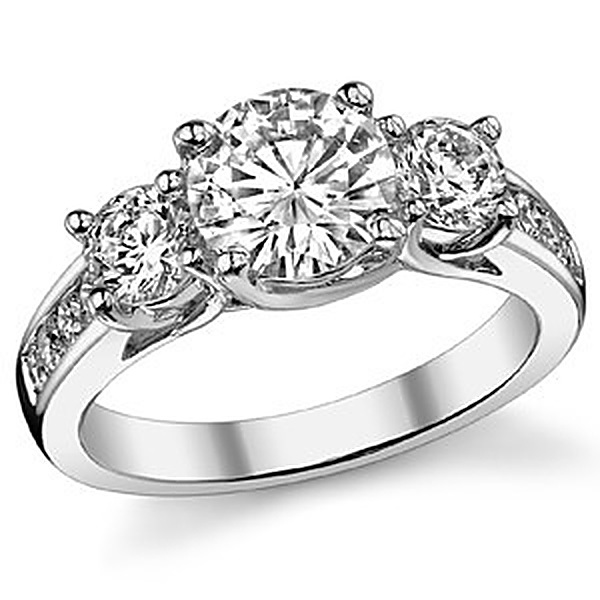
If you've ever watched a master jeweler at work, you've seen a bench that looks, to an outsider, like a controlled explosion. There are small metal picks, odd-shaped wooden sticks, tiny flame nozzles, and hundreds of little drawers that each hold something the size of a grain of rice. Most of those tools have been on the bench for decades, and most of them predate the digital design we do on the computer screen next to them.
We do plenty of CAD and 3D printing in our shop, but the hand skills still run on physical tools. Here are the ones our jewelers reach for every day, and what each one is actually for.
The jeweler's saw
A jeweler's saw (also called a piercing saw) is a small frame that holds a blade with 10 to 16 teeth per centimeter. It's the tool we use to cut shapes out of sheet metal, to open a ring shank for resizing, to trim a casting sprue, and to free a finished piece from its wax pattern gate. The blades are ridiculously thin — you can snap one with your thumbnail — and we go through them constantly. A skilled jeweler can follow a line drawn on metal with the saw to within a tenth of a millimeter, which is why we still use it instead of laser cutting for the tightest shapes.
Files, and more files
A jeweler's bench has dozens of files in different shapes: flat, round, half-round, triangular, square, and knife-edge. Each one is for a specific curve. We start with a coarse-cut file to remove big amounts of metal, then move through medium-cut, then fine-cut, then a "dead-smooth" file that leaves almost no scratch. The progression is the same whether we're shaping a ring shank or smoothing a casting sprue.
There's a reason a master jeweler's file collection is considered their personal kit. Files wear out, they develop a "sweet spot" after months of use, and each jeweler has their own favorites. When one of our bench jewelers retires, their file roll is one of the hardest things to replace.
The torch
We use two torch types. A Smith little torch runs on a mixture of air and natural gas, producing a soft, broad flame for heating a whole ring shank during soldering. A micro torch (often a butane or oxygen-piped pencil torch) gives a pinpoint flame for heating a single prong or a tiny solder joint. We never use a big flame when a small one will do; overheating a piece is the fastest way to discolor metal, melt a setting, or ruin an adjacent stone.
Soldering is the bench's signature skill. We cover the technique separately, but the short version is that the torch is just the heat source. The real skill is reading the heat — knowing when the flux is melting, when the solder is about to flow, and when to pull the flame before the joint runs.
Mandrels and hammers
A ring mandrel is a tapered steel rod marked with ring sizes. We slide a ring onto it to measure size, and we use a rawhide or plastic mallet to tap a ring into roundness after resizing. Rawhide is the hammer of choice because it doesn't mar the metal. Steel hammers are reserved for heavy forming, and even then we use them only on annealing bench blocks, not on finished pieces.
Pliers: the bench's hand tools
We keep a dozen pairs of pliers on the bench, each for a different job. Flat-nose pliers for bending sheet. Round-nose pliers for forming wire into rings and loops. Chain-nose pliers with tapered tips for getting into tight spaces. Half-round pliers for forming curves without marring the outer surface. We also have "ring bending pliers," which are custom-shaped to form a ring shank around a mandrel without leaving marks.
The rule on pliers: never use a pair on metal that's softer than the pliers, or you'll leave teeth marks. Most of our forming pliers have polished jaws for that reason.
Burs and flex shaft
A flex shaft is a flexible rotary tool driven by a motor under the bench. It holds burs — small cutting wheels in every shape — for removing material fast, carving design details, opening prongs, and setting stones. We use burs with names like "bud," "cone," "flame," and "round," each matched to a specific job. The flex shaft is the closest thing on the bench to a power tool, but the skill is entirely in the hand guiding it: a bur can ruin a finished setting in a fraction of a second if it wanders.
The polishing station
At the end of every piece, we move to the polishing bench: a motor-driven spindle with muslin and cotton buffs, charged with polishing compound (rouge for gold, white diamond compound for platinum). We start with a coarse compound to remove file marks, move to a medium compound, and finish with a high-luster rouge. The whole process is done by hand, holding the piece against the spinning wheel at just the right angle — too much pressure and you'll round over a sharp corner; too little and you won't get the shine. We polish every piece in-house because outsourcing this step loses the consistency our clients expect.
Why hand tools still matter
CAD and 3D printing have changed a lot of what we do. We can prototype a design in an afternoon that would have taken a week of hand fabrication twenty years ago. But the final 10% — fitting a stone, smoothing a solder joint, bringing up a finish, correcting a small casting defect — still runs on hand tools and hand judgment. A machine can cut a perfect bezel seat; it can't tell when a prong is about to be a hair too tight on a particular stone. That's the part that stays on the bench, in human hands, and it's why our jewelers are still learning new things after thirty years at the bench.
For the legal text behind our material compliance, see the REACH Regulation (EC) No 1907/2006 on EUR-Lex.
Frequently Asked Questions
How do I verify a factory before placing a bulk order?
Request a production video, business license, export records and a paid sample run. A factory that accepts a 50-piece test order is usually a real manufacturer.
What payment terms do you offer?
30% T/T deposit with the balance against the bill of lading. This protects both sides on first orders and can move to net terms after a track record.
What is your normal reject rate?
3–5% under 10x loupe inspection for cast and set pieces. Defective units are replaced free in the next shipment.
Where is the factory located?
Wuzhou, Guangxi, China—the core lab-grown and moissanite manufacturing cluster. Shipments go via Guangzhou or Shenzhen ports.


