Inside the Atelier: Wholesale Supplier Audit, Step by Step
Words and bench work · HOLYCOME workshop
I have sat on both sides of a supplier audit. Twelve years ago I was the guy hiding a messy polishing bench from a visiting buyer. Now I am the one opening cabinets and handing over certificates. So when a US or EU buyer asks me how to vet a factory, I tell them what I would check if I were spending my own money.
This is not a piece about picking a supplier in general. It is about the audit itself: the paper you should demand, the certificates you should read line by line, and the walk-through that exposes whether the workshop is real.
01Start with the documents, not the samples
Most buyers do it backwards. They order samples first, fall in love with the stone, then ask for paperwork. By then you have already lost your leverage.
Ask for the business license and the export registration before anything else. A real factory in Wuzhou or Shenzhen will have both, and the registered scope should mention jewelry manufacturing, not just trading. Cross-check the company name against the bank account name on the proforma invoice. If the invoice says one entity and the bank says another, stop and ask why.
- Business license with manufacturing scope
- Export registration or customs code
- Bank account name matching the contract party
- Signed quality agreement stating the AQL you accept
- Written MOQ and lead time terms, not verbal promises
Payment terms belong in this stack too. Standard practice is T/T 30% deposit with the balance before shipment, and PayPal for sample orders under a few hundred dollars. Any supplier who wants 100% upfront on a first production run is telling you something about their cash flow.
02The certificate question: GRA is not the same as IGI
This is where I see the most confusion, and occasionally the most dishonesty. GRA and IGI are different bodies with different weight.
GRA cards come with moissanite and are a grading reference for color and clarity, issued per stone with a matching number. IGI is a laboratory report, used mainly for lab-grown diamonds and for higher-value pieces where a buyer needs an independent lab document. A supplier who calls a GRA card an IGI certificate is either sloppy or hoping you will not notice.
| Document | What it covers | Who issues it | When to demand it |
|---|---|---|---|
| GRA card | Moissanite color and clarity reference | GRA | Every moissanite order above sample volume |
| IGI report | Lab-grown diamond grading | IGI laboratory | Lab-grown diamond goods, higher ticket |
| Metal assay | 925 silver purity | Third-party assay lab | Any silver program, once per alloy batch |
| Nickel release test | Skin contact compliance | Accredited test house | EU shipments, before first order |
Ask for the certificate numbers in advance and verify a handful on the issuer's own lookup tool. Do not accept a photo of a card; ask for the physical card to ship with the goods so your customer can scan it.
03What a facility check actually looks like
You do not need to fly to China to audit a facility, though it helps. A live video walk-through with the camera pointed where you choose will separate factories from offices faster than any brochure.
Ask them to show the stone intake area first. A working factory has a locked intake drawer, a scale, and a logbook where every parcel is weighed in and out. If the person on camera cannot tell you where incoming moissanite is logged, you are talking to a trading company.
The three stations I would want to see on camera
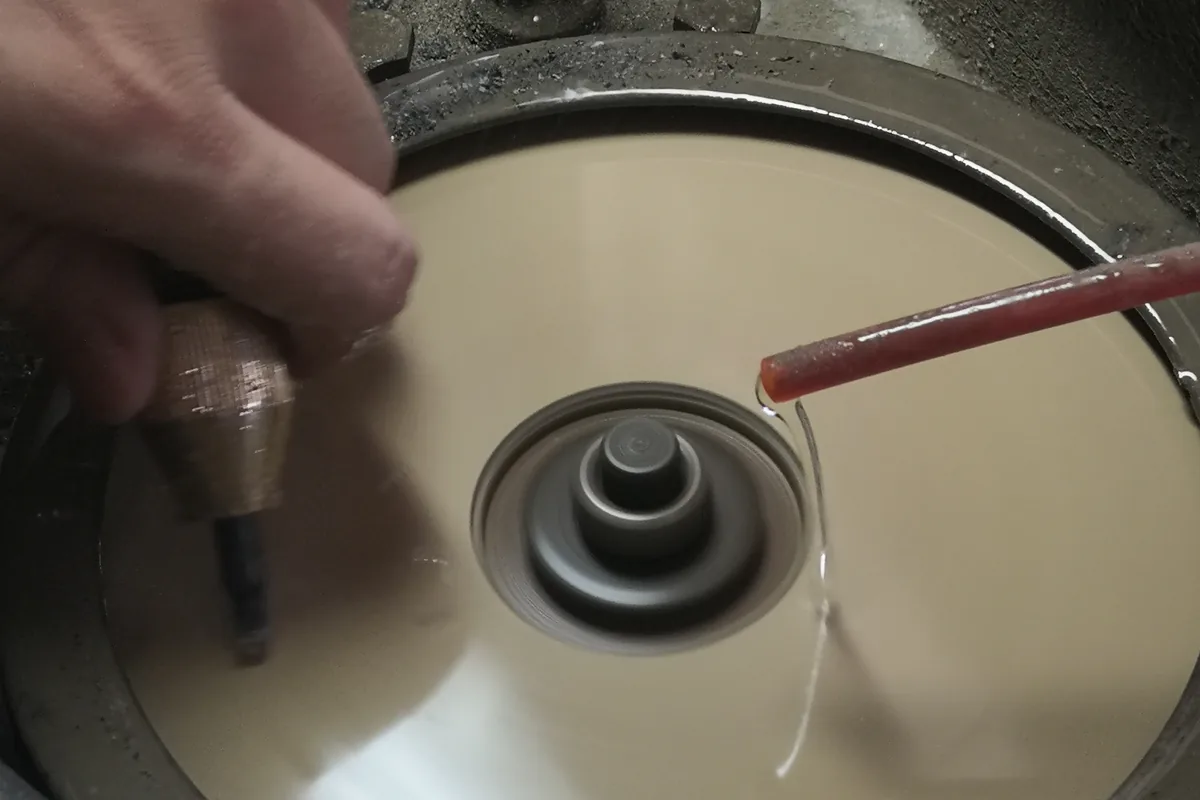
First, the setting bench. Look at how many benches are occupied and whether the tools look used. Second, the polishing room, which should be dusty and loud. Third, the final inspection table, where stones are checked under loupe and light before packing.
Ask about the QC stages out loud and listen for specifics. Ours run three: an incoming stone check against the ordered grade, an in-process check after setting and before polishing, and a pre-ship inspection using AQL sampling on the finished cartons. A supplier who says "we check everything" has no system.
If a factory cannot describe its own rejection rate, it is not measuring quality. Ask what percentage of stones get sent back to the cutter each month.
Finally, ask to see the packing area and the shipping labels from the last week. Real factories ship constantly, and the label stack tells you whether they serve trade buyers or only sample requests.
04Reading the audit for signs of a middleman
Trading companies are not criminals, but you pay for the layer. The tell is usually speed and specificity. A middleman quotes fast because they are guessing, and goes quiet when you ask about alloy batches or stone yield.
Ask three questions and note the delay before the answer. Which alloy supplier do they use for 925 silver? What is their monthly stone rejection rate? Can they show the CAD file for a custom mount within 48 hours? A factory answers in minutes because the answers live in the building.
- Vague answers on alloy or stone sourcing
- Quotes that change when you add a second SKU
- No named QC contact, only a sales rep
- Refusal to put AQL terms in writing
- Sample photos that match other suppliers' catalogs
One more check: ask for the last two shipping documents to the US or EU. A genuine exporter will have DDP lanes running, typically 5-8 days door to door, and can show you the paperwork trail.
05Where our numbers come from
Buyers often ask why our cost, speed and yield run roughly 20% better than typical trading companies. The reason is boring: we cut, set and polish in-house, so there is no margin stacked on margin and no waiting for a third party to confirm a stone grade.
That shows up in the audit. Custom MOQ is 30 pcs because we tool the mold ourselves; stock items ship from 1 pc. Production runs 12-18 days because the queue is ours to schedule. Deposit terms stay at T/T 30% because we are not financing a middleman's purchase order.
06Frequently Asked Questions
What is your MOQ for a first audit order?
Stock moissanite and silver pieces start at 1 pc, which is enough to run your own inspection. Custom designs need 30 pcs per SKU because a new mold has to be cut. Sample orders are paid by PayPal, production by T/T 30% deposit.
How long from deposit to dispatch?
Production takes 12-18 days for most orders, and DDP delivery adds 5-8 days to the US or EU. Certificates are issued during the pre-ship QC stage, so GRA cards travel with the goods rather than arriving later.
How is price quoted, and does the certificate change it?
Price is quoted per piece, based on metal weight, stone size and grade, and setting complexity, with the GRA card included for moissanite. IGI reports on lab-grown diamond goods are quoted as a line item because the lab charges per stone.
If you want to run this audit against a real factory, send your spec sheet and target quantity to service@holycome.com or message WhatsApp +86 133 7744 7107. We will return a quote, the certificate list for your program, and a video walk-through of the stations above so you can check the floor before you commit a deposit.
