Inside the Atelier Wholesale: CAD to Sample Approval
Words and bench work · HOLYCOME workshop
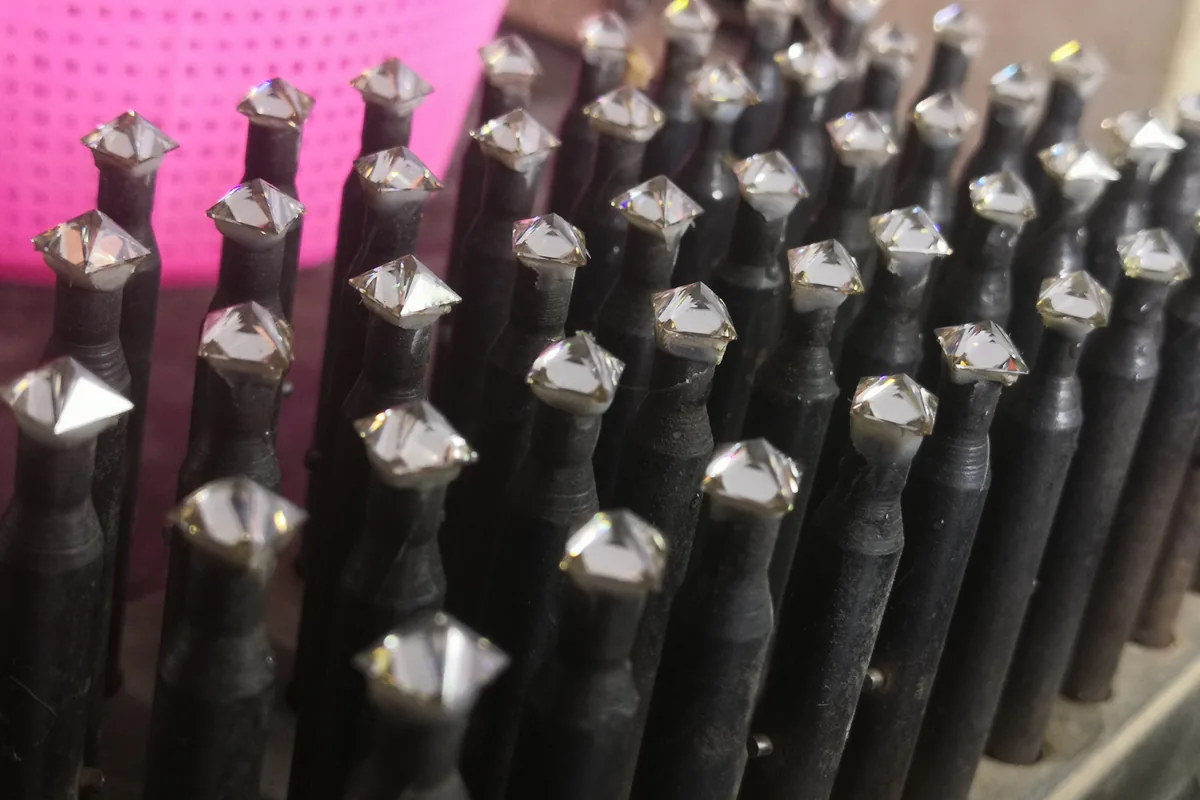
01The order that taught me to slow down at CAD
Two years back a buyer in Antwerp sent us a pendant drawing on a napkin photo. Beautiful thing. We quoted it, tooled it, and shipped a sample in fourteen days. She opened the box and the bail sat two millimetres too low. On a sketch nobody notices. On a neck it reads as wrong.
That rework cost us a week and cost her a launch date. Since then our atelier treats the CAD stage as a gate, not a formality. This piece walks you through the custom and OEM path as it actually runs here, in order, with the places where money and calendar time get lost.
02What lands on my desk when a custom request arrives
Every OEM job starts as a packet: reference images, metal choice, stone spec, target retail price, and the quantity you expect to reorder. The last one matters more than buyers think. A design that casts cleanly at thirty pieces per size is not always the design you sketched for a single hero sample.
We ask for these before quoting:
- Stone type and size range, moissanite or lab-grown diamond, with color and clarity targets
- Metal: 925 silver, 10K, 14K, 18K, or brass for sampling only
- Ring sizes or chain lengths, plus the size curve you expect to sell
- Any hallmark, engraving, or packaging requirement for the destination market
- Your in-hand date, not your ship date
Stock items move at one piece minimum. Custom work starts at thirty pieces per design and size run. Those are our numbers, not an industry rule, and they exist because tooling and setup time have to be spread across something.
03CAD review: the twenty minutes that save a month
Our modeler builds the file and I look at it before you do. Not for aesthetics, for physics. Wall thickness under 0.8 mm on a silver shank will dent in a jewelry box. Prongs spaced for a 5 mm stone will not hold a 6.5 mm one without a seat change. A hidden hinge needs clearance the drawing never shows.
You get the file as a render set plus a short note listing every change we suggest and why. Approve it or push back. This round trip usually takes two to four days, and it is the cheapest place in the whole process to have an argument.
If a buyer and I disagree about a design, I want that disagreement at the CAD screen, not at the AQL table with four hundred pieces already set.
04From approved file to a sample you can hold
Once the CAD is signed, the sequence on our floor runs like this:
| Stage | What happens | Typical days | Who signs off |
|---|---|---|---|
| Wax print and tree | Resin model printed, sprued, invested | 2 to 3 | Atelier lead |
| Casting and clean-up | Metal poured, gates cut, surface prepped | 2 to 4 | Floor QC |
| Stone setting | Stones sorted, seated, tightened | 3 to 5 | Setter and QC |
| Polish and plating | Finish, rhodium if specified | 2 to 3 | Finishing lead |
| Pre-ship check | AQL inspection, photos, paperwork | 1 to 2 | Me |
Add it up and a custom sample lands in twelve to eighteen days including the QC gates. Photographs go to you at the pre-ship stage, front, side, macro on the setting, and a scale shot so you can judge proportion.
05The three QC gates, and what each one actually catches
Gate one: incoming stone check
Every parcel is checked before it touches metal. Moissanite gets a loupe pass for inclusions and a refractive sanity check, lab-grown diamonds get screened, and we log carat weight per lot. A stone that fails here never becomes someone's center stone.
Gate two: in-process inspection
This happens mid-run, not at the end. Setters pull pieces at random for seat depth and prong contact. Castings get checked for porosity at the shank and under the gallery, which is where it always hides. Catching a bad wax tree at piece forty beats catching it at piece four hundred.
Gate three: pre-ship AQL
Final inspection runs to AQL sampling rather than eyeballing the top layer of the tray. Dimensions against the approved CAD, stone security, plating color, clasp function, hallmark position, and packaging. Anything out of spec gets pulled and the lot gets a second look.
Certificates follow the goods: GRA reports for moissanite, IGI for lab-grown diamond where the order calls for it. Those are issued against the finished piece, so the report number matches what your customer receives.
06Why our numbers run about twenty percent tighter
We are the factory, not a middle layer. The CAD modeler, the casting line, the setters, and the QC bench all sit in the same building, which means a question about a prong does not travel through an agent and back. That single fact is where the roughly twenty percent edge in cost, speed, and yield comes from. Rework gets caught at the bench instead of after a container ride, and stone yield stays higher because the person setting the stone is the person who flags the problem.
Payment terms are plain. Thirty percent deposit by T/T to start, balance before shipment. Samples can go on PayPal if that is easier for your first order. Delivery is DDP, five to eight days in transit to most US and EU destinations, duties handled.
07Sample approval, then the bulk run
When the sample arrives, put it on a body or a display, not just under a loupe. Check the bail height, the comfort of the shank inside, the way the stone catches light at arm's length. Send back photos with notes if something is off. We revise once at no tooling charge if the change stays inside the approved CAD envelope.
Signed sample becomes the golden reference. Bulk production is measured against it, and so is the pre-ship AQL. That is the whole point of the exercise: the argument happened early, so the run is boring.
08Frequently Asked Questions
What is the minimum order for a custom design?
Custom and OEM work starts at thirty pieces per design, though stock moissanite and silver pieces ship from one piece. Below thirty, tooling and setup costs push the unit price up sharply, so we quote it honestly rather than hide it.
How long from CAD approval to a sample in my hands?
Production runs twelve to eighteen days after CAD sign-off, and DDP transit adds five to eight days. The CAD review itself takes two to four days depending on how many revisions you want.
How is the price built?
Price is metal weight at the day's rate, plus stone cost by size and grade, plus labor and finishing, plus certificate fees where applicable. Quantity and size run move the labor portion most, so a thirty-piece run and a three-hundred-piece run quote differently.
Send your sketch, reference photo, or CAD file to service@holycome.com or WhatsApp +86 133 7744 7107 and ask for a sample quote. Tell us your target retail price and in-hand date and we will tell you straight whether the design can hit it.
