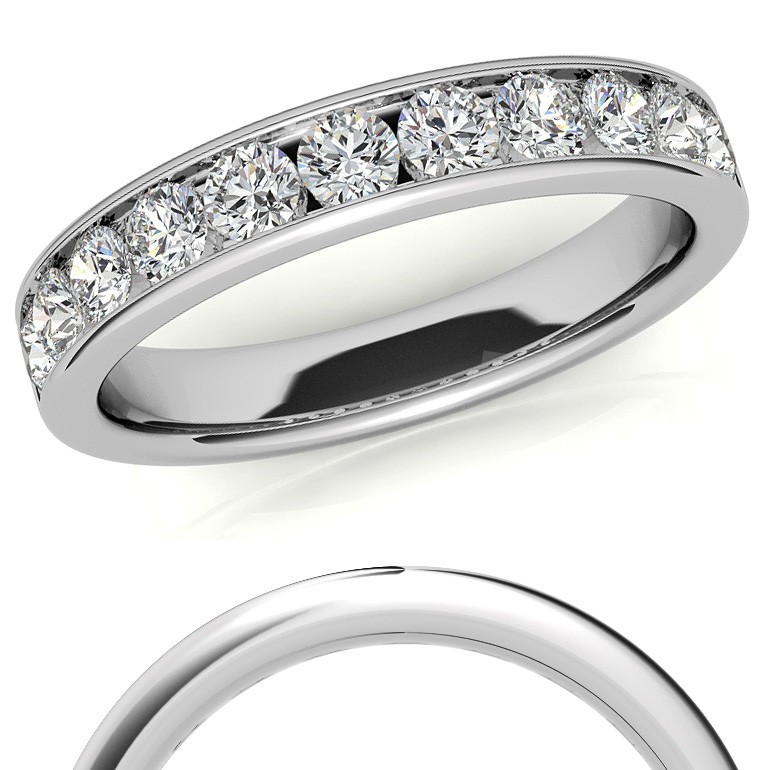
The quality of a finished ring is decided at the bench, but the condition it arrives in is decided by packaging. A perfectly polished solitaire shipped loose in a box will arrive scratched, with a bent prong and a tarnished spot. Wholesale buyers who have never seen a factory pack line often underestimate how much process sits between "QC passed" and "ready to ship."
Step 1: final clean before anything else
No piece goes into packaging dirty. The standard finish line is an ultrasonic clean in warm soapy solution, a steam rinse, and a dry with a lint-free cloth. Stones are checked again under magnification at this stage — polishing compound loves to hide under prongs. For plated pieces, the rhodium or gold flash goes on after the polish and before packaging, because the plating shop is the last wet process.
Step 2: individual protection
Each piece gets its own barrier. The most common setup is a small polyethylene bag with a moisture-absorber strip for silver (anti-tarnish paper or a zapped "anti-tarnish" tab). Rings are often slid into a small cotton or velour pouch first, then bagged. Necklaces and bracelets are laid flat on a cardboard insert or coiled around a small card to prevent knotting. Earrings go on a display card or in a divided tray — loose earring backs vanish in transit.
Step 3: tray packing and separation
Pieces do not touch each other. Factories use foam-lined trays with individual slots, or stacks of divided pulp board. Rings sit in ring sticks or half-moon foam cutouts. Higher-value orders get velvet-wrapped inserts. The principle is simple: metal-on-metal contact during a bumpy ocean voyage is what produces micro-scratches across a finished surface.
Step 4: labeling and paperwork
Each bag carries a small tag: style number, karat, stone type and weight, size, and quantity. This is what lets the receiving buyer check the carton against the PO without unwrapping everything. Inside the outer box sits a packing list, often a certificate copy for certified stones, and a commercial invoice for export. Buyers who receive an order with no internal tags should flag it — it usually means the factory skipped the final reconciliation step.
Step 5: outer carton and cushioning
The inner trays slide into a double-wall export carton. Void space is filled — foam peanuts, bubble wrap, or crumpled kraft — so the trays cannot shift. The carton is taped with reinforced packing tape, sealed along all seams, and labeled with shipping marks, weight, and handling symbols. For high-value air shipments, factories sometimes use tamper-evident security tape and a branded carton.
Tarnish, humidity, and climate control
Silver is the problem child in packaging. Sterling reacts with sulfur in the air, and a shipment crossing an ocean in a sealed container — where humidity and sulfur levels build up — can arrive dull even if it left the floor bright. Responsible silver shipments include anti-tarnish paper strips, VCI (volatile corrosion inhibitor) film, or a silica gel desiccant to keep moisture down. Gold and platinum are not tarnish-sensitive, but their finishes can dull if packed damp. If a piece leaves the ultrasonic wash and is not fully dry before bagging, the trapped water leaves a watermark. A final dry with a hot air blower before bagging is a small step that prevents a surprisingly common complaint.
Air freight versus ocean freight packing differences
The same carton travels differently depending on mode. Air shipments are lighter-handled in transit but subject to rapid pressure and temperature changes; they need to be sealed against moisture. Ocean shipments spend weeks in containers stacked in the sun, where internal temperatures can hit 60°C. That heat softens foam inserts, melts cheap plastic bags, and can cause adhesive labels to fall off. For ocean freight, factories use higher-temperature plastics, reinforced tape, and fewer heat-sensitive inserts. If you are consolidating a sea shipment, ask the factory which packaging spec they use for ocean versus air; it is not the same box.
Red flags in a factory's packing
- Pieces bagged together without separation — expect scratches.
- No anti-tarnish protection on silver — expect dulling by arrival.
- Necklaces loose in the bottom of a box — expect knots.
- No internal tags or packing list — expect reconciliation problems at your end.
- Single-wall carton for an ocean freight shipment — expect crushed corners.
What buyers can specify
You are not stuck with the factory's default pack. A PO can ask for: individual poly bags with SKU tags, anti-tarnish strips on all silver, white jewelry tissue wrapping, custom-branded pouches for retail-ready SKUs, and a specific carton weight for airline pricing. Many factories will do this at no charge if it is written into the order; they will not do it unprompted because it slows the line.
Packaging is also the first impression a boutique customer gets when you resell the piece. For the retail side of the same decision, see our notes on jewelry presentation and care.
For HS classification of jewellery in customs and export documentation, the WCO Harmonized System nomenclature is the authoritative nomenclature.
Authoritative References
For buyers who need to verify the technical and regulatory basis of this guide, the following independent institutions publish authoritative reference data:
- ISO 9001 Quality Management - the international standard for consistent production quality.
- Wikipedia: Jewellery - manufacturing processes, materials and global trade background.
Frequently Asked Questions
How do I verify a factory before placing a bulk order?
Request a production video, business license, export records and a paid sample run. A factory that accepts a 50-piece test order is usually a real manufacturer.
What payment terms do you offer?
30% T/T deposit with the balance against the bill of lading. This protects both sides on first orders and can move to net terms after a track record.
What is your normal reject rate?
3–5% under 10x loupe inspection for cast and set pieces. Defective units are replaced free in the next shipment.
Where is the factory located?
Wuzhou, Guangxi, China—the core lab-grown and moissanite manufacturing cluster. Shipments go via Guangzhou or Shenzhen ports.


