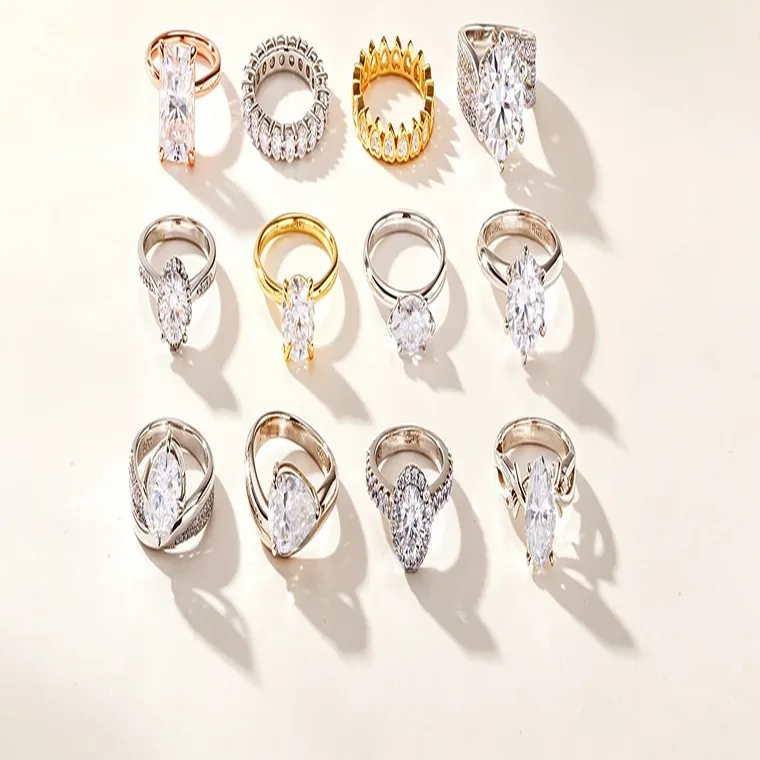
If you have ever held a shard of sunlight in your hand, there is a good chance it was heliodor. The golden-yellow to honey-yellow variety of beryl has been quietly building a following among collectors and designers who want a warm, hard, and surprisingly affordable colored stone. At our bench, heliodor shows up most often as a center stone in yellow or rose gold rings and as long, tapered baguettes in earrings, where its steady color does not compete with finer diamonds.

The name comes from the Greek words for sun and gift, which is a fair description of what a fine stone looks like on the finger. Most of the commercial material on the market today comes from Minas Gerais in Brazil, with older, more saturated golden material from Namibia and trace crystal pockets in the Ukraine and Madagascar. Unlike its cousins emerald and aquamarine, heliodor does not command the same premium, partly because larger clean crystals are more available and partly because the yellow market has historically been led by citrine and yellow sapphire.
Where heliodor sits on the beryl family tree
Beryl is a single mineral species with a habit of changing color depending on trace elements. Emerald gets green from chromium and vanadium, aquamarine gets blue from iron, morganite gets pink from manganese, and heliodor gets its golden yellow from the same ferric iron that colors aquamarine, but in a different oxidation state and concentration. Pure colorless beryl is called goshenite, and we will cover that one separately in another post.
For the bench jeweler, what matters more than the chemistry is the physical package. Heliodor measures 7.5 to 8 on the Mohs scale, which puts it in the same wearable neighborhood as aquamarine and just below ruby and sapphire. It has no cleavage of consequence, meaning it does not split along clean planes the way an emerald or a topaz can, and fractures tend to be sparse in material that is cut for jewelry. That combination makes it a sensible daily-wear center stone.
Color, clarity, and cut
The most desirable heliodor is a clean, even golden yellow with a hint of green rather than brown. Stones that tip toward the brown or straw side are cheaper, and stones that push into a vivid, almost lemon-yellow are rarer and more prized. Clarity is typically eye-clean in commercial sizes, which is one reason the cutters can afford to weight the stone. A well-cut heliodor in the 2 to 5 carat range looks substantial on the hand because beryl has a moderate refractive index around 1.57, so light returns warmly rather than in a sharp diamond-like flash.
Cuts are usually oval, cushion, or emerald-step, since step cuts let the golden color read evenly. Mixed cuts are common on larger stones when the cutter wants both color and brilliance. We tend to favor a medium-deep cut on heliodor to keep the face-up color from looking washed out, especially in lighter 10x8mm oval sizes.
Treatments: heat, and what to ask about
Much of the heliodor on the market has been gently heated to remove a greenish component and bring out a cleaner yellow. Heat treatment in beryl is stable, routine, and not considered a defect, but a responsible seller should still disclose it. Untreated, naturally golden heliodor exists and carries a modest premium, but most buyers will not see a meaningful difference in a finished piece.
Iradiation is occasionally used on other beryls to produce pink or green tones, but it is not a common practice on commercial golden material. If a dealer is advertising "untreated golden beryl," ask for a lab report in writing rather than relying on a verbal claim.
Wearing and caring for heliodor
Because heliodor is hard and tough, it takes to prong, bezel, and channel setting without drama. We prefer a bezel or a tight four-prong on rings that see daily wear, simply because the stone is not cheap to replace if a prong catches and the stone spins. Ultrasonic cleaning is generally safe on clean, untreated material, but we pull back on the steam cleaner and skip the ultrasonic on any heliodor that has visible fractures or that we cannot verify treatment history on.
At home, warm water, a drop of mild dish soap, and a soft brush under the table will take off the skin oils and lotions that dull the golden surface. Heliodor does not fade in light the way some colored stones do, but prolonged exposure to harsh chemicals, chlorine, and perfumes will eventually cloud the polish. Store it away from harder stones like sapphire and diamond so the facet edges do not get nicked.
How heliodor compares in a buying decision
If you are choosing between a yellow sapphire, a citrine, and a heliodor for a custom ring, the tradeoffs are straightforward. Yellow sapphire is the hardest and most durable, but it is also the most expensive and can read as too electric in lighter shades. Citrine is the cheapest but is softer (7 on Mohs) and often looks too glassy. Heliodor sits in the middle: hard enough for daily wear, warm in color, and far less expensive than a comparable yellow sapphire. For a center stone in the 1.5 to 3 carat range, it is one of the more sensible values in colored gem jewelry, and it photographs beautifully in warm-toned metals.
Whether you are commissioning a custom piece or picking a ready-made ring, ask the setter whether the stone has been heated, what the source is, and how they plan to secure it. Those three questions will tell you more about the piece than any marketing sheet will. For more context on how durability translates to daily wear, see our Mohs hardness scale guide, and if you are weighing colored-stone options more broadly, our colored gemstone buying guide walks through the same tradeoffs we use at the bench.
The definition of carat weight and how it is measured are set out in the Wikipedia entry on carat weight.
Frequently Asked Questions
What gold purities and platings do you offer?
Solid 10K, 14K and 18K, plus gold-filled and vermeil. Plated fashion lines use 1–2 micron PVD over brass or 316L.
How do I avoid mislabeling gold products?
Label by construction: solid, gold-filled, vermeil or plated. Mislabeling plated as vermeil is the most common compliance complaint in this category.
Can you stamp karat marks?
Yes. Every solid-gold and vermeil piece is stamped with karat and maker marks, which supports customs and resale claims.
What is the MOQ for gold lines?
50 pieces per design for stock settings; custom CAD work starts at 100 pieces.


