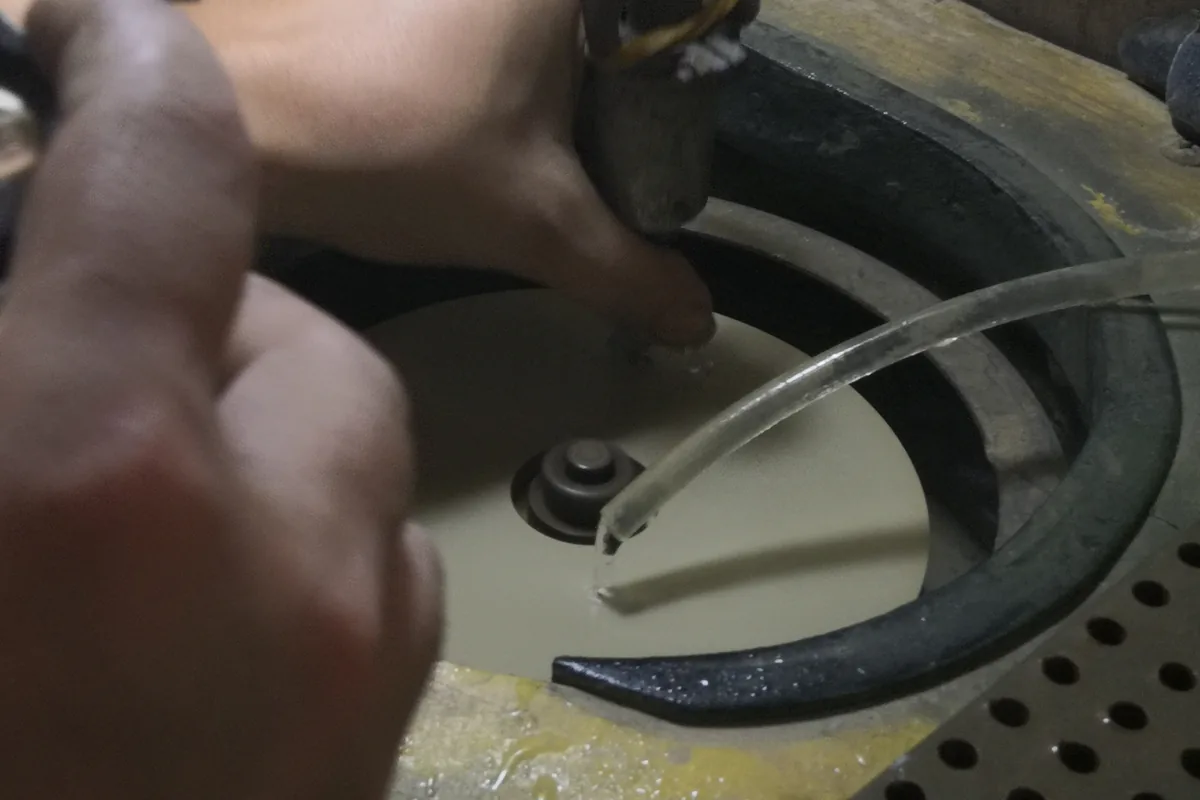
Under a loupe, a well-set pave row looks like a field of stones held by nothing at all. In fact each stone is gripped by two to four tiny metal beads, raised and burnished by hand with a setting bur. That technique is grain setting (also called bead setting or shot setting), and it is the step between a CAD model with dots and a piece that customers actually wear. Get the bead wrong and a stone falls out; get it right and the row reads seamless.
How grain setting differs from prong and pave
Prong setting uses visible metal claws. Channel setting slides stones into a pre-made rail. Grain setting drills a seat directly into the metal surface, drops the stone in, and raises small beads of the surrounding metal over the girdle to lock it. The beads are part of the base metal, not separate parts. It is the method behind pave and micro-pave accent work, and it sits alongside the other methods we compare in stone setting types: prong, bezel, pave, channel. Because the bead has to bite into real metal, the base wall underneath matters more than the stone itself; the same girdle rules that underpin the GIA grading and setting framework apply here, since a poorly cut girdle makes the bead grab an edge instead of a flat seat.
The bench sequence
- Mark and drill. Layout the stone positions with a scriber, then drill a pilot hole slightly smaller than the stone diameter into the metal surface.
- Cut the seat. Use a setting bur matched to the stone size to open a seat that the girdle rests in. The stone should sit flush, not rock.
- Drop and check. Place the stone dry. Under 10x it should sit level and not lift under a fingernail.
- Raise the grains. Use a bearing (graining) tool to roll a small bead of metal over the girdle at two to four points. This is the hand-pressure step that separates bench setters from machine work.
- Burnish and clean. Press each bead smooth, then pick out metal dust and steam the row.
The pressure on the graining tool is the skill. Too little and the bead does not roll over the girdle; too much and it folds into a sharp burr that catches skin. Good setters can feel the bead roll with the wrist rather than the arm, and they lift the tool the moment the bead turns shiny. That feel is why we train new setters on scrap sterling for a week before they touch a customer stone. We also pull-test every finished row under magnification: a gentle tug with a beading tool should move nothing. On micro-pave rows under 1 mm stones we work under a microscope, because the beads are too small to see by eye and a bead that looks closed from a distance may actually sit beside the girdle. We photograph the row top-down at 20x and file it with the QC record. We also advise buyers not to clean pave rows with ultrasonic solutions that lift stones; warm soapy water and a soft brush is enough, because a grain bead is not a prong and repeated soaking can weaken the burnish. We pass that care note on to every buyer so the row survives the customer's lifetime.
Why grain setting fails in production
The top failure is a bead raised too thin, which snaps off after a month of wear. The second is a seat cut too deep, which sinks the stone below the surface and kills its sparkle. The third is uneven bead pressure, which tilts the stone. We catch these at the pull test described in stone security pull test QC checklist, because a bead that lifts under gentle pressure never leaves the bench. Hand-vs-machine setting trade-offs are in hand setting vs machine setting.
FAQ
Is grain setting the same as pave?
Grain setting is the technique pave rows are built with. Pave describes the look; grain setting describes how each small stone is held.
How small a stone can be grain-set?
Down to about 0.8 mm in micro-pave, though below 1.0 mm the defect rate climbs sharply and requires microscope work.
Do grain-set stones fall out easily?
Properly raised beads hold as well as prongs. The failures we see are on thin wall stock where the bead has no metal to bite into.
Can grain setting be redone if a stone falls out?
Usually yes. We clean the old bead, re-seat the new stone, and raise a fresh grain, as long as the surrounding metal is not worn through.
Need pave and micro-pave set by hand, not by machine? Talk to our setting team — we set accent stones on custom and production runs and pull-test every row before shipment.


