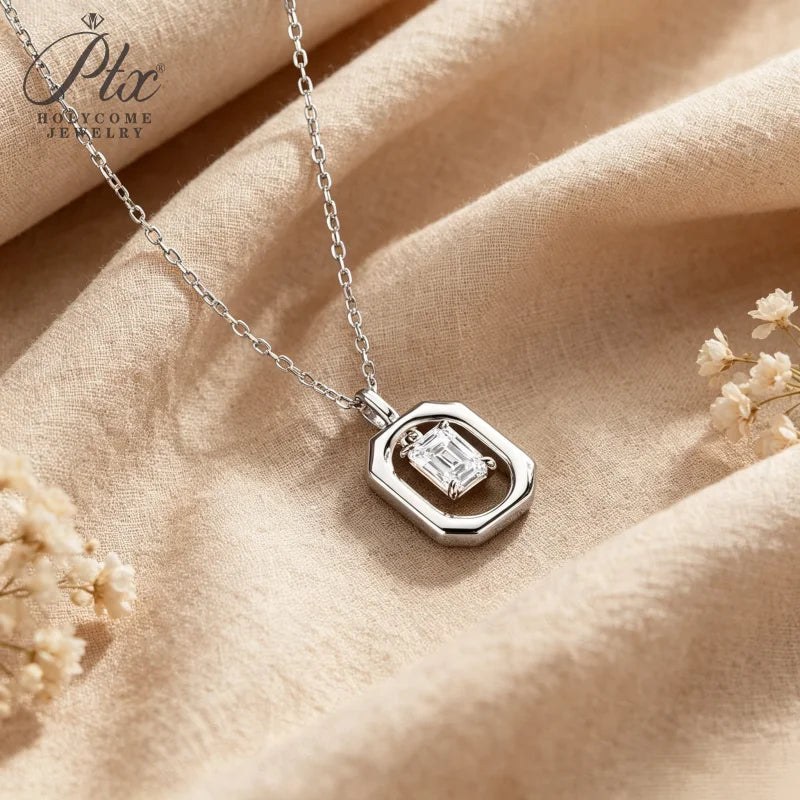
Most people know beryl for its colored stars: emerald green, aquamarine blue, morganite pink, heliodor gold. The colorless cousin, goshenite, rarely gets the spotlight. That is a shame, because it is one of the most durable, cleanest-looking white stones a bench jeweler has access to, and it carries none of the ethical cloud that has surrounded some diamond alternatives.
Goshenite is named after Goshen, Massachusetts, where it was first documented in the 19th century. It is the purest form of beryl in a chemical sense, with none of the trace elements that give the other varieties their color. Crystals can grow quite large, and they are frequently transparent enough to cut into clean, eye-clean gems without extensive sorting.
How it compares to other white stones
If you line up a white sapphire, a white topaz, a cubic zirconia, a moissanite, and a goshenite in a tray, the differences are subtle but real. White sapphire is the hardest at 9 on Mohs and the most expensive, but it often looks dull and milky because of its lower refractive index. White topaz is brighter but soft at 8 and scratches easily. Cubic zirconia is cheap and brilliant but wears out in two to three years. Moissanite is hard and fiery, but the doubled facet lines and green tint are noticeable up close.
Goshenite sits at 7.5 to 8 on Mohs, with a refractive index around 1.57. It is not as fiery as a diamond or a moissanite, and it will never out-brilliance a well-cut white sapphire. What it does offer is a clean, even, slightly soft white look that photographs well and feels honest in a setting. Designers use it when they want a stone that reads as "clear crystal" rather than "trying to be a diamond." In a wide brushed gold band, scattered goshenites catch the light like fine crushed ice, without the cold, hard glitter of diamonds in the same layout.
One practical note: goshenite is sometimes irradiated or heated to produce other beryl colors, but pure colorless goshenite sold as goshenite is typically untreated. If a dealer offers "white beryl" at a suspiciously low price, ask whether the color has been stabilized or treated. Natural colorless material is inexpensive enough that there is little reason to treat it, but the trade has long memories and occasional surprises.
A short history as an optical and diamond material
Before modern plastics and advanced optics, goshenite was cut into thin, perfectly flat slices and used for the covers of scientific instruments, because it is transparent to a wide range of wavelengths and does not scratch as easily as glass. It was also used, occasionally, as a diamond simulant in low-cost jewelry during the early 20th century, before cubic zirconia and moissanite took over that niche. Today you will see it in collector pieces, in retro-style jewelry, and as small accent stones in designs that lean into the natural-mineral look rather than the luxury-diamond look.
Sources and supply
Colorless beryl comes from the same pegmatite pockets as the other colored varieties. Brazil produces most of the commercial clean material, with additional crystals from Madagascar, Afghanistan, and the New England states in the US. Faceted goshenite is inexpensive by gemstone standards, and large clean stones over 5 carats are not difficult to find, which is one reason it has never developed the collector premium of rarer color beryls.
Setting and care at the bench
Because goshenite has no cleavage and no inclusions to worry about in clean material, it sets well in prongs, bezels, and pavé. We have used it as a scatter stone in wide wedding bands where we wanted white sparkle without the cost of diamonds, and as long tapered baguettes flanking a colored center stone. It takes a good polish and holds it.
Care is straightforward. Ultrasonic and steam are safe on clean, fracture-free material, but we still recommend warm soapy water for pieces you plan to wear for decades, because repeated thermal shock over years can eventually open up hidden feathers. Store it away from diamonds and sapphires; at 7.5 to 8 on Mohs, it will scratch against a 9 or 10, even though it is perfectly happy against gold, silver, and other beryls.
Who goshenite is right for
Goshenite is not the stone for someone who wants maximum sparkle or maximum status. It is the stone for someone who wants a clear, honest, durable white gem in a custom setting, who does not want the cost or the optics of a diamond, and who appreciates that it comes from the same mineral family as emerald and aquamarine. In a wide gold band with small goshenite accents, it reads quiet and considered, not flashy. That is a look that lasts longer than any trend. It also pairs surprisingly well with warm-toned gemstones like orange garnet or yellow sapphire, because its neutral white does not compete for attention. If you are weighing it against other white alternatives, our guide to diamond simulants covers the same comparison in more detail, and our colored gemstone buying guide walks through how we source material at the bench.
A concise scientific overview of moissanite is given in the Encyclopaedia Britannica entry on moissanite.
Authoritative References
For buyers who need to verify the technical and regulatory basis of this guide, the following independent institutions publish authoritative reference data:
- GIA Gem Encyclopedia - independent grading and identification reference for natural and lab-grown gems.
- Wikipedia: Moissanite - peer-reviewed background on moissanite chemistry, optics and history.
Frequently Asked Questions
How do I verify a factory before placing a bulk order?
Request a production video, business license, export records and a paid sample run. A factory that accepts a 50-piece test order is usually a real manufacturer.
What payment terms do you offer?
30% T/T deposit with the balance against the bill of lading. This protects both sides on first orders and can move to net terms after a track record.
What is your normal reject rate?
3–5% under 10x loupe inspection for cast and set pieces. Defective units are replaced free in the next shipment.
Where is the factory located?
Wuzhou, Guangxi, China—the core lab-grown and moissanite manufacturing cluster. Shipments go via Guangzhou or Shenzhen ports.


