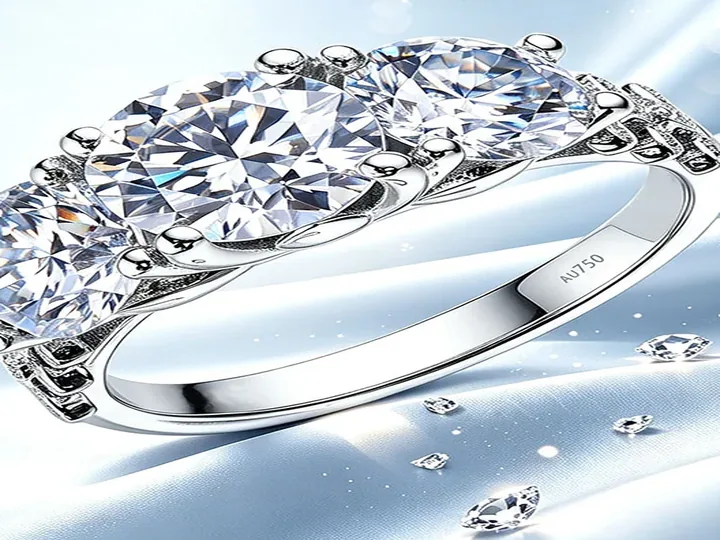
The gold in a wedding band is not the color of pure gold leaf. Pure 24K is a rich, deep yellow — and far too soft to wear. Every gold ring sold is an alloy: pure gold diluted with other metals to add hardness, castability, and color. The "rose," "yellow," and "white" on a spec sheet are not different materials; they are different recipes inside the same karat. Understanding the alloying logic prevents costly mismatches between samples and reorders.
Why pure gold is never used directly
24K gold is soft enough to bend under firm pressure. A 24K ring would dent in weeks, prongs would loosen, and engravings would round off. Alloying introduces copper, silver, zinc, and (for white gold) nickel or palladium to raise tensile strength and wear resistance while keeping the gold content at a declared karat — 10K, 14K, 18K. The karat is the fraction by weight of pure gold: 18K is 75% gold, 14K is 58.3%, 10K is 41.7%.
Yellow gold: the baseline recipe
Yellow gold is what you get when the alloying metals are chosen to keep the warm yellow tone. A typical 14K yellow gold alloy is roughly 58% gold, ~20% copper, ~20% silver, with a small zinc addition for castability. 18K yellow uses 75% gold and a smaller, balanced copper/silver mix. Higher karat means a deeper, richer yellow; lower karat paler and harder. The exact copper-to-silver ratio shifts the hue: more copper pushes toward orange, more silver toward pale greenish yellow.
Rose gold: copper does the work
Rose gold is yellow gold with a much higher copper proportion and little or no silver. The copper is what produces the pink-to-rose tone. Classic 18K rose gold is 75% gold and 25% copper; 14K rose runs about 58% gold, ~4-20% copper, with some silver and zinc to adjust. Because copper oxidizes and tarnishes, rose gold can darken slightly with age — normal, not a defect. Buyers in markets where nickel is restricted can use rose gold confidently; copper is not a sensitizer in the same way.
White gold: diluted, then plated
White gold is not gold colored white by magic. It is yellow gold alloyed with white metals — traditionally nickel, or increasingly palladium and silver — to lighten the tone. Nickel white gold is harder and cheaper; palladium white gold is softer, more expensive, and nickel-free. Either way, the as-cast color is a warm gray, not brilliant white. The bright white look customers expect comes from a thin rhodium flash plated on top. That is why white gold rings need re-rhodium plating every 12-24 months: the plate wears, the gray undertone shows through.
Why two samples of "14K white" look different
This is the single most common complaint in wholesale reorders. One factory's 14K white uses nickel and reads cool gray; another uses palladium and reads warmer; a third rhodium-flashes heavier. If your brand has a specific white in mind, you have to specify the white-gold alloy type and the rhodium plate thickness, not just "14K white gold." Without that clause, every reorder is a coin flip.
Nickel sensitivity: a regulatory and commercial issue
Nickel white gold is harder, takes a crisper polish, and is cheaper than palladium white gold, but nickel leaches out of worn metal and is a common contact allergen. The EU Nickel Directive limits nickel release from items that contact skin, which effectively rules out traditional nickel white gold for jewelry sold into Europe unless the piece is plated thickly enough to act as a barrier. Even then, worn-through areas release nickel over time. For brands selling into Europe, Australia, and California, palladium white gold — or rose or yellow gold — is the safer default. Nickel-free claims need to be backed by lab testing, not just by the alloy recipe.
Solder must match the alloy
One reason reorders drift in color is that the wrong solder was used. Soldering a 14K rose piece with 14K yellow solder leaves a visible yellow line at the joint. Each alloy color and karat has a matching solder at a slightly lower melting point. Factories that stock a full solder range can match the joint; factories that keep a universal solder cannot. When you specify a color, also ask which solder the bench uses — and inspect photos of the solder zone at sample approval.
Alloy selection checklist for buyers
- Declare karat AND color AND alloy type: e.g. "14K yellow, copper-silver-zinc standard."
- For white gold: nickel or palladium? Nickel-free markets need the palladium recipe.
- Specify rhodium flash on white gold (typical 0.1-0.25μm) as a separate clause.
- Match alloy across reorders by keeping a signed physical sample, not a photo.
- Remember rose gold darkens with age — that is copper, not tarnish failure.
Gold alloy choice sits upstream of every other manufacturing decision: casting temperature, solder compatibility, plating, and final color all follow from it. For the karat-by-karat tradeoffs, our gold buying guides break down the cost and durability side.
Rhodium plating, which gives white gold jewellery its bright finish, is covered in the Wikipedia article on rhodium.
Frequently Asked Questions
What gold purities and platings do you offer?
Solid 10K, 14K and 18K, plus gold-filled and vermeil. Plated fashion lines use 1–2 micron PVD over brass or 316L.
How do I avoid mislabeling gold products?
Label by construction: solid, gold-filled, vermeil or plated. Mislabeling plated as vermeil is the most common compliance complaint in this category.
Can you stamp karat marks?
Yes. Every solid-gold and vermeil piece is stamped with karat and maker marks, which supports customs and resale claims.
What is the MOQ for gold lines?
50 pieces per design for stock settings; custom CAD work starts at 100 pieces.


