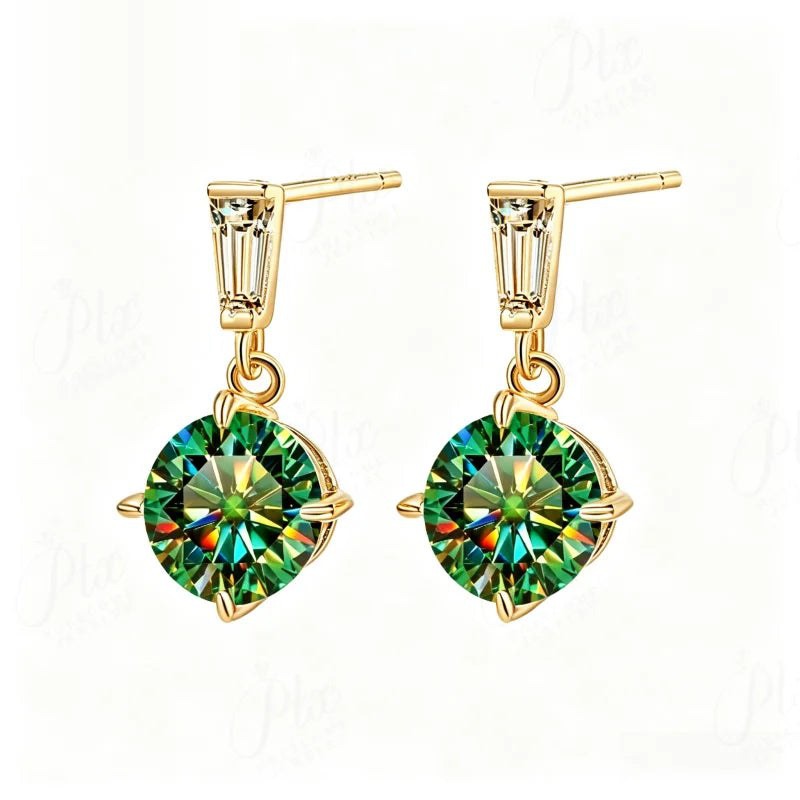
The way a stone is held in metal is often treated as a design detail. On the factory floor it is a production decision with real labor cost, repair rate, and stone-suitability implications. The exact same stone in a prong setting and in a bezel setting is a different piece of work, priced and built for different customers. Choosing the technique up front prevents the most common setting-related returns, and it also prevents the surprise of a quote that jumps when a buyer upgrades from prong to pavé after the CAD is done.
Prong setting
Prongs are the most common setting for solitaire center stones. They use less metal, let light enter the stone from more angles, and are easy to repair. The trade-off is durability: thin prongs catch on clothing and hair and can loosen over years of wear. Production prong work is fast and scalable, which is why it dominates bridal. Setters close prongs by hand under magnification; a well-set stone has no rocking when pushed with a tweezer and no visible gaps between prong and stone edge. For daily-wear pieces, a factory will usually thicken the prongs slightly, which adds bench time but cuts the repair rate in half.
Bezel setting
A bezel wraps a thin wall of metal around the stone's girdle. It is more durable than prong and is preferred for daily-wear pieces, men's bands, and pieces set with softer stones. The trade-off is labor: bending a clean, even bezel takes more time than closing prongs, and the bezel hides some of the stone's edge, reducing the apparent size. Bezel setting also requires a tighter fit on the stone seat; a poorly cut stone can rock in a bezel and take extra bench time to seat. Full bezels are the most durable; half bezels or partial bezels compromise between prong light entry and bezel protection.
Channel setting
Channel setting holds stones between two metal walls, typically along a band or a bar. It is durable and smooth against the skin, which is why it is common on wedding bands. The trade-off is precision: each stone must be cut to a calibrated size to fit the channel without gaps. Mismatched stones leave visible spaces or force the setter to thin the walls, which weakens the band. Channel work is a poor fit for irregularly cut or non-calibrated stones; if your line uses mixed cuts, prong or bezel will be more forgiving and cheaper to produce.
Pavé and micro-pavé
Pavé sets many small stones in a surface with tiny beads of metal. It produces a high-shine, dense look but is the most labor-intensive setting per carat. Micro-pavé in particular requires magnification and very small stones, which drives up both cost and repair risk: a single loose pavé stone can lead to a return. Factories that offer pavé at bargain pricing usually skip the under-gallery support, which is why those pieces lose stones faster. A properly supported pavé setting has a closed back and a bead around every stone; a quick pavé has beads only on the visible edge and sheds stones within months.
Tension setting
Tension setting holds the stone under pressure from a pre-loaded band, no prongs or bezel. It looks modern and minimal, but it is the least forgiving: the band must hold a precise tension, the stone must be cut to tight tolerances, and the setting cannot be sized after assembly. Tension work is a specialty, not a general production technique, and factories that do it well are rare. Buyers asking for tension setting on a karat-gold band should confirm the factory has done it before; a first-time tension attempt on a customer's stone is how stones crack on the bench.
Flush and bead setting
Flush setting, also called gypsy setting, sinks the stone into a drilled hole and burnishes the metal over the girdle. It sits smooth against the skin and is common on men's bands and signet-style pieces. The trade-off is that the stone is recessed, which reduces its brilliance, and a flush-set stone is difficult to replace without drilling out the seat. Bead setting is a lighter relative of pavé, using tiny beads rather than full prongs; it reads as a sprinkle of light across a surface and is cheaper than full pavé but less durable than prong.
Matching technique to stone and customer
Daily-wear, low-maintenance pieces lean bezel or channel. High-light, look-at-me solitaires lean prong. Fashion-forward, high-margin pieces can carry pavé. Tension is for clients who fully accept its constraints, and flush setting is for pieces that need to sit smooth against skin. When you brief a factory, name both the stone and the use case; a good setter will push back if the chosen setting does not suit the stone. You can see setting examples in our portfolio.
The definition of carat weight and how it is measured are set out in the Wikipedia entry on carat weight.
Frequently Asked Questions
How do I verify a factory before placing a bulk order?
Request a production video, business license, export records and a paid sample run. A factory that accepts a 50-piece test order is usually a real manufacturer.
What payment terms do you offer?
30% T/T deposit with the balance against the bill of lading. This protects both sides on first orders and can move to net terms after a track record.
What is your normal reject rate?
3–5% under 10x loupe inspection for cast and set pieces. Defective units are replaced free in the next shipment.
Where is the factory located?
Wuzhou, Guangxi, China—the core lab-grown and moissanite manufacturing cluster. Shipments go via Guangzhou or Shenzhen ports.


