Stacked rings look easy on social media: a thin gold band next to a sapphire solitaire next to a pearl band, all worn together on the same finger. What the photos do not show is that those stones are quietly rubbing against each other all day, and the harder ones are winning. Over months and years, that friction shows up as scratches, abraded girdles, and loose stones that should not be loose yet.
The fix is not to stop stacking. It is to understand hardness compatibility before you build the stack. The Mohs scale, which we cover in detail in our everyday-wear hardness guide, ranks minerals from 1 (talc) to 10 (diamond). The gaps matter more than the absolute numbers: a stone at 9 will scratch a stone at 7 every time they touch, and a stone at 7 will slowly dull a stone at 5.
Which stones actually scratch which
Diamonds (10), sapphires and rubies (9), and chrysoberyl (8.5) are the scratchers. Topaz (8), spinel (8), and the quartzes (7) sit in the middle. Emerald (7.5-8 but heavily included), peridot (6.5-7), tourmaline (7-7.5), garnet (6.5-7.5), aquamarine (7.5-8), and tanzanite (6.5-7) all live in a broad middle band where they tolerate each other but are vulnerable to the harder group. Pearls (2.5-4), opals (5.5-6.5), lapis (5-5.5), and turquoise (5-6) are the scratch-ees. They should never ride against a sapphire or diamond on the same finger.
The practical rule we give clients: if two stones are more than two Mohs points apart, do not let them touch on a daily-wear hand. Put a plain metal band between them, or wear one on a different finger.

The most common damage patterns we see
The first is a scratched opal or pearl band worn next to a diamond eternity band. Within a year the opal's surface looks frosted, and the pearl loses its luster. The second is a scratched tanzanite or peridot ring worn next to a plain platinum wedding band; the metal is softer than the stone, but the constant micro-movement abrades the girdle. The third is an emerald stacked next to a sapphire, where the sapphire's edge chips the emerald's already fragile table.
None of this is dramatic. It happens slowly, which is why clients often bring the piece in saying "I don't know what happened." We know what happened: the stack was built without a compatibility check.
How to stack safely
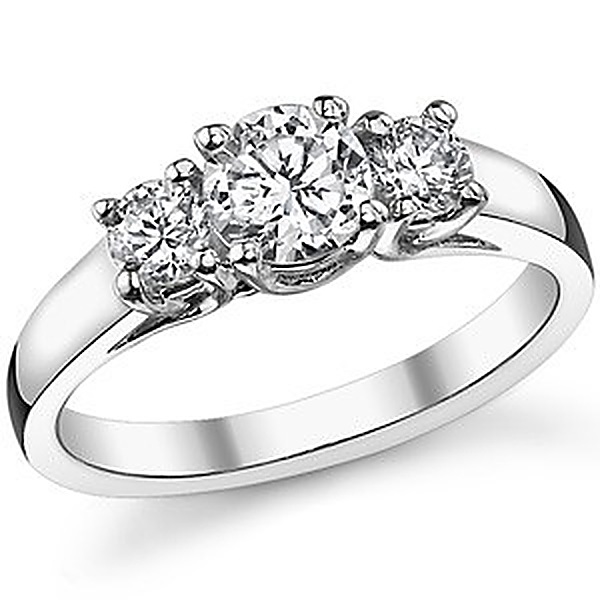
Build the stack in layers. Put your hardest stone (the diamond or sapphire solitaire) in the middle, flanked by plain metal bands that act as spacers. Put the softer stones (pearl, opal, turquoise) on the outside, separated from the hard center by at least one plain band. If you want two colored stones in the stack, pick them from the same hardness band so they wear at the same rate.
Our piece on stackable rings and how to layer covers the styling side. The hardness rule is the practical side that styling posts leave out.
Travel, weather, and the rest of the hand
The same logic applies when you travel. A hotel safe that lets you wear one ring per finger is a luxury most people do not have, so we suggest choosing which finger gets the hard stack and which gets the soft pieces. A diamond solitaire on the index finger, a plain band on the middle, and a pearl or opal ring on the ring finger separates the hardest stones from the softest by at least one band's width. Our notes on travel jewelry care walk through the packing side, but the on-hand arrangement matters just as much as the case.
Weather plays a small role too. Cold, dry air makes metal contracts slightly and prongs loosen, which means an already-abraded girdle can finally slip. Summer sweat softens stringing and dulls porous stones. A quarterly check-in with your jeweler for prong tightness and surface condition catches most of these before they become repairs.
What to do if you already stacked badly
If a softer stone is already scratched, the fix depends on the stone. Pearls and opals can often be lightly repolished by a specialist, but every repolish removes a layer, so it is not infinite. Quartz and beryl cabs can be re-domed. Faceted stones that have been abraded at the girdle usually need to be re-cut, which changes weight and can require re-setting.
The cheapest repair is the one you avoid. Before you build a new stack, lay the rings on a table, look at the stones that will touch, and ask us which ones need a spacer. It takes five minutes and saves years of damage.
Stacking rings are one of the most personal ways to wear jewelry. They mark anniversaries, birthdays, and small wins. Treat the stones in the stack with the same care you give the story, and the stack will keep its luster for decades.
For third-party reference, the Wikipedia article on moissanite details moissanite’s discovery, optical properties and use in jewellery.
Frequently Asked Questions
What ring sizes can you supply in bulk?
US sizes 5–12 including half sizes. Send a size breakdown with your order and we cast to that curve; comfort-fit inner bands reduce resize requests.
Can I order a mixed size run instead of one size?
Yes. Mixed runs are standard for wholesale: specify quantity per size and we pack and label by size at no extra labor cost.
What is the MOQ for custom ring designs?
50 pieces per design for existing molds; 100–300 pieces when a new mold or CAD model is required.
How should I price rings for retail margin?
Most partners use a 3–4x markup on FOB cost for sterling and 2.5–3x for moissanite solos, which keeps landed cost under 30% of retail.