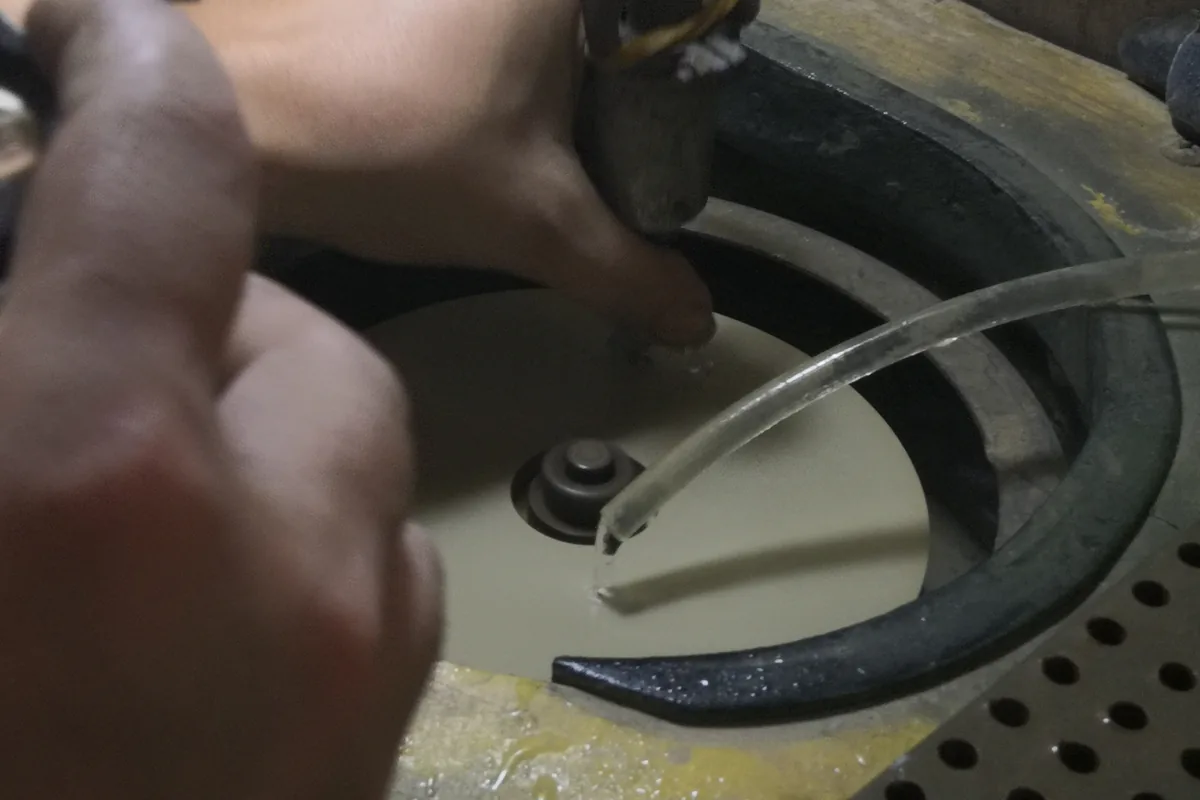
A jewelry designer approached a factory with a delicate pavé band she wanted to launch. She expected a 50-piece minimum; the quote came back at 300. The sticker shock was real, but so was the explanation — her design had 84 tiny stones, a curved shank, and a brushed interior finish, each of which adds setup time. Custom jewelry MOQs are not arbitrary. They reflect what it actually costs a factory to set up a style. This piece breaks down the levers that move your minimum order and the negotiation that brings it into reach.
What actually drives the MOQ number
A factory sets MOQ to amortize fixed setup costs across the run. Those fixed costs fall into four buckets:
| Cost driver | Typical impact on MOQ |
|---|---|
| CAD design & 3D printed pattern | Adds one-time tooling; does not change per-piece MOQ |
| Cast tree setup (casting labor) | Lower MOQ for simple shapes; higher for odd geometries that waste tree space |
| Stone sourcing (FTC jewelry industry guides) (matched lots) | Pavé and matched-color stones push MOQ up because suppliers sell by parcel |
| Custom packaging / stamps | Boxes, tags, and cards are printed in thousands, so they raise the floor |
A plain silver pendant with one 6mm stone might open at 50 pcs. A pavé band with 84 matched stones often starts at 150-300 pcs because the stone parcel itself is sold in minimum quantities.
How to bend the MOQ down
You cannot redefine physics, but you can restructure the order so the factory clears its setup threshold without you buying 300 units of one risk style:
- Share the tree: combine several of your designs on a single casting tree. The factory pays one setup; you get several styles at once.
- Use stock heads and settings: pick a standard prong head or bezel seat and change only the stone or the shank. Stock settings skip the seat-cutting step.
- Defer packaging: order plain poly-bagged pieces first, then apply branded boxes on the reorder when the style is proven. Packaging MOQs vanish from the first run.
- Phase the stones: cast the metal shells first, source stones in a matched parcel, and set in a second phase. This lets you test demand before committing to a full stone buy.
Our own low-batch program starts at 20 pcs per style on simple designs once tooling is approved, against an industry norm closer to 50-100. The trade-off is a slightly higher unit price on the first run, which drops on the reorder.
MOQ guidance by buyer profile
Independent designers testing one new style: accept a higher unit price on a 20-50 pc first run. Treat it as market research. Reorder at 100+ pcs only if the first run sells through.
Boutiques building a seasonal line: bundle 5-8 styles into one PO to share casting setup, and negotiate a combined MOQ rather than per-style minimums. This is the most common way small buyers unlock factory pricing.
Private-label brands scaling: once a style proves itself, push the factory for a standing reorder agreement at 200+ pcs per quarter. Locking a recurring volume usually buys down both the unit price and the MOQ on new launches.
Frequently Asked Questions
What is the smallest MOQ a jewelry factory will accept?
For simple stock-based designs, 20-50 pieces is realistic. For fully bespoke CAD designs with custom stones, expect 100-300 pieces. Factories absorb low-batch orders from trusted repeat buyers more readily than from first-time unknowns.
Do I pay tooling fees on top of the MOQ?
Yes, usually. CAD and 3D-printed patterns are charged as a one-time fee, often refundable or credited on orders above a threshold. Ask whether tooling is a hard fee or deductible on your second order.
Can I split one design across multiple finishes to hit a lower MOQ?
Often, yes. A pendant made in silver, gold vermeil, and 14k gold counts as one style for casting setup. Finishing happens after casting, so the factory does not re-set up for each finish.
Why does pavé setting raise the MOQ so much?
Small pavé stones are sold in matched parcels of 500-1,000 stones. A 50-piece ring order with 80 stones per ring needs 4,000 stones, so the supplier's stone MOQ drives your order size, not the factory's casting cost.
What happens if my first order sells faster than expected?
Request a reorder against the existing tooling. Because CAD and casting patterns are already approved, reorders skip the longest lead-time steps and usually ship in 3-4 weeks at a lower unit price.
Takeaways
- MOQ reflects fixed setup costs — tooling, stone parcels, packaging — not the factory being difficult.
- Combine styles on one PO to share casting setup and lower the effective per-style minimum.
- Defer custom packaging to the reorder so your first run stays small and testable.
- Negotiate tooling fees as deductible on the second order when you can.
Want a MOQ quote on a specific design? Send your sketches or CAD files — we reply with a per-style minimum and a tooling breakdown within 48 hours. Explore our custom design service, read about private label programs, or see typical timelines in the factory tour.
EU-wide limits on nickel, lead and cadmium in jewellery are set by the REACH Regulation (EC) No 1907/2006 on EUR-Lex.


