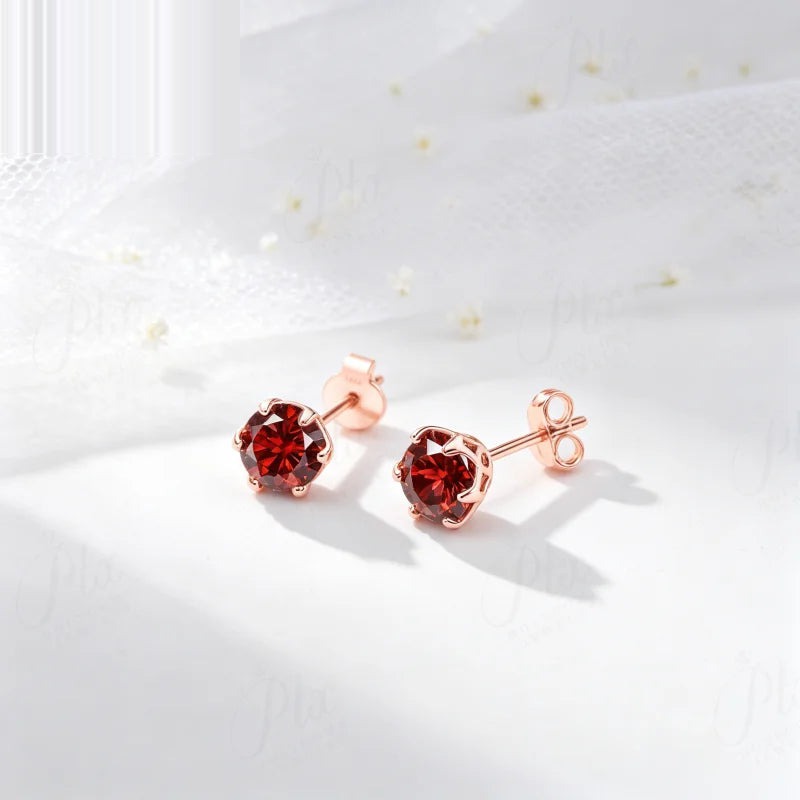
Walk through any museum of antiquity and you will encounter carnelian. Egyptian scarabs, Roman signet rings, medieval intaglios: this warm orange-red quartz has been carved and worn for five thousand years. It is still one of the most affordable colored gems you can buy today, and it remains perfectly practical for modern jewelry.
Color and where it sits in the family
Carnelian is a variety of chalcedony, the microcrystalline quartz family, colored orange to reddish-brown by iron oxides. The line between carnelian and its darker cousin sard is fuzzy: lighter, orange-toned stones are carnelian; darker, browner, harder stones are sard. Most commercial material sold as carnelian sits in that bright orange-red range that reads well against both skin tones and metals.
The color is warm and flattering. It reads as autumn jewelry in gold and as a modern pop of color in silver. Unlike ruby or garnet, it is not a saturated red; it is orange with a red edge, which makes it far easier to pair with neutral wardrobes.
The heat treatment question
Here is the single most important thing to know about carnelian: nearly all of it is heat-treated. Raw chalcedony can be pale gray, yellow or brownish. Gentle heating in a controlled oven oxidizes the iron and deepens it into the familiar orange-red. The treatment is stable, permanent, universally accepted in the trade, and disclosed by responsible dealers. It is not a modern shortcut; ancient cutters likely sun-baked or lightly fired rough to achieve the same effect.
If a piece is advertised as "natural carnelian," that usually means untreated rough in a paler peach or brownish tone. The vivid orange-red in the catalog image is almost certainly heat-treated, and that is fine. The treatment does not weaken the stone.
Sources
Historically, carnelian came from India, and Indian material is still considered among the best. Brazil, Uruguay and Madagascar now supply much of the commercial rough, with occasional material from Germany and the United States. Because the stone is abundant and treatment is routine, pricing stays accessible even in larger cabochons and carved beads.
Durability and setting
At 6.5 to 7 on the Mohs scale, carnelian is a solid everyday stone. It is cut as cabochons, beads, and carved intaglios rather than faceted, for the same reason as other chalcedonies: the fibrous structure does not show brilliance in facets. We set it in bezel settings, rings, pendants and long necklaces, and it takes very little punishment.
Carnelian is also a favorite material for custom signet rings and carved details because it carves cleanly and holds a fine edge. If you have ever held an antique seal made of red stone, it was very likely carnelian.
Care
Clean carnelian with warm soapy water and a soft cloth. It is stable enough to shrug off most household chemicals, but prolonged contact with perfume or cosmetics can dull the polished surface over decades, not weeks. Ultrasonic and steam cleaners are generally safe for treated carnelian, though we still prefer hand cleaning for any piece with other co-set gems. Store it away from diamond and sapphire pieces, which will scratch the surface.
Carnelian vs. sard vs. other orange stones
Buyers often confuse carnelian with sard, orange jasper and even amber. Sard is darker and browner, with a finer texture; orange jasper is opaque and matte rather than translucent; amber is much lighter, softer and warm to the touch. A true carnelian has a slight translucency when held up to a light, with a smooth, even orange glow. That translucency is what sets it apart from cheaper imitation glass or dyed agate sold under the same name.
If you are buying a carved intaglio or a signet in carnelian, ask whether the carving is hand-done or mass-produced. Hand-carved carnelian holds a sharper edge and has slight irregularities that machine carving cannot reproduce, and those details are what make the piece worth keeping. We carve our own carnelian details at the bench for exactly that reason. Care is minimal enough that carnelian is one of the few gems we recommend to people who rarely take jewelry off; it tolerates showers, hand washing and everyday chemicals far better than softer stones, which is part of why it stayed popular across so many centuries. It is also one of the few colored gems whose value lies entirely in the color and the carving rather than in rarity, which means you can buy a generous-size piece without paying a collector's premium.
Why it is having a moment
Carnelian fits the current mood for warm, earthy, heritage-looking jewelry. It reads as older than its price tag, it pairs naturally with gold, and it works equally well in a stackable everyday ring or a statement pendant. If you like matte cabs but want warmer color than blue chalcedony, this is the natural next step. You can compare the family in our guides to colored gemstone buying and read more about how we set cabs in setting techniques.
On responsible sourcing of minerals, the OECD Due Diligence Guidance for Responsible Supply Chains of Minerals is the international reference framework.
Authoritative References
For buyers who need to verify the technical and regulatory basis of this guide, the following independent institutions publish authoritative reference data:
- GIA Gem Encyclopedia - independent grading and identification reference for natural and lab-grown gems.
- Wikipedia: Moissanite - peer-reviewed background on moissanite chemistry, optics and history.
Frequently Asked Questions
How do I verify a factory before placing a bulk order?
Request a production video, business license, export records and a paid sample run. A factory that accepts a 50-piece test order is usually a real manufacturer.
What payment terms do you offer?
30% T/T deposit with the balance against the bill of lading. This protects both sides on first orders and can move to net terms after a track record.
What is your normal reject rate?
3–5% under 10x loupe inspection for cast and set pieces. Defective units are replaced free in the next shipment.
Where is the factory located?
Wuzhou, Guangxi, China—the core lab-grown and moissanite manufacturing cluster. Shipments go via Guangzhou or Shenzhen ports.


