A retailer in Oslo asked for exclusive designs and received a recoloured version of a stock style and found it on a marketplace within a month. The order was not lost on price. It was lost on a specification nobody wrote down. This piece looks at care & maintenance from the buyer's side of the table: what the promise means at the bench, what it costs to get it wrong, and how to write a brief a factory can be held to.
What Private Label Really Requires Beyond a Logo on the Box
Private label is not a box and a tag. It is an exclusivity term, a design source, a packaging specification and a reorder guarantee, and all four have to be in writing.
We will not sell a design we made for you to another buyer. That is a contractual commitment, not a courtesy.
What the Industry Standard Delivers, and Where It Breaks
The default offer in this category is a stock photo, a unit price and a thirty-day promise. That works for one order and stops working on the second, because a stock photo cannot specify cast in 925 sterling silver or 10k/14k/18k gold by lost-wax casting.
| Comparison | Common practice | What we hold | Why it matters |
|---|---|---|---|
| Element | Weak programme | What we contract | |
| Design | recoloured stock | new mould or documented variant | |
| Exclusivity | none | no resale of the design for 24 months | |
| Packaging | generic box | your dieline and barcode | |
| Reorder | price at will | price band locked 12 months |
How We Set Up a White-Label Programme That Holds Its Margin
Stone retention after a 40-cycle wear test is the number we publish per lot. It is the one a buyer can check with a caliper and a loupe in ten minutes, and the one that decides whether a reorder is a formality or a negotiation.
- Lot and rack reference on every carton
- Cast in 925 sterling silver or 10k/14k/18k gold by lost-wax casting declared on the invoice, not assumed
- One plated sample approved per rack before the run
- Stone parcel photographed and hue band stated in writing
The Three Failure Modes We See Most
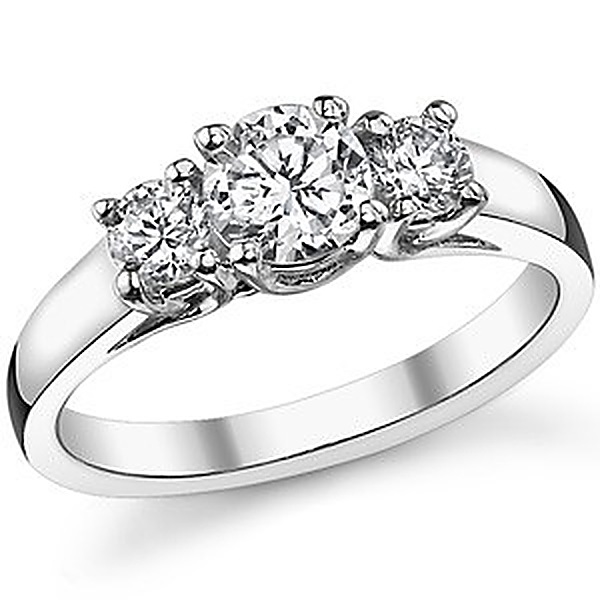
On rings the three failures that come back most often are prong wear, stone tilt after two seasons, and rhodium burn-off on the shank. Each has a root cause upstream of the bench, which is why sorting finished pieces never fixes the rate.
Prong wear traces to wire gauge and setting pressure. Stone tilt traces to the bearing surface being cut by hand instead of by burr. Plating burn-off traces to rack contact points, not to the tank.
Tolerance Stack: Where 0.1mm Becomes a Complaint
Tolerance compounds across operations. A casting that runs 0.15mm wide, a setting that shifts the stone 0.1mm, and a polish that removes 0.05mm of surface can put a ring outside the size the customer ordered without any single step being out of specification.
That is why we hold the stack at the casting rather than at the finish. Tightening the last operation cannot recover tolerance that was already spent at the first.
The Reorder Sheet We Hand Back
Every reorder comes back with the original sheet: alloy batch, stone parcel reference, plating rack number, setting team, measured stone retention after a 40-cycle wear test. It is four lines and it removes the argument about what "the same" means.
Buyers who keep those four lines can audit a fifth lot in an afternoon. Buyers who do not are comparing two photographs and hoping.
Packaging and the First Thirty Seconds
The carton is the first physical impression. An anti-tarnish pouch, a cavity insert and a stone-side-up orientation cost a few cents and prevent most of the transit damage we see on rings.
Loose fill is the main cause of bent posts and scratched faces. It is cheaper than a cavity insert by about two cents a unit, which is the worst trade in the category.
Why We Publish the Numbers
Publishing stone retention after a 40-cycle wear test and the plating micron figure is uncomfortable for a factory that expects to be judged on photographs. It is comfortable for a buyer who has to defend a reorder to a boss.
The number is the argument. A supplier who will not publish one is asking you to trust the photograph instead.
The Three Failure Modes We See Most
On rings the three failures that come back most often are prong wear, stone tilt after two seasons, and rhodium burn-off on the shank. Each has a root cause upstream of the bench, which is why sorting finished pieces never fixes the rate.
Prong wear traces to wire gauge and setting pressure. Stone tilt traces to the bearing surface being cut by hand instead of by burr. Plating burn-off traces to rack contact points, not to the tank.
The Six Cost Lines and Which One Moves
Metal, stone, labour, plating, packaging and freight. On a fifty-piece run the first two carry roughly half the cost, labour about a quarter, and the rest the balance. A quote that undercuts the market by thirty per cent has moved one of the last four.
Plating and packaging are the cheapest to cut and the hardest for a buyer to see, which is exactly why they get cut. We publish the micron figure so the cut is visible before the order rather than after the first complaint.
What to Send Us to Get a Real Quote
A sketch or reference photo, the metal and finish, the stone size and grade, the setting type, the target quantity and the tolerance you will accept. With those six fields we return a drawing and a price in three days.
Without them we can only quote a range, and a range is what turns into a dispute at delivery. We would rather send the drawing back with the tolerances printed on it than send a number that will not hold.
Why the Cheapest Sample Is the Most Expensive Decision
A sample that costs nothing is usually made from a stock tree with a stone the factory already had. It shows you the catalogue, not the production.
We charge samples at cost and credit them against the first order. It is a small amount of money that buys you a truthful answer about what your reorder will look like.
The Six Cost Lines and Which One Moves
Metal, stone, labour, plating, packaging and freight. On a fifty-piece run the first two carry roughly half the cost, labour about a quarter, and the rest the balance. A quote that undercuts the market by thirty per cent has moved one of the last four.
Plating and packaging are the cheapest to cut and the hardest for a buyer to see, which is exactly why they get cut. We publish the micron figure so the cut is visible before the order rather than after the first complaint.
What It Costs and How Long It Takes
Fifty pieces per design is the working minimum on care & maintenance. A sample runs three to five days, bulk fifteen to twenty days under 500 pieces, and a custom mould twenty-five to thirty days from drawing approval. Payment is 30% deposit with the balance against the bill of lading copy.
If the order is below fifty, the setup cost per piece roughly doubles because the casting tree and the plating rack are fixed costs. That is arithmetic, not a policy to negotiate around.
| Item | Value | Note |
|---|---|---|
| MOQ | 50 pcs / design | sizes and colours can be split |
| Sample | 3-5 days | one piece, approved before the run |
| Bulk lead time | 15-20 days | under 500 pieces |
| Custom lead time | 25-30 days | from drawing approval |
| Payment | 30% / 70% | balance against B/L copy |
| Port | Guangzhou / Shenzhen | export from Wuzhou |
Frequently Asked Questions
Can you make an exclusive design for us?
Yes, with a new mould paid once and owned by you. We will not offer that design, or a variant within 1mm of its outline, to another buyer for twenty-four months.
What is the minimum for private label?
Fifty pieces per design, with a minimum of four designs to justify a dedicated packaging run. Below four designs the dieline cost per SKU dominates.
Do you handle the labelling?
Yes, including the country-of-origin mark, the karat hallmark and your SKU barcode. We will produce one labelled sample for legal review before the run.
Who is the manufacturer of record?
We are, and we will say so on the customs paperwork. Some brands prefer to be named as the importer of record, which is a separate arrangement we can document.
Can you produce a second lot identical to the first?
Yes, if we hold the four inputs: alloy batch, stone parcel, plating tank and setting team. The reorder sheet records all four, so the check happens against a document rather than against a memory.
What happens if the lot arrives outside the agreed tolerance?
Photograph the piece with a scale and reference the lot line. Above the agreed AQL we replace and cover freight; inside it we replace the affected units inside ten days.
About the Manufacturer
HOLYCOME by Wuzhou HengliLai Jewelry Co., Ltd. runs casting, setting, polishing and plating on one site in Wuzhou, Guangxi, the artificial gemstone cluster that supplies most of the trade. Monthly capacity is roughly 60,000 pieces across silver and gold lines. Buyers can reach the trade desk at service@holycome.com or on WhatsApp at +86 18078079070, and a factory visit can be arranged with two weeks' notice.
Next Step
If you are pricing care & maintenance for a season, send the quantity per design, the stone grade you need and the date you need it on the shelf. We will return a drawing, a landed cost and a production date within three days, and a physical sample before you commit to a run. Samples are charged at cost and credited against the first order.
Related reading: Wholesale Silver Gold Vermeil - HOLYCOME (Wholesale Guide), Bulk Silver Rhodium Plating Supplier - HOLYCOME (Wholesale Guide), Wholesale Silver Plating Options - HOLYCOME