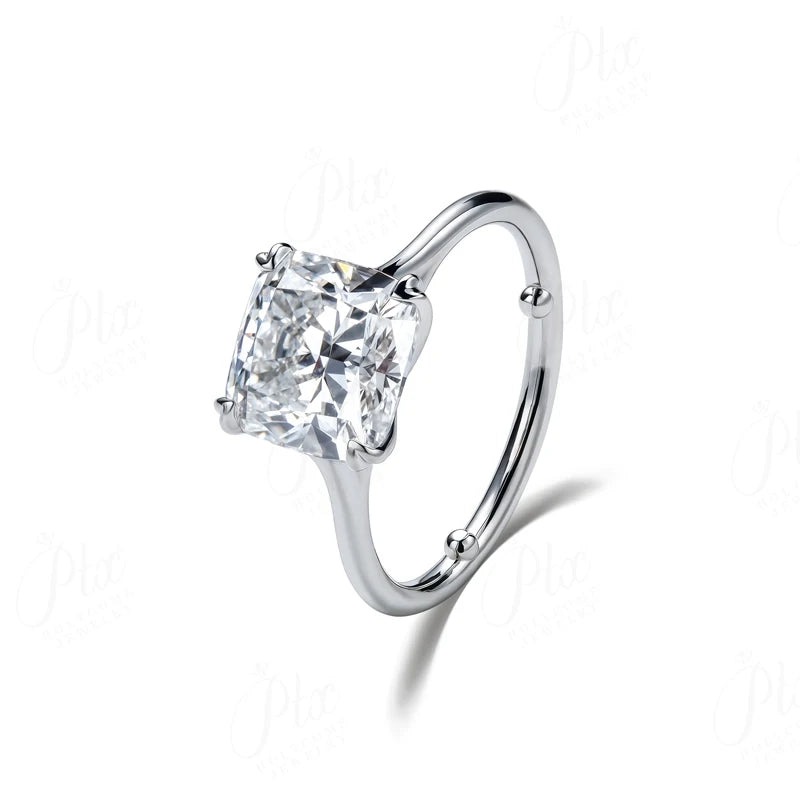
Walk into a jewelry case and the stones split into two visual groups: those covered in tiny flat planes that flash light, and those shaped like smooth, rounded domes. The first are faceted; the second are cabochons (pronounced cab-uh-shonz). The cut is not just styling. It is a deliberate choice based on what the stone does best—and choosing the wrong cut can hide the very quality you paid for, turning a fine material into a dull-looking piece.
What a faceted cut is for
Facets—the small, precisely angled flat cuts across a stone—are designed to bounce light around and return it to the eye. That is what produces brilliance, sparkle, and fire. Diamond, ruby, sapphire, and most transparent colored stones are faceted because you want light playing through them. The art is the math: our breakdown of facet angles and brilliance explains why a poorly angled stone looks dead even when the color is perfect. Faceting is the right call when the stone is transparent and its value lives in light return, and it is the process we describe in how stones are actually faceted at the lapidary.
What a cabochon cut is for
A cabochon is a polished, rounded dome with no facets—usually flat on the bottom, curved on top. It is the cut of choice when the stone's best feature is something facets would ruin:
- Adularescence and chatoyancy. Moonstone's floating blue light and a cat's-eye's silk band only show on a smooth dome. Facets would split the effect into scattered pieces.
- Play-of-color in opal. Opal's rainbow flashes read across a smooth surface; a faceted opal looks muddy and loses its fire.
- Matrix and pattern. Turquoise with spiderweb matrix, agate bands, and rutilated quartz show best as smooth slices where the pattern can be centered.
- Opaque and included stones. A translucent stone with cloudy inclusions has no light to bounce, so faceting adds nothing; a dome shows the body color instead.
Why durability pushes the choice too
Cabochons are also tougher. A smooth dome has no sharp facet edges to chip, and it can be set in a protective bezel that fully covers the rim. Soft stones like turquoise (5-6 Mohs), opal (5.5-6.5), and moonstone (6 with cleavage) are almost always cabbed for both optical and structural reasons. A faceted soft stone would chip its thin facet edges within months of ring wear. Our notes on the Mohs scale and everyday wear pair hardness with the cut that protects it, and explain why soft stones in rings usually get bezel-set domes.
Can a stone be cut either way?
Sometimes. High-quality transparent tourmaline or garnet is faceted for sparkle. The same material in opaque or included form can be cabbed for color. Agate and quartz get cut both ways depending on what the rough contains. The lapidary decides after looking at the rough: if the stone's beauty is light, facet it; if it is color, pattern, or optical effects, cab it. The height of the dome also matters—too flat and the effect is weak; too tall and the stone sits awkwardly in a setting.
What to expect in price
Faceted transparent stones are priced on clarity and light return. Cabochons are priced on color, pattern, and the smoothness of the dome. A high-domed, perfectly symmetrical cab is skilled work and costs accordingly; a flat, lopsided one was rushed. When you buy a cabochon, judge the evenness of the dome and the placement of the effect (a centered cat's-eye, a full face of opal color) rather than looking for sparkle that was never the point.
The bottom line
Faceted means sparkle. Cabochon means color, pattern, and optical light play. The right cut is the one that shows off why that particular stone was worth buying—not a default style you chose at the case. If a stone is sold in the wrong cut, even fine material can look ordinary, and the lapidary's choice is often the difference between a piece that sings and one that quietly disappoints.
Re-cutting and repurposing
One advantage of a cabochon is that when it gets scratched or chipped after years of wear, it can often be re-domed and repolished relatively cheaply, bringing back a fresh surface. A chipped faceted stone needs more precise re-cutting that removes weight and changes proportions. This is why soft, sentimental stones in rings are frequently cabs: a new polish is a simpler renewal than re-faceting. When you are choosing a cut for a piece that may be passed down, that practicality is worth keeping in mind alongside the look you love today.
Next time you pick up a colored stone, notice which cut it is and why. Once you start seeing the pattern—opal cabs, ruby facets, turquoise domes—the choice stops looking random and starts looking like a deliberate, knowledgeable decision.
The lapidary who chooses well does not just cut a stone—they make sure its best quality is the first thing you see.
The Gemological Institute of America’s gem encyclopedia is an authoritative, widely cited reference on moissanite and diamond quality factors.
Frequently Asked Questions
How do I verify a factory before placing a bulk order?
Request a production video, business license, export records and a paid sample run. A factory that accepts a 50-piece test order is usually a real manufacturer.
What payment terms do you offer?
30% T/T deposit with the balance against the bill of lading. This protects both sides on first orders and can move to net terms after a track record.
What is your normal reject rate?
3–5% under 10x loupe inspection for cast and set pieces. Defective units are replaced free in the next shipment.
Where is the factory located?
Wuzhou, Guangxi, China—the core lab-grown and moissanite manufacturing cluster. Shipments go via Guangzhou or Shenzhen ports.


