Buying Guides Wholesale: CAD to Sample Approval, Step by Step
Words and bench work · HOLYCOME workshop
01Why this article starts at the CAD file, not the price list
Most buying guides wholesale pieces you read start with a price grid and work backward. That order is wrong for anyone doing custom work. The number you actually care about is the date your sample gets approved, because everything downstream hangs off it: the bulk start date, the stone order, the DDP booking.
I have run QC on this floor for twelve years. The failures I see are almost never casting failures. They are approval failures, meaning the buyer and the factory were looking at two different things and nobody noticed until 200 pieces came back wrong. So here is the custom path in the order it actually happens.
02Step one: what a CAD file has to contain before we cut wax
A drawing and a CAD file are not the same request. A drawing tells us a shape. A CAD file tells us a tolerance. If you send a photo of a competitor ring and say make this, we will make something, but it will be our interpretation of a photo, and you will be approving our interpretation.
For a clean quote we need four things: a dimensioned sketch or reference photo, the metal (925 silver, 10K/14K/18K gold), the stone spec (moissanite or lab-grown diamond, shape, size in mm, grade), and the ring size or chain length. Send those and CAD usually comes back in 3 to 5 working days.
What we tighten up during CAD review
- Prong thickness and tip radius, because thin prongs are the number one cause of stone loss in transit.
- Gallery height and stone seat depth, so the pavé sits flush instead of catching on knitwear.
- Minimum wall thickness on hollow or hinge pieces, since a 0.6 mm wall will not survive a polishing drum.
- Clasp and jump ring gauge, matched to the finished weight of the piece.
- Stone count and layout, so the setter and the buyer are counting the same holes.
You get a 3D render plus a 2D dimension sheet for sign-off. This is the cheapest moment in the whole project to change your mind. After wax, changes cost time.
03Step two: from resin print to finished sample
Approved CAD goes to wax printing, then casting, then filing, then setting, then polish, then plating if it is silver. That sequence is not negotiable and it is why a sample takes 12 to 18 days, not 5. Anyone promising a custom sample in a week is either skipping the setting stage or shipping you a stock piece with your logo stamped on it.
One thing buyers underestimate: the sample is a manufacturing document, not a gift. Whatever tolerance the sample holds is the tolerance bulk will hold. If the sample has a 0.3 mm gap at the hinge, so will the 500 pieces after it.
Stone sourcing at the sample stage
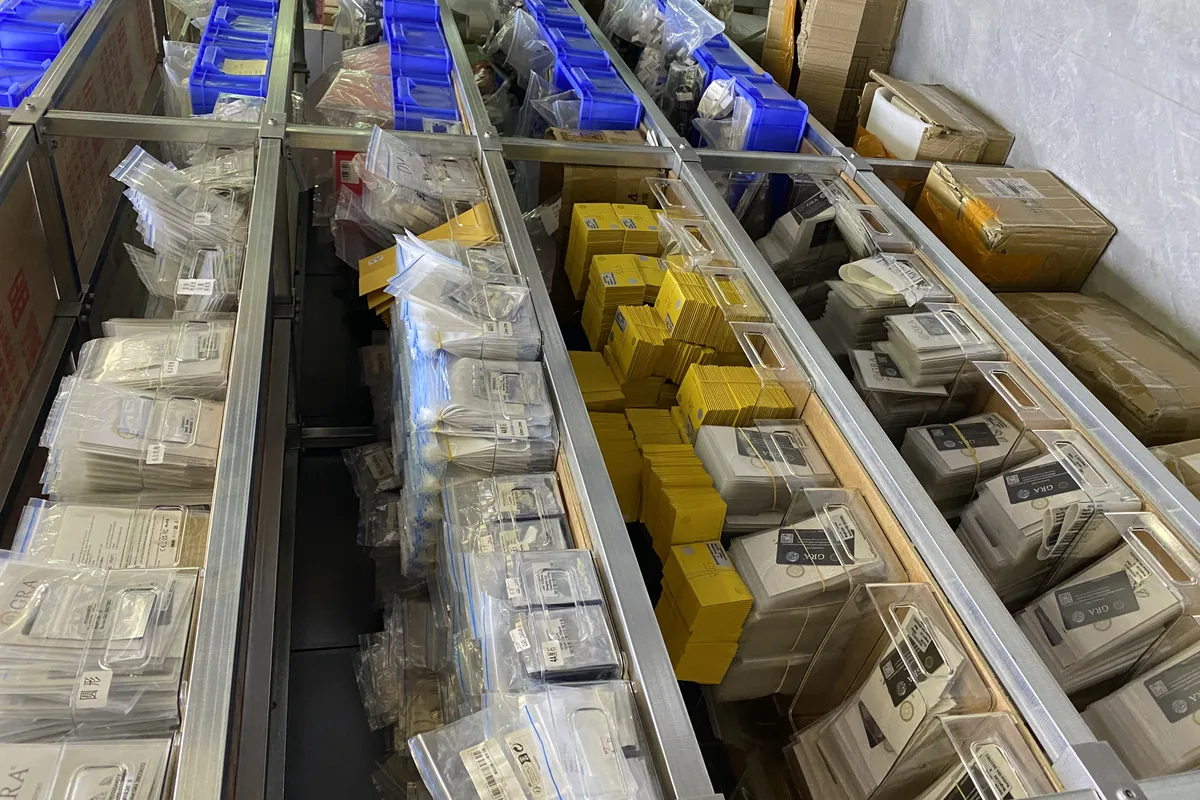
We check incoming stones before they touch a bench. Moissanite comes with GRA certificates per stone above a certain size, and lab-grown diamonds above 0.30 ct ship with IGI. Those papers follow the stone into your bulk order, which matters more than most buyers realize when their own customer asks for provenance.
If a supplier cannot tell you which certificate body covers which stone size, they are buying loose parcels and relabeling. Ask the question early.
04Step three: the three QC gates your sample passes through
Our floor runs three checkpoints on every custom job, sample and bulk alike. This is where the 20 percent edge over typical trading companies comes from, and the reason is boring: we own the benches, so a defect is caught by our own staff instead of being discovered by an inspector who has to email a third party and wait two days for an answer.
| Gate | When | What gets checked | Who signs off |
|---|---|---|---|
| Incoming stone check | Before setting | Size in mm, color grade, certificate match, chip and feather inspection | Stone room lead |
| In-process check | After setting, before polish | Prong tightness, stone seat depth, solder joints, dimension against CAD sheet | Line QC |
| Pre-ship AQL | Before packing | AQL sampling, plating thickness, clasp function, weight per piece, laser mark | QC lead |
The in-process gate is the one that saves money. Catching a loose prong before polish means a two-minute fix. Catching it after plating means stripping, resetting and replating, and that piece now has a delivery date you cannot move.
05Step four: sample approval, and what to put in writing
When the sample ships, you get photos from six angles plus a short video of the clasp or hinge working, and the weight in grams. Approve in writing against those photos, not against the memory of the CAD render. Renders lie about sparkle and they lie about scale.
Mark up the approval email with anything you are accepting as-is. A buyer who writes approved, looks good has approved everything, including the 0.2 mm prong variance they did not notice. Be specific. Approve the sample, then reference the sample number on every bulk PO.
Sample terms: PayPal is fine for sample and CAD fees, and the fee is credited against your bulk order once it is placed. Bulk runs on T/T with 30 percent deposit and balance against the pre-ship inspection report.
06Step five: bulk, DDP, and how the timeline stacks up
Bulk production runs 12 to 18 days after sample approval and stone confirmation, not after deposit alone. That distinction matters because stone sourcing is the variable. If you approve a sample with a 6.5 mm fancy-cut lab-grown stone and we have to source it, the clock starts when the stone lands, not when the wire clears.
Shipping is DDP, typically 5 to 8 days door to door for US and EU addresses, with duties handled on our side. MOQ is 1 piece on stock designs and 30 pieces per SKU on custom, per metal and per stone combination. Mixed sizes within one SKU count as one line.
Where the 20 percent actually shows up
- Cost: no trading-company margin stacked on top of the factory price, so landed cost runs roughly 20 percent under a broker quote on the same spec.
- Speed: CAD revisions and QC decisions happen on the same floor as production, which cuts a typical 3 to 5 days of back-and-forth out of the sample cycle.
- Yield: in-process QC catches setting defects before polish, so the rework rate on bulk is lower and your shortfall claims mostly disappear.
None of that is magic. It is the difference between asking someone and asking the person who is holding the piece.
07Frequently Asked Questions
What is the MOQ for a custom CAD design?
30 pieces per SKU for custom work, counted per metal and per stone type. Stock designs ship from 1 piece. If you are testing a market, start with stock, prove the shape sells, then move to custom.
How long from CAD to approved sample?
CAD is 3 to 5 working days, and the physical sample is 12 to 18 days after CAD sign-off. Add stone sourcing time if your design calls for a cut or size we do not hold in the stone room.
How is price calculated on a custom piece?
Price is built from metal weight at the day's rate, stone cost by size and grade, plus a setting and finishing charge. On bulk, the per-piece price is fixed at sample approval and held for the PO quantity.
If you have a design sitting in a folder, send the sketch, the metal and the stone spec to service@holycome.com or WhatsApp +86 133 7744 7107 and ask for a CAD quote and a sample timeline. We will tell you plainly if the design has a manufacturing problem before you pay for wax.
