Vacation is when jewelry gets into the most trouble. Pools, hot tubs and beaches look harmless, but they expose rings and necklaces to chlorine, salt water and sand in ways a normal day never does. We have seen otherwise well-cared-for rings return with pitted gold, loosened stones and tan lines that trapped grime. The rule is simple: know the risks, and decide what you keep on. Here is how to protect your jewelry on trips.
Chlorine: The Silent Enemy
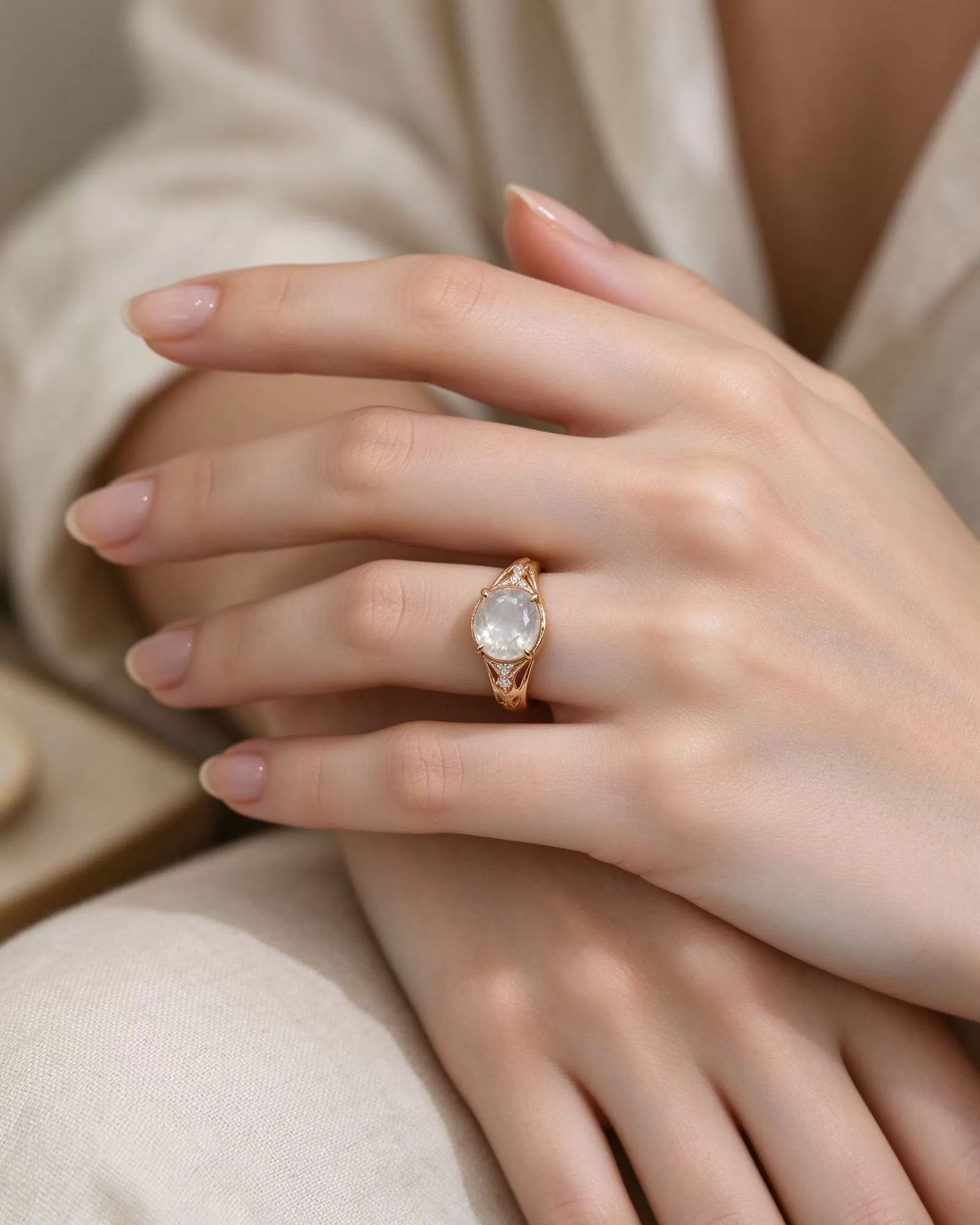
Pool and hot tub water contains chlorine, and prolonged exposure is bad news for gold and platinum. Chlorine can pit and weaken gold over time, especially at the high temperatures of a hot tub. It will not damage the diamond or gemstone itself, but it attacks the metal holding it. The safest choice is to take off rings before you swim. If you must wear a simple band, rinse it afterward, but the pool is genuinely one place where removing your ring is the wise move.
Salt Water and Sand
Ocean water is less immediately corrosive than chlorine, but salt residue builds up in prongs and chain links, and salt air accelerates tarnish on silver. Worse is sand: fine grains are abrasive and can scratch gold if rubbed against, and a handful of sand near an open drain is where rings go to disappear. At the beach, keep rings off or securely on, and never set one on a towel where it can be swept away.
The Travel Risk: Losing the Ring
More jewelry is lost on vacation than damaged. Hands swell in heat, lotion makes rings slip, and a ring removed by the poolside is easily forgotten. If you wear a ring on holiday, use a designated jewelry pouch in a zipped bag, never a loose hotel drawer. For high-value pieces, leave them home and wear a travel alternative. Our travel care notes cover packing in detail.
After the Trip: Clean and Inspect
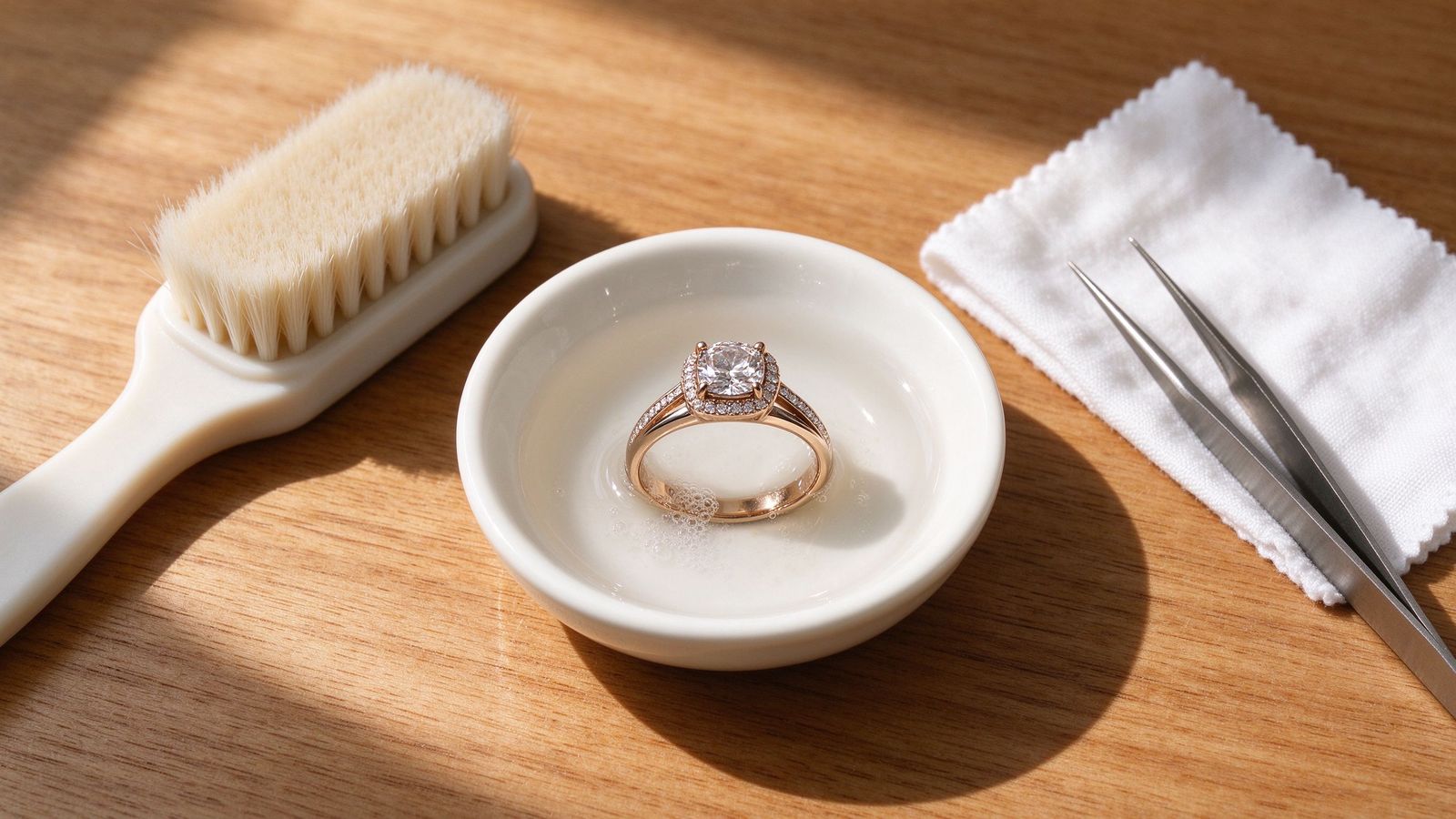
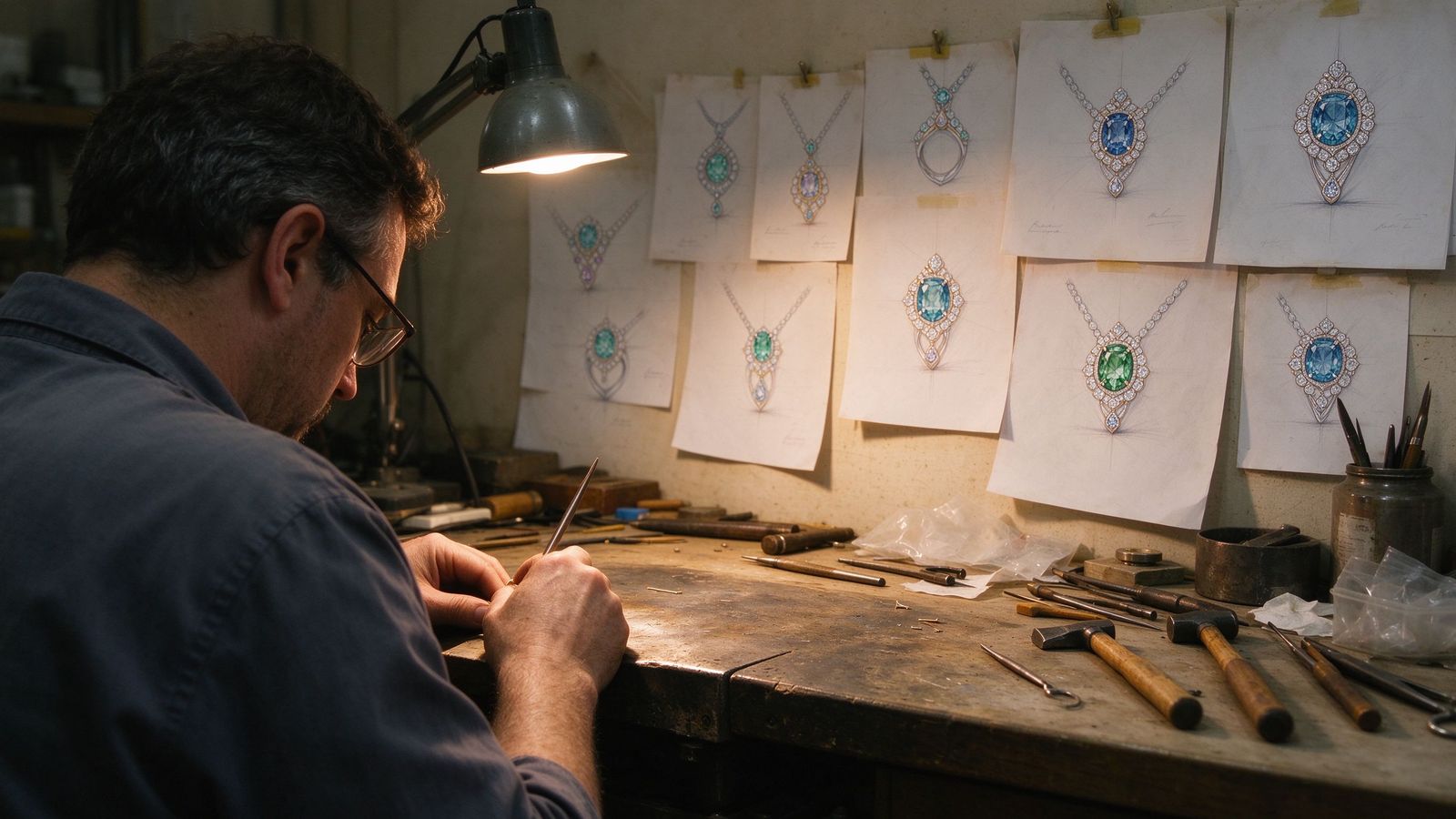
When you return, clean your jewelry before putting it away. Warm soapy water and a soft brush remove sunscreen, salt and chlorine residue. Check prongs — a beach trip is exactly when stones can loosen. If anything looks pitted or a stone rattles, bring it in. We clean and inspect rings at the bench as part of our care service, and you can read about how we finish pieces in the work section. Need advice on a specific piece? Ask us.
Frequently Asked Questions
Can I wear my engagement ring in the pool? We recommend removing it — chlorine risks the metal, not the diamond.
Is salt water bad for diamonds? The diamond is fine; rinse the metal afterward to remove salt residue.
What about a plain gold wedding band? Even simple bands benefit from being off in hot tubs; rinse if worn.
How do I stop my ring slipping in the heat? Hands swell on holiday; a temporary ring fit adjuster helps, or size up mentally and keep it secure.
The Post-Holiday Jewelry Check Routine
When you return from a trip, give your jewelry a proper check before it goes back in the box. First, wash away sunscreen, salt and chlorine with warm soapy water, brushing gently behind settings. Then inspect each piece closely: look for a rattle in any stone, a gap in a clasp, or a worn prong. Sand and salt are abrasive over time, and a beach trip is exactly when prongs loosen without you noticing. If anything feels off, bring it in rather than waiting. This post-trip habit takes ten minutes but catches problems early — before a stone falls out months later. A little inspection on return protects the pieces you wore all holiday, and it is far easier than losing one to an unnoticed loosened setting.
A Simple Vacation Jewelry Rule
If you want one rule to remember on holiday, make it this: the most valuable pieces stay home, and the pieces you bring are chosen for the environment. A sturdy gold band can handle a beach day; a delicate pavé ring should not. Pack a small pouch, take photos of your jewelry before you travel, and never leave a piece on a hotel bedside or a pool edge. With that mindset, your vacation becomes a memory, not a search party for a lost ring.
The Post-Holiday Jewelry Check Routine
When you return from a trip, give your jewelry a proper check before it goes back in the box. First, wash away sunscreen, salt and chlorine with warm soapy water, brushing gently behind settings. Then inspect each piece closely: look for a rattle in any stone, a gap in a clasp, or a worn prong. Sand and salt are abrasive over time, and a beach trip is exactly when prongs loosen without you noticing. If anything feels off, bring it in rather than waiting. This ten-minute habit catches problems early — before a stone falls out months later. It protects the pieces you wore all holiday, and it is far easier than losing one to an unnoticed loosened setting.
Do not forget the pieces you did not wear. Travel jewelry boxes get tossed into bags, and pieces can shift against each other. Lay everything out, check each clasp, and re-fold the pouch properly. A small habit at unpacking prevents a tangled, scratched mess months later. We see plenty of pieces that came home from vacation with hidden wear, and most of it is avoidable with this simple check. For deeper cleaning and inspection, our bench care service is always open — see the process page for what we offer.
A Simple Vacation Jewelry Rule
If you want one rule to remember on holiday, make it this: the most valuable pieces stay home, and the pieces you bring are chosen for the environment. A sturdy gold band can handle a beach day; a delicate pavé ring should not. Pack a small pouch, take photos of your jewelry before you travel, and never leave a piece on a hotel bedside or a pool edge. With that mindset, your vacation becomes a memory, not a search party for a lost ring. Travel light, pack carefully, and enjoy the time away without worrying about what is on your finger.